.svg&w=384&q=75 "Naijagoal logo")
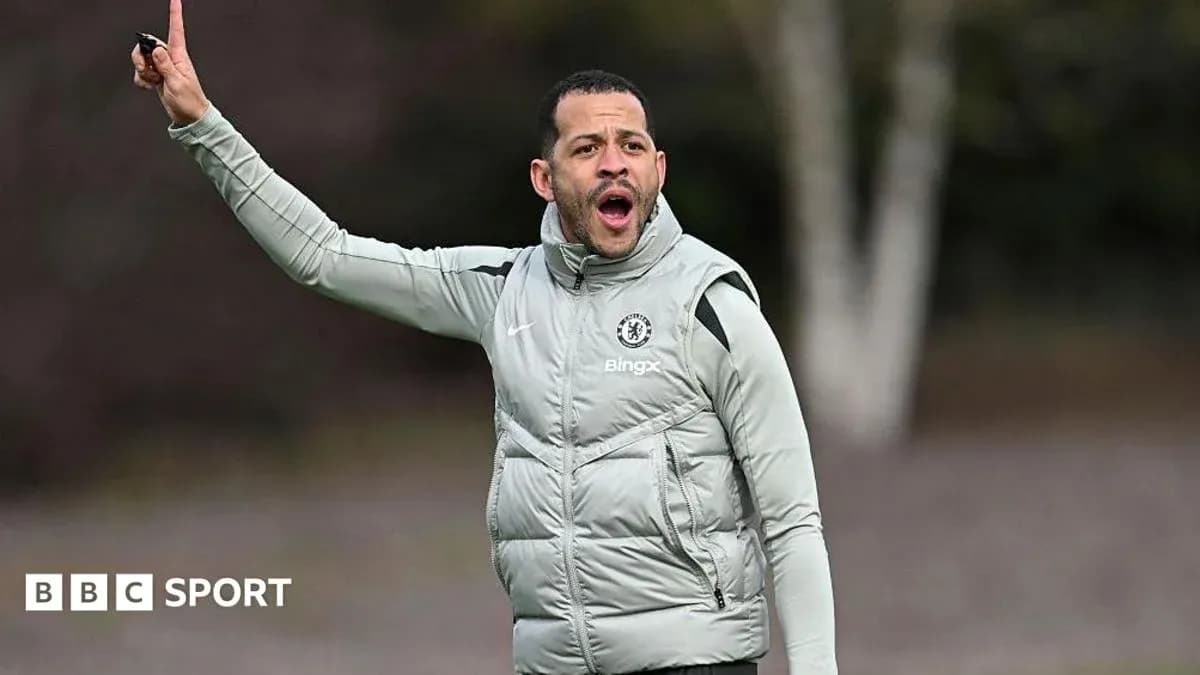

Liam Rosenior Returns as Head Coach of Paris FC
Liam Rosenior is back in the dugout – and back in France.
Three months after his brief and bruising spell at Chelsea came to an end, the 41-year-old has been unveiled as the new head coach of Paris FC on a two-year deal, with an option for a further season. It is a swift return, but a calculated one, to a league and a landscape that already know his work.
From Stamford Bridge setback to Paris project
Rosenior’s time at Chelsea was short and unforgiving. Appointed in January to replace Enzo Maresca, who left following disagreements with the club hierarchy before resurfacing at Manchester City, he walked into a club in permanent flux and paid the price for a brutal late-season collapse.
After an initially encouraging spell, Chelsea’s form fell off a cliff. Rosenior lost each of his final five Premier League games. His team did not score a single goal in that run. By April, his time at Stamford Bridge was over.
Yet the manner of his departure has not dented his standing in boardrooms that look beyond headline results. Paris FC’s owners – the Arnault family, with Red Bull as a minority shareholder – have chosen him to replace Antoine Kombouare after an underwhelming 11th-place finish in Ligue 1 last season, and they have been clear about why.
In their announcement, Paris FC highlighted Rosenior’s “wealth of experience at the highest level”, his track record with young players and his commitment to “attractive and attacking football”. That combination fits neatly with a club that sees itself as upwardly mobile and stylistically ambitious, not merely content to survive in the French top flight.
Strasbourg credentials carry weight
If Chelsea was a harsh audition in England’s spotlight, Strasbourg was the body of work that truly sold Rosenior to Paris.
During his spell at Chelsea’s sister club, he oversaw one of the most eye-catching young sides in Europe. Strasbourg finished seventh in Ligue 1 in 2024-25 and booked a place in the Uefa Conference League, doing so with the youngest squad across Europe’s top five leagues.
That detail matters. Paris FC want development as much as they want results. They want energy, resale value, identity. Rosenior has already proved he can build a competitive team around emerging talent and still punch above its weight in the table.
A coaching journey built step by step
Rosenior’s route to this job has never been the glamorous fast track. It has been incremental, often demanding, and occasionally unforgiving.
He started on the training pitches with Brighton’s Under-23s, learning the rhythms of youth development and the grind of academy work. From there, he moved to Derby County, first as Wayne Rooney’s assistant and then as interim boss in a club wrestling with turmoil on and off the pitch.
Hull City gave him his first permanent role in senior management in 2022. He stabilised them quickly: 15th in the Championship in his first season, then a push towards the play-offs in his second, falling just short in seventh. Missing out on the top six cost him his job, but it also underlined his capacity to lift a club into contention without lavish resources.
Now comes a different challenge. A capital club with serious backing. A league he knows. Expectations that are high but not yet suffocating.
A fresh canvas in the French capital
Paris FC are not Paris Saint-Germain, and that is precisely the point. They are trying to carve out their own identity in a city dominated by a global superpower. The Arnault family’s presence and Red Bull’s minority stake signal intent: this is a project designed to grow, to modernise, to tap into data, youth and branding while still respecting the rhythm of French football.
Rosenior walks into a dressing room that finished mid-table but has the backing to aim higher. The club’s statement spoke of ambition “to achieve more”. That can mean European qualification, a stronger domestic footprint, or simply a style of football that makes the club a destination for young players and restless fans.
His blueprint is well known now: front-foot football, trust in youth, structure without suffocating creativity. In Strasbourg, it earned continental football. In Hull, it turned a drifting side into a contender. At Chelsea, it never had time to take root.
Paris FC are betting that, this time, time will be on his side.
For Rosenior, after the churn of English football, this is not just another job. It is a chance to prove that the work in Strasbourg was no one-off and that the scars from Stamford Bridge can be turned into something more powerful: experience, edge, and a clearer sense of what his teams must look like when they are truly his.
The question now is simple and sharp: in a city where one club already dominates the skyline, can Liam Rosenior build another that demands to be seen?