.svg&w=384&q=75 "Naijagoal logo")
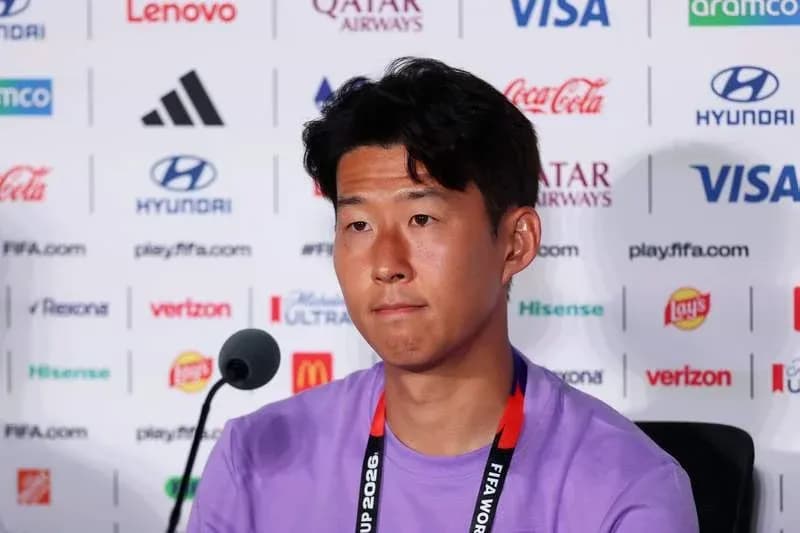

KFA Condemns Media Mockery of Heung-min Son's Military Service
The Korea Football Association has moved quickly and firmly after a leaked recording appeared to capture journalists mocking national team captain Heung‑min Son over his military service.
The incident, exposed by Football Asian, has ignited anger in South Korea and forced the governing body to publicly rebuke the behaviour of those involved.
Mockery on a live mic
During a training session at the national team’s Guadalajara base camp ahead of the 2026 FIFA World Cup in North America, some media members were reportedly caught on microphone belittling Son’s military duty. One remark claimed the forward “didn’t even properly serve in the military,” a line that cut straight into one of the most sensitive topics in South Korean public life.
Son earned exemption from the full 21‑month mandatory service after leading South Korea to Asian Games gold in 2018, a triumph that allowed him to complete a shortened three‑month basic training instead. That exemption is entirely within the rules and is a well‑established reward for major sporting success.
The leaked exchange, though, has shifted the focus from football to respect, responsibility and the limits of media conduct around a national icon.
KFA: respect must come first
The Korea Football Association responded with a strongly worded statement, framed as a “message of advice” on media activities around the national team, but carrying the clear weight of a warning.
It said it “expresses regret regarding the inappropriate remarks made by some media officials” during training in Mexico, stressing that the Taegeuk Warriors are preparing with “a sense of responsibility to represent South Korea on the global stage of the World Cup” and are striving to repay the public’s faith.
The KFA made no attempt to hide its displeasure at the impact of the leak, describing the conversations as having caused “great shock and disappointment to the team.”
Respect for the press remained part of the message. The association underlined that it “respects the reporting activities and the role of the media,” but drew a clear line: on‑site coverage, it insisted, must be built on “mutual respect and trust,” with “respect for and protection of the players” taking precedence.
From there, the tone hardened. The KFA “requests that media outlets and reporters show greater consideration and a responsible attitude toward the national team and players to prevent similar situations from recurring,” a call that reads as both guidance and ultimatum.
Protecting a captain, shielding a team
For Son, the timing could hardly be worse. As captain and the face of South Korean football, he carries the weight of a nation into every major tournament. Questions over his commitment or service do not just target the individual; they risk unsettling a squad trying to build momentum for a World Cup cycle.
The association’s statement made that broader concern clear. It urged “the media and members of the football community to unite in support” so the national team can deliver its best on the World Cup stage, and pledged to “continue to prioritise the protection of the players and strive to create a healthy media environment.”
The message is unmistakable. In a country where military service is a deeply emotional subject and where Son stands as a generational figure, the KFA has drawn a firm boundary: scrutiny is part of the job, mockery of a captain’s service is not.
As the build‑up to 2026 gathers pace, the question now is whether the media pack adjusts its tone—or whether this flashpoint becomes the first major fault line of South Korea’s World Cup campaign.