.svg&w=384&q=75 "Naijagoal logo")

Kevin McHugh's Departure from Finn Harps: Lines Crossed
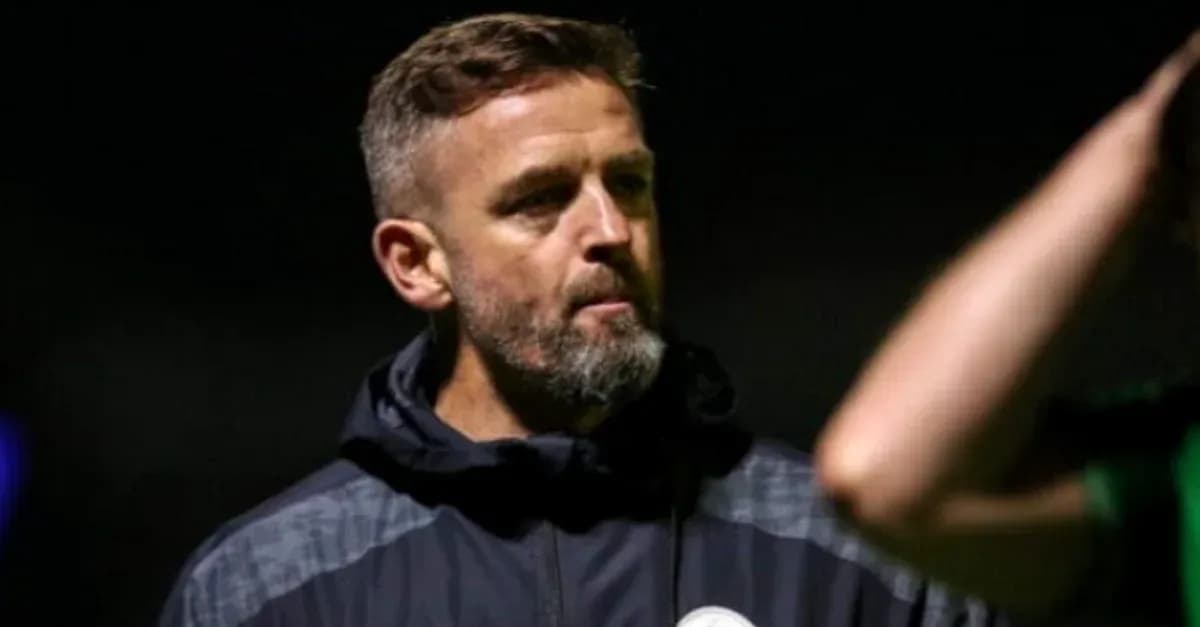
Kevin McHugh has spent most of his adult life carrying Finn Harps on his back. On the pitch. On the touchline. In the academy. On Sunday night, that burden finally snapped.
Harps confirmed his departure in a short club statement. McHugh answered with something far more pointed.
The 46-year-old, who has been at the heart of Finn Park for the best part of three decades, has accused senior figures at the club of a lack of “honesty, decency and support” and says “lines have been crossed way beyond” what he is prepared to accept.
This was not a parting of ways dressed up as mutual. It was a parting of ways laced with frustration and, above all, disappointment.
A club servant pushed too far
McHugh knows the chaos of Finn Harps better than anyone. He grew up in it, thrived in it, and for years helped hold it together.
He scored 186 goals in 439 games across two spells, made his senior debut back in August 1998 against Fanad United in a League Cup tie, and since 2017 has run the Finn Harps Academy. When Darren Murphy left in April 2025, McHugh stepped into the senior manager’s role as well, effectively doubling his workload for 15 months.
He did it, he says, with his “two hands tied behind my back”.
The club’s struggles on the pitch have been obvious. Harps have slipped to the bottom of the First Division. The problems behind the scenes, McHugh suggests, cut far deeper.
In the last six weeks alone, he lost Max Johnston, Idir Zerrouk, Perrault Tokam, Daniel De Lacerda and Temi Ajibola. His budget was slashed. The squad thinned. The fight got harder.
He was prepared to take the hit. Prepared, he insists, to absorb damage to his own reputation if it meant steering the club through a brutal period.
But he was not prepared for what he describes as the behaviour of those above him.
Blast aimed at boardroom
McHugh does not name names beyond the chairman, but he does not soften the blow.
“I am extremely disappointed in the chairman and a few of his close board members that are supposed to be directing this football club,” he said, pointing to “the lack of honesty, decency and the lack of support shown towards myself and my staff during a period when we needed it most.”
This is a club icon accusing its leadership of abandoning the dressing room when the pressure rose. The tone is not angry for anger’s sake; it is weary, hardened, and final.
He admits he never wanted to air grievances in public, yet says he felt compelled to “show support for my staff who have shown nothing but full on commitment, professionalism and dignity throughout all of this and deserved much better treatment from the people involved.”
Then comes a line that tells you everything about the strain behind the scenes:
“Lesser men would have walked months ago with the conditions we were left in to compete at this level.”
He didn’t walk then. He has now.
Harps at a crossroads
The timing of his departure lands just as hope flickers from a different direction.
Filipino entrepreneur Freddy Gonzalez is pushing to take over the club, with his bid expected to go before shareholders in the coming weeks. McHugh has already met him, even after stepping down as first team manager.
Harps’ own statement suggested McHugh would move into a new role “as part of the club's transition to a professional structure”. McHugh, though, makes it clear that nothing is agreed.
Gonzalez, he says, has outlined “short and long-term plans” and understands that McHugh needs time before discussing any potential position. The door is open, but not yet crossed.
What McHugh does not hesitate about is his view of what Gonzalez could bring.
He talks of “complete change within the club” if the buy-out is approved. He calls the direction under Gonzalez “hugely positive” and highlights the “complete clarity” in the prospective owner’s plans.
“Whether I decide to be part of this journey or not,” McHugh says, “there is certainly exciting times ahead for this brilliant football club when Freddie does come on-board.”
From survival mode to something more
For all the anger at how his time in the dugout has ended, McHugh’s words are not those of a man turning his back on Finn Harps. He sounds more like someone refusing to accept that this is all the club can be.
He talks about the “ugly nature of football”, but his gaze is fixed on the people who have kept Harps alive: the fans, the volunteers, the staff who have “gone through the mill in some shape or form down through the years”.
To them, he offers something close to a promise.
He is “delighted” that they might, finally, in their lifetime, see Finn Harps FC “come out of survival mode and into development mode”.
That is the fault line now running through Finn Park. On one side, a club legend who believes lines have been crossed by those in charge. On the other, the prospect of a new owner, a new structure, and a chance to break from the cycle of firefighting.
McHugh has stepped away from the technical area. The question now is whether the club he gave his career to is ready to step away from its old habits.