.svg&w=384&q=75 "Naijagoal logo")

Juventus' Late Collapse: Vicario's Fury and Defensive Failures
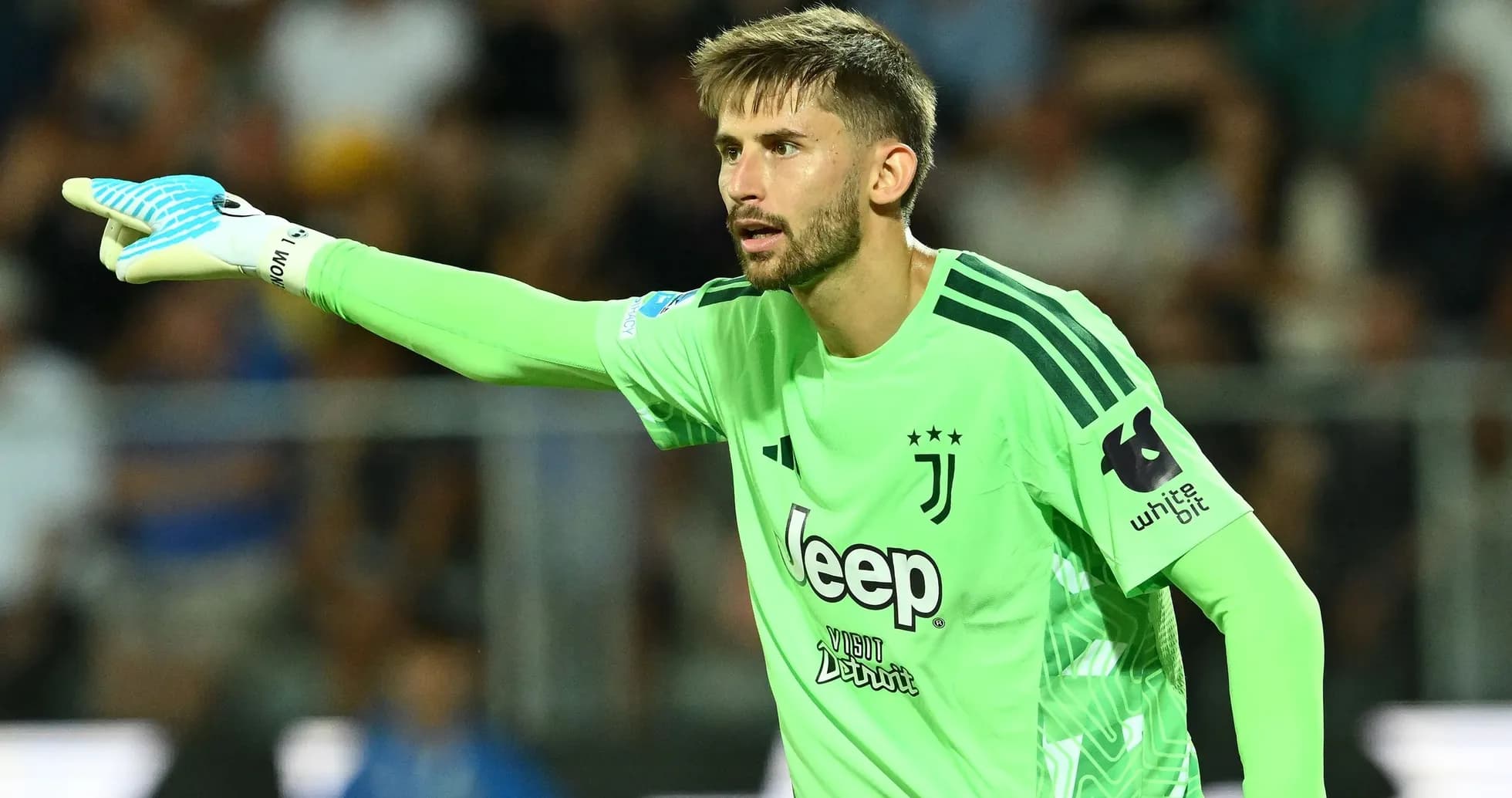
Juventus let the point slip in stoppage time, and Guglielmo Vicario let his teammates know exactly what he thought of it.
The Bianconeri had twice dragged themselves back from behind, only to implode at the death. With the clock almost out, their defensive line disintegrated, Vasilije Adzic ghosted through, and the hosts snatched a winner that felt as much like a gift as a goal. As the whistle went, Vicario, on loan from Tottenham and one of the few to emerge with credit, was seen roaring at his back line, furious at how a chaotic night had ended.
High line, higher cost
This was not just a late lapse. It was 90 minutes of defensive self-sabotage.
Juventus’ offside trap was torn apart repeatedly, the high line looking more like a suggestion than a structure. Sebastiano Esposito struck first, then Kieron Bowie restored Sassuolo’s lead later on, each time punishing a unit that stepped up without conviction and communicated without clarity.
At the other end, Edon Zhegrova almost dragged Juve out of the mess on his own. Twice he produced moments of individual brilliance, twice he hauled his side level with solo efforts that had nothing to do with system or shape and everything to do with raw talent. It should have been enough to steady the game. Instead, the collective failed him.
The defensive third, again, told the real story. Poor positioning. Broken lines. No control in the final minutes. The kind of basics a club of this size simply cannot afford to ignore.
Vicario’s anger: “We lost our balance”
Vicario did not dress it up when he spoke to DAZN afterwards. He made it clear these were not freak concessions; they were the very situations Juventus had drilled to avoid.
“There is great bitterness, because I understand the desire to go and win the game, because we are Juventus and it is our obligation to aim for victory every time, but we lost our balance and we talked all week about this,” the 29-year-old goalkeeper said.
He did not stop there.
“Juventus cannot concede two goals like that. This is a club with a glorious history and we cannot allow goals like that. We need to be more calm and balanced, because we have a team full of quality, and we will be able to create chances.”
The message was blunt: ambition is not the problem. Control is. Juventus chased the win and forgot the basics that protect at least a draw.
No hiding behind injuries
The context is harsh. Juventus are already navigating a demanding stretch with key players out, and the biggest absence of all is their captain. Manuel Locatelli faces four to six months on the sidelines after meniscus surgery, ripping a hole in the heart of the midfield and removing the on-pitch organiser who usually knits everything together.
It would be easy to lean on that as an alibi. Vicario refused.
“We’re sad to be losing Manuel, but it’s a long-term injury, and we do have players of quality in the squad. We can’t just keep seeking excuses,” he stated.
The injuries are real. So, in Vicario’s eyes, is the responsibility.
From late rescue to late collapse
What stings even more is the timing in the wider narrative of their season. Only a week ago, Juventus had found a way to snatch something from a similarly tight game, Federico Gatti coming off the bench to grab a late 1-1 draw against Milan. That felt like a turning point, a sign of resilience.
This felt like the opposite.
Asked whether the dressing room was more filled with anger or regret, Vicario admitted both emotions were running high. The frustration came not just from the defeat, but from how hard they had worked to claw themselves back into it before throwing it away.
“In my view both, because we had managed to turn the tide in our favour. We must be able to control these moments of the match better, because we’ve got the quality,” he noted.
Quality is not the question. Juventus have it, even with Locatelli out and the squad stretched. The question is whether they can grow the composure and tactical maturity to stop nights like this becoming a pattern, rather than a painful warning.