.svg&w=384&q=75 "Naijagoal logo")

Journey to Special Olympics Gold: The Scunthorpe Football Team
On a hot July evening in Scunthorpe, while England’s elite chase a World Cup final in New York, another squad is grinding through its own journey – one measured not in television audiences or sponsorship deals, but in confidence, independence and a shot at Special Olympics gold.
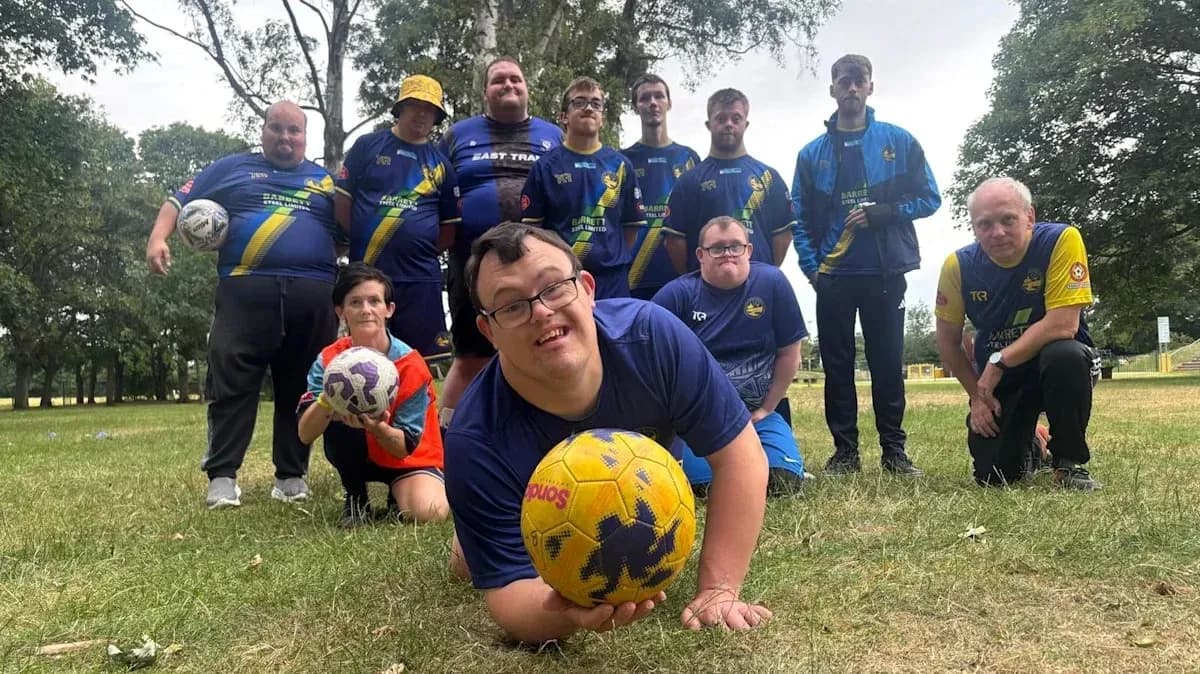
Under the trees in Central Park, in the heart of North Lincolnshire, a group of footballers work through their drills in the shade. The shouts are sharp, the focus absolute. Bibs are straightened, cones reset, balls fizzed into feet. It looks like any serious training session.
It didn’t start that way.
This team began life at Bottesford Town Football Club around a decade ago, created for young adults with Down’s syndrome. A small group at first, trying to find their feet in a game that had often shut them out. Over time, the door opened wider. Players with autism, ADHD and other learning disabilities arrived. The squad grew, and so did the ambition.
Those early sessions were about tiny steps. A first confident pass. A shout for the ball. A smile at a new teammate. Now the same players are pulling on their own colours and preparing to walk out at the Special Olympics GB National Summer Games at Alexander Stadium in Birmingham from 26 to 30 August.
The scale of that leap is written all over Jake’s face.
“I feel happy,” he says, when asked about the tournament. No hesitation. No need to dress it up. He talks about taking corners, then starts offering a quick masterclass in how to “wrap” the ball into the net. He has been here before, winning silver at the Special Olympics in 2017. This time, the target is clear: two goals and a gold medal.
Special Olympics GB exists for people like Jake – for the estimated 1.5 million people in Great Britain living with an intellectual or learning disability. It offers them sport all year round, in their own communities, and a structure where medals are only part of the story. The real currency is opportunity.
Jake’s mum, Sue, has seen that value from the very first session. She has driven the minibus, rattled the collection tins, organised the logistics and, crucially, kept pushing.
Her younger son, Aiden, also has disabilities and is now learning to coach the team. The family’s weekends and evenings are built around football. Around this team.
Sue remembers how it began: a boy who loved the game but couldn’t quite fit into the mainstream.
“My son Jake, he’s got Down’s syndrome and he loves playing football but struggled to play it mainstream,” she explains. “He found it too difficult and couldn’t keep up with the team.”
So she went to Bottesford Town FC and asked for something different – a chance, not a favour. A space where Jake and his friends could play at their own pace, on their own terms.
“For Jake to be able to play football was just such a big thing for him,” she says. “It’s his passion. He loves football and he wanted to be able to play it.”
The impact has gone far beyond first touches and set-pieces. The group has grown tighter, friendships have hardened into something more like a second family. Parents who once feared isolation for their children now watch them joke, argue, celebrate and compete like any other squad.
“When your child is born and you find out they have a disability, it’s a complete unknown,” Sue says. “But my commitment was always that my boys would access as much as possible in their lives.”
Bottesford Town FC have backed that commitment. The players train in a sports hall when the weather turns, then move out onto a 4G pitch that allows them to play all year round. Proper facilities. Proper football.
The path to Birmingham has not been smooth. The team were accepted into the games in 2021, only to see the event cancelled because of the Covid-19 pandemic. Years of anticipation vanished with a single announcement.
“It set quite a few of them back. Jake was one of those who struggled,” Sue admits. The routine disappeared, the social contact shrank, and the big stage they had dreamed of was suddenly gone.
So this year’s tournament carries extra weight. It is a second chance, and it has not come cheap. The biggest challenge, Sue says, has been raising £10,000 to cover travel and accommodation for two teams to compete. Parents, coaches and players have thrown themselves into fundraising, knowing every raffle ticket and sponsored event nudges them closer to Birmingham.
On the training pitch, manager Michael Potts can feel the shift. Sessions are sharper. Voices louder. The countdown has started.
The training, he says, is “ramping up” as the competition draws nearer, and the players are “excited”. The 4G surface has helped them refine their game, encouraging quicker passing and better control. With the squad now including players with a range of intellectual disabilities, the coaching team has had to adapt – tailoring drills, communication and support so every player can contribute.
At one end, Mason stands in goal, surveying the scene like any keeper with a defence he trusts.
He calls it “rock solid”. There’s pride in that description. Asked what advice he would give to England’s men’s team about tightening up at the back, he doesn’t blink: train hard, and make sure the goalkeeper focuses on “throwing the ball out” properly. Simple, specific, straight from someone who knows his craft.
Mason saved a penalty at his last competition. That moment has stayed with him, and he is chasing gold as well.
Taylor, a defender who joined the team a decade ago, is another who has grown up with this project. He talks about how well the training is going, how much work they are putting in. His message to others is blunt: train hard. His prediction is bold: four goals.
As the evening cools and the shadows lengthen across Central Park, the noise from the session doesn’t dip. Instructions cut through the air. Laughter follows a miscontrol, then someone snaps back into focus for the next drill.
From a distance, it could be any ambitious amateur side preparing for a big tournament. Up close, you see something else layered on top: the years of graft, the parents on the touchline who refused to accept that football wasn’t for their children, the players who have turned what began as a tentative experiment into a serious sporting commitment.
Walking away through the park, the scene lingers – shirts clinging with sweat, a goalkeeper barking orders, a defender stepping in front of a shot he doesn’t really want to block but does anyway.
They are chasing medals in Birmingham. They are chasing something bigger too.
When the whistle blows on the Special Olympics GB National Summer Games at Alexander Stadium, the question won’t just be how many goals they scored, or what colour medal hangs around their necks.
It will be how many more doors this team can kick open next.