.svg&w=384&q=75 "Naijagoal logo")
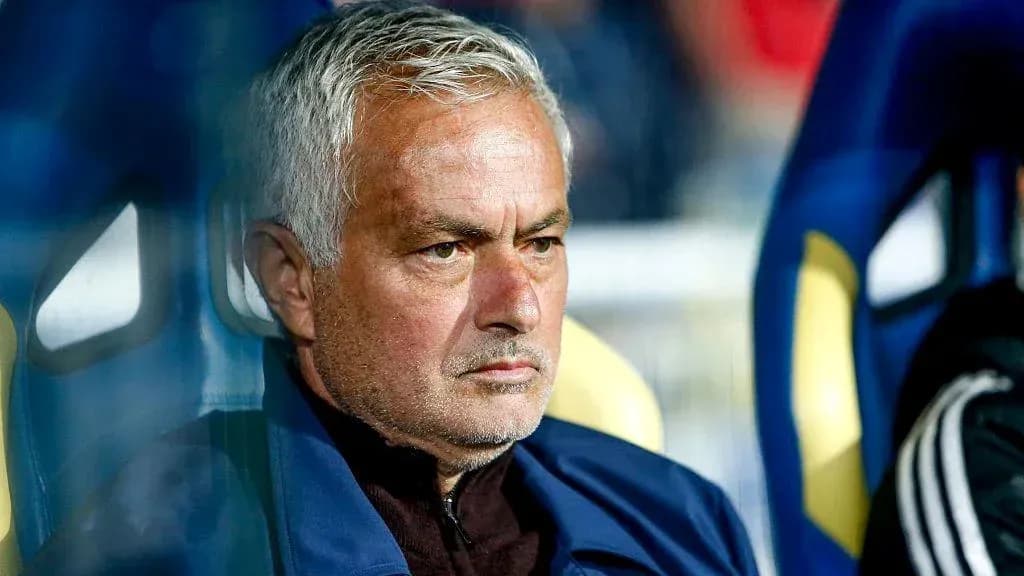

Jose Mourinho's Missed Chance at Manchester United
Jose Mourinho has finally said it out loud. He shook hands on succeeding Sir Alex Ferguson at Manchester United – then walked away and went back to Chelsea.
The revelation comes in a new Netflix documentary about Mourinho’s career, and it pulls back the curtain on one of the great “what ifs” of modern English football.
The job that was his – until it wasn’t
“When I left Real Madrid, I signed to go to Manchester United after Sir Alex,” Mourinho says in the film. No ambiguity. No hint. Signed.
Ferguson, the man who built United’s modern empire and collected 13 Premier League titles, backs him up. “Mourinho was offered the job,” he says. “I sat him down and explained the situation. As far as I was concerned, he was accepting. And then, within hours, it changed.”
Those “hours” altered the course of two giants – and perhaps the Premier League itself.
United, preparing for life after a 26-year reign at Old Trafford, turned instead to David Moyes, the long-serving Everton manager handpicked by Ferguson. Moyes arrived as “The Chosen One”, immortalised on a banner at the Stretford End. Mourinho, meanwhile, retraced his steps to Stamford Bridge, where he had already become a legend with back-to-back league titles in 2005 and 2006.
The phone call that broke Ferguson’s plan
What changed? Not money. Not power. Not trophies. It was Mourinho’s sense of loyalty – and his need to feel wanted.
Ferguson recalls the moment the deal slipped away. “One night, he phoned me and he was crying. He said: ‘Alex, I can't take it. I've given my word to Chelsea and I'm not going to break my word.’ “The reason he gave to me I could understand, but I was disappointed.”
Mourinho admits the pull of Old Trafford was real, and deep.
He describes himself as “very flattered” to be offered the chance to replace Ferguson, calling Manchester United a club with “incredible appeal”. For a coach obsessed with history, status and the theatre of the game, it was the ultimate stage.
But another emotion won.
“One thing is love for football, another thing is love for a certain club,” Mourinho says. “I think this is more powerful than love for football and, fundamentally, after Real Madrid I needed to feel that I'm loved.
“For me to lose the chance to be the coach to succeed Sir Alex Ferguson was dramatic, but I don't regret it because it was a decision that I made with my heart.”
Two paths, two very different outcomes
The contrast that followed could hardly have been sharper.
Mourinho returned to Chelsea in 2013 and quickly restored his authority. He delivered a third Premier League title and added the League Cup, reaffirming his status as the man who could still bend a dressing room – and a season – to his will.
At Old Trafford, Moyes never came close to that kind of control. Tasked with following the most successful manager in English football history, he lasted just 10 months. The “Chosen One” banner became a symbol not of continuity, but of a misstep in the club’s succession plan.
The sense of what might have been grew with every dropped point, every fractured performance, every reminder that Ferguson’s era had ended without a seamless handover.
Mourinho’s second chance at Old Trafford
United circled back to Mourinho in 2016, three years after he had turned them down and with Louis van Gaal’s turbulent spell over.
This time, there were no tears on the phone, no late change of heart. Mourinho walked into Old Trafford as manager at last, not as Ferguson’s heir but as the man tasked with dragging the club into a new phase.
Across two and a half years, he delivered silverware: the League Cup and the Europa League, tangible proof that he could still win on the biggest stages. Yet the relationship frayed. Results dipped, the mood darkened, and in December 2018 he was sacked after a slump that felt all too familiar for a club still searching for a post-Ferguson identity.
The irony lingers. Mourinho did become Manchester United manager – just not at the moment when Ferguson wanted him most, and not with the power of a direct succession behind him.
Instead, the story now belongs to a different timeline: a signed commitment that never became a contract, a late-night phone call, and a manager who chose the embrace of Chelsea over the inheritance of an empire.
Football’s history books record the trophies. Its great regrets live in stories like this.