.svg&w=384&q=75 "Naijagoal logo")

Jim McGuinness Extends Donegal Tenure into 2027
In the end, he stayed.
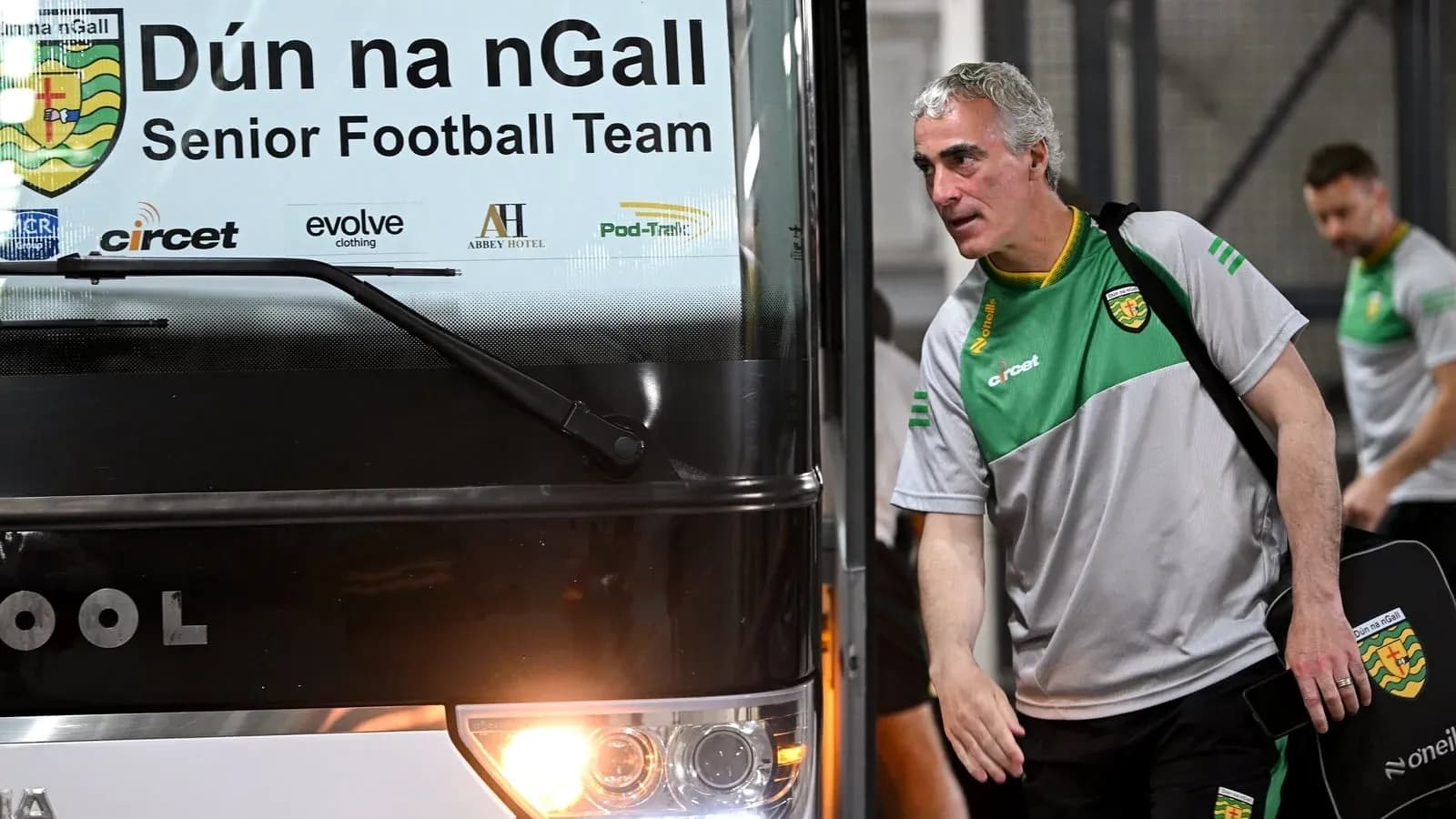
After weeks of will-he, won’t-he, Jim McGuinness has taken up the option of a fourth year in charge of Donegal’s senior footballers, extending his second spell at the helm into 2027. Given how 2026 unravelled, it always felt more likely than not. Men like McGuinness do not walk away from a season that ended like that.
Donegal’s championship exit on the longest day of the year still jars. Croke Park bathed in midsummer sun, the stage set, the energy seemingly right. Yet Donegal, for all their effort, looked like they were dragging themselves through treacle against Dublin. They somehow forced extra-time – Michael Murphy, of course, landing a late two-pointer that briefly jolted life into them – but it only delayed the inevitable. The Dubs pulled clear with something to spare.
As the camera lingered on Murphy, the question hung in the air: had we just seen his last act on Jones’s Road? At 37, the Tír Chonaill talisman has yet to reveal his inter-county future. Donegal’s next steps are impossible to fully map until that piece of the puzzle drops.
A season that turned on its head
For six months, Donegal had looked like something close to the finished article. Calling their championship exit unbelievable is not far off the mark. They had the scars of 2025, the hurt of an All-Ireland final where they were reduced to bemused observers as Paudie Clifford conducted Kerry’s orchestra. This was supposed to be the year they answered back.
Their Ulster defeat to Down could be ring-fenced, or so the argument went. One of those days. The Mourne men arriving with a point to prove, intent on reminding everyone of their own tradition. The Letterkenny loss, while jarring, at least spared Donegal a few more awkward provincial hurdles. The real business lay ahead. Donegal were, at worst, second favourites for Sam Maguire.
Nobody shouted that down. They had the receipts. A Division 1 title secured in style at the end of March. Kerry, even minus a few regulars, taken apart at Croke Park. David Clifford held to just two scores, his late goal coming when Donegal had already hauled up the ladder. McGuinness’s side hunted, harried and out-thought the Kingdom. They looked hungry, almost evangelical about laying down a new template after that 2025 final.
McGuinness himself had been stung by the criticism of that All-Ireland. His tactical acumen had been questioned, his aura prodded. He responded early this year, saying only “an All-Ireland winning manager or a top coach” had the standing to interrogate his methods. It was a line delivered with intent. Jimmy was not for shrinking.
Killarney, collisions and a statement win
Then came Killarney in May. Not just a test, a collision. Donegal didn’t just edge Kerry; they beat them up and beat them on the scoreboard. McGuinness appeared to shove Diarmuid O’Connor on the sideline, Micheál Burns saw red, and David Clifford thundered into a hefty shoulder that helped light the fuse. The football was ferocious, the needle unmistakable.
Donegal’s emphatic win almost became the second story. McGuinness’s spiky exchange with Newstalk’s Tommy Rooney and the looming threat of a suspension dominated the aftermath. In the end, the CCCC decided the referee had dealt with matters on the day. No ban. No Ger Brennan-style exile to the “room of non-involvement”. McGuinness walked away with his touchline presence intact and his team anointed as All-Ireland favourites before Whit weekend.
At that point, there was no obvious reason to doubt them.
And then June arrived.
Two weekends, one collapse
Across two weekends, expectation was stripped bare. The Donegal that had swaggered through spring disappeared. The drop-off was stark.
Cork came to Ballybofey with a quiet belief they could do a job. For a long spell they looked second best, but when they finally clicked, Donegal had no answer. The verve that had dismantled Kerry was nowhere. The hosts looked flat, almost listless, as the Rebels finished stronger and stole away with a result that changed the temperature of Donegal’s summer.
To borrow from Lady Bracknell, losing to Down might be chalked up as misfortune. Losing again on home turf? That smacked of carelessness. The truth, of course, runs deeper. By the time Donegal reached Croke Park again, the edge that had defined them earlier in the year had gone. They arrived without the drive required to take the next step.
“Our players were running out of gas and looking on from the outside it is just a mystery,” said Brian McEniff, the man synonymous with Donegal football, as he tried to untangle what had happened since that league final. If McEniff was baffled, he was in good company.
Had Donegal poured too much emotion into keeping Kerry down? Did that fractious day in Killarney drain the very reservoir of adrenaline they would need later? You could curse the luck of the draw, but the ledger since the 2025 All-Ireland tells a more uncomfortable story. The big days have not yielded the big performances often enough. For McGuinness, even with a Division 1 title in his back pocket, that will sting.
Looking to 2027: timing the run
So he returns with something to prove.
Next year, his gaze will inevitably drift beyond May. The league? Donegal already have that title and a handful of Ulsters banked. Those competitions still matter, but 2027 will be judged on what happens after the early summer cut-off. That window is where he must harden the likes of Shea Malone, Max Campbell, Turlough Carr and Conor MacCahill, building depth and resilience rather than just spring form.
The Michael Murphy question will answer itself in due course. With him, Donegal’s ceiling rises. Without him, McGuinness must fast-track a new hierarchy of leaders. Either way, the plan has to be calibrated for July, not March.
The bookmakers still believe. Donegal sit as second favourites for Sam Maguire next summer. Mayo’s run this year underlined the modern truth: it’s all about timing. Slaying a giant in May counts for little if you’re out of gas when the real music starts. Donegal have lived that lesson the hard way.
This could be McGuinness’s last year in inter-county management. If it is, he will want the balance sheet to look very different: fewer alarming drop-offs, more days when his team finish as strongly as they start, no more scenes of players running on empty when the season is on the line.
The pressure that comes with that is obvious. But so is the opportunity. McGuinness has been around long enough to know you don’t always get a second chance at a second act.