.svg&w=384&q=75 "Naijagoal logo")

Jermain Defoe's Short-Lived Management Tenure at Woking Ends
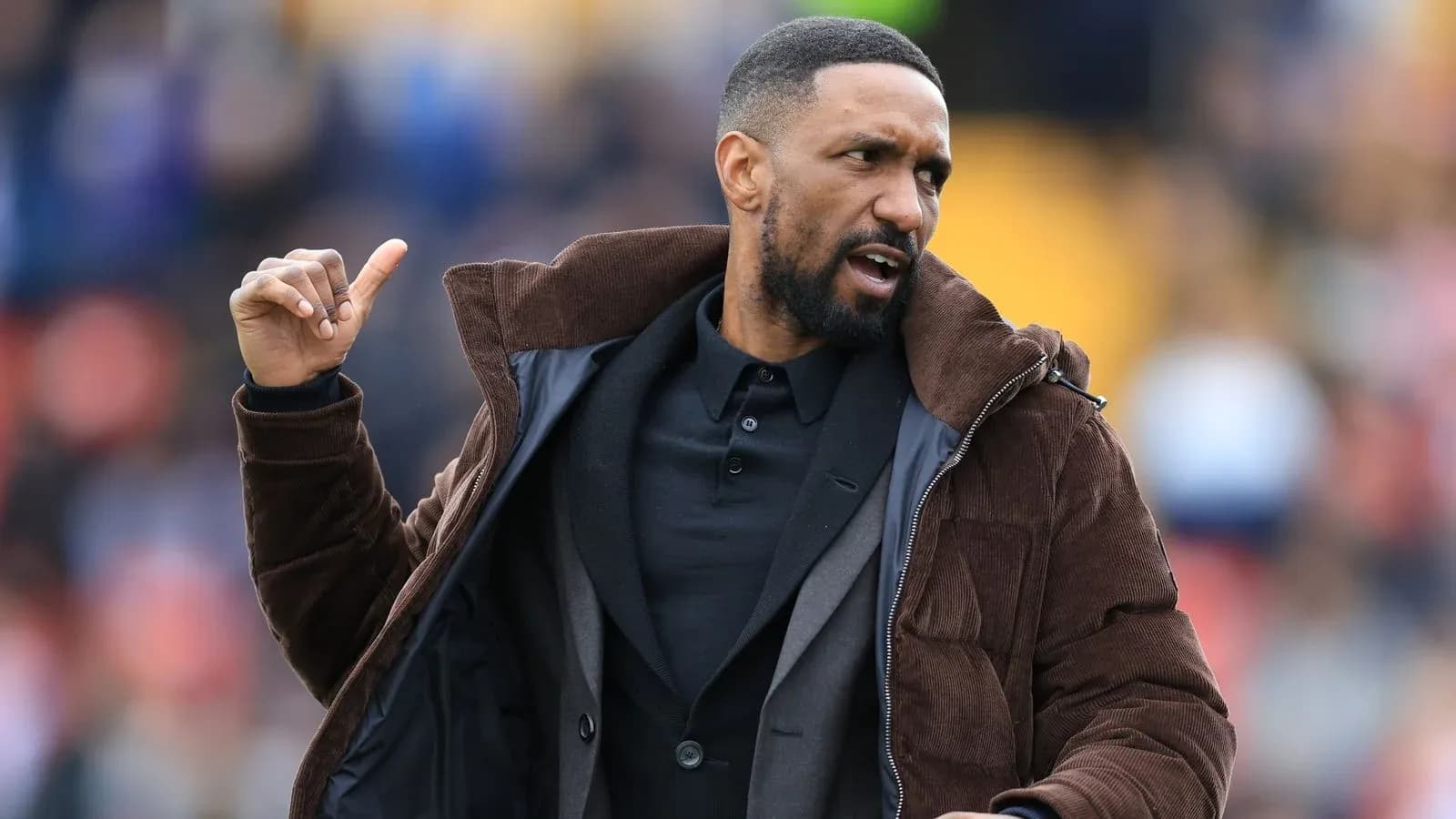
Jermain Defoe’s first job in management has ended after just four months – and the fallout at Woking is already turning bitter.
On Thursday, the National League club announced that Defoe had left by mutual consent. By Saturday morning, the tone had changed. Director of football Jody Brown went public with a pointed, detailed account that cast serious doubt on the former England striker’s version of events.
“People do not just fail to turn up”
Defoe, who took charge in March and oversaw six games – winning two and losing one – framed his departure as the result of circumstances that made it “impossible” for him to continue. He called his spell at Woking an “eye-opening” experience and spoke of pride in the work he, assistant Paul Bracewell and Karl Halabi had started.
Brown’s response was stark.
In a strongly worded statement, he claimed Defoe and Bracewell failed to attend a scheduled meeting with club directors and the head of operations – and then did not turn up to that day’s training session either.
“Every football club faces challenges,” Brown said, listing the usual internal demands from players, media teams, medical staff and even car park attendants. “But people do not just fail to turn up.”
That line cut through the polite language of “mutual consent”. It painted a very different picture to Defoe’s carefully crafted Instagram farewell.
Backing the appointment – and then questioning it
Brown did not attempt to duck his own role. He admitted the decision to hire Defoe was his recommendation and said he “take[s] full responsibility” for it.
“After meeting with him on several occasions, I believed he was the right person to lead the club into an exciting new era,” Brown said. He then delivered the line that will sting any former elite player trying to make it in the dugout: “As we have seen many times before, success as a player does not always translate into management and leadership.”
Brown insisted Woking were “fully committed” to backing Defoe. Recruitment, staffing calls and football decisions, he said, were “heavily influenced” by the 43-year-old. This was no token appointment. The club, in Brown’s telling, handed him the keys.
Yet behind Defoe’s upbeat public messages, concern was growing.
Reports requested, but never received
Brown revealed that, in recent weeks, feedback from “players, staff and other departments” had raised “growing concerns” about preparations for the new season.
To get a clearer picture, Brown asked Defoe and Bracewell for a short report. Nothing complex: squad depth, recruitment targets, any operational issues that needed addressing so the club could “accelerate preparations for the season”.
That request, Brown said, went out more than once.
The report never arrived.
A meeting was then set up – directors, manager, assistant manager, head of operations – to go through those preparations in detail. On a day when planning for the season should have been sharpened, Woking’s key football figures were due around the same table.
According to Brown, Defoe and Bracewell did not show up. They did not attend training either. No serious concerns had previously been raised directly with him, Brown added, and he refused to speculate on Defoe’s reasons.
In the space of a few sentences, the breakdown stopped being a vague “circumstance” and became a concrete flashpoint: a no-show at a crucial moment in pre-season.
Defoe’s version: pride, frustration and a swift exit
Defoe has not yet responded to Brown’s claims. Sky Sports News has contacted him for comment.
His only public explanation so far came in that Instagram statement, where he confirmed he had “mutually agreed” to leave Woking and said “circumstances have ultimately made it impossible for me to continue in the position.”
He stressed how proud he was of the work done and insisted he felt “we were building something special.” He thanked owner Todd Johnson, praised the supporters and reserved his strongest emotions for the players, saying he was “genuinely gutted” for a “fantastic” group.
“I’m really disappointed the journey has ended so soon,” he wrote, while also describing the experience as one that will “undoubtedly make me stronger for the next challenge in my career.”
The language was reflective, almost philosophical. It did not hint at the kind of internal friction Brown has now laid bare.
From “something special” to smoke and confusion
The speed of the collapse is striking.
Only weeks earlier, Sky Sports cameras had followed Defoe into his first steps in management. His Woking side opened with a six-goal thriller against Eastleigh, then played out a goalless draw with Braintree Town. The results were modest, but the mood around Defoe was ambitious.
“People talk about it being impossible. That means nothing. I truly believe that we can do something special,” he said after the Braintree game, even talking up the possibility of promotion to the EFL.
For a man who built his reputation on seizing moments in the penalty area, the challenge of dragging a National League club upwards clearly appealed. “When you become a manager and a coach, you want that sort of challenge,” he said. “You want to get up in the morning and have a goal to strive to.”
Those EFL hopes have now gone up in smoke, at least in this chapter of his career. The “eye-opening” nature of the job, as he described it, has been underlined in the harshest way: public criticism from the very man who brought him in.
What next for Woking – and for Defoe?
For Woking, the priority is obvious. Pre-season planning has been disrupted, recruitment decisions have been shaped by a manager who has already gone, and the director of football has just admitted to a major misjudgment in appointment. The club must now move quickly to steady the dressing room and find a new voice on the touchline.
For Defoe, the questions are more personal, and more pointed. Can he convince another club that the issues at Woking were truly “circumstances” beyond his control? Or will Brown’s accusation – that “people do not just fail to turn up” – linger over every future interview?
The former striker wanted a challenge. He has one now, and it lies not on the pitch, but in rebuilding his reputation as a manager before the next opportunity arrives.