.svg&w=384&q=75 "Naijagoal logo")

Jamshedpur FC Withdraws from Indian Super League
Jamshedpur FC, the club that turned a steel city into one of Indian football’s loudest cauldrons, is walking away from the Indian Super League.
Nine years after Tata Steel successfully bid for an ISL franchise and planted top-tier football in Jamshedpur, the company has withdrawn its team from the league, confirming that the former champions will not feature from the 2026-27 season onward.
The announcement, delivered in a statement on Friday, lands like a punch to the gut for a league that only recently shifted to a club-led model. For Jamshedpur’s supporters, it cuts even deeper. The JRD Tata Sports Complex, affectionately christened ‘The Furnace’, had become one of the ISL’s most distinctive venues: noisy, full, and fiercely local.
From dream project to champions
Tata Steel won the bid for the Jamshedpur franchise in 2017, extending the group’s long and serious relationship with Indian football. The club quickly carved out its own identity, drawing big crowds and building a reputation for honest, hard-running football.
The high point came in the 2021-22 season. Under Owen Coyle, Jamshedpur FC surged past more fancied names to be crowned ISL champions, a title that seemed to validate the entire project. A steel town had a champion team; the narrative wrote itself.
Now, when the ISL returns in October, that champion badge will sit on the shelf. Jamshedpur FC will be missing from the fixture list.
“Jamshedpur FC would like to confirm that it will not be participating in ISL from 2026-27 season onwards,” the club said. The statement stressed that JFSPL remains committed to the “continued growth and development of football in India,” highlighting ongoing work at grassroots level and the intent to keep identifying and nurturing young talent.
What the club did not say was why.
Money, uncertainty, and a stunned staff
Behind the scenes, the picture looks far less polished. Sources indicate concerns over mounting losses and questions in some quarters about the league’s long-term sustainability. Those worries, simmering for a while, have now boiled over into a full-scale exit.
The club has already informed the All India Football Federation of its decision. Internally, the news hit hard. CEO Mukul Choudhari convened a staff meeting and told employees that the senior team would no longer continue. Close to 50 members of the administrative and technical staff, spread across the first team, youth, and grassroots operations, have been left staring at an uncertain future.
On the football side, the situation is just as tangled. At least 12 senior players remain on long-term contracts. Owen Coyle, the coach who delivered the ISL title, is also still contracted. There is no clarity yet on how those deals will be resolved, or what comes next for the professionals who signed on believing the project had time and backing behind it.
Six other players, including former India midfielder Raynier Fernandes, Abhishek Ambekar, Aman CK, Devendra Murgaokar, Leewan Castanha and Provat Lakra, were brought in on short-term contracts solely for the Durand Cup. For them, the horizon is even shorter.
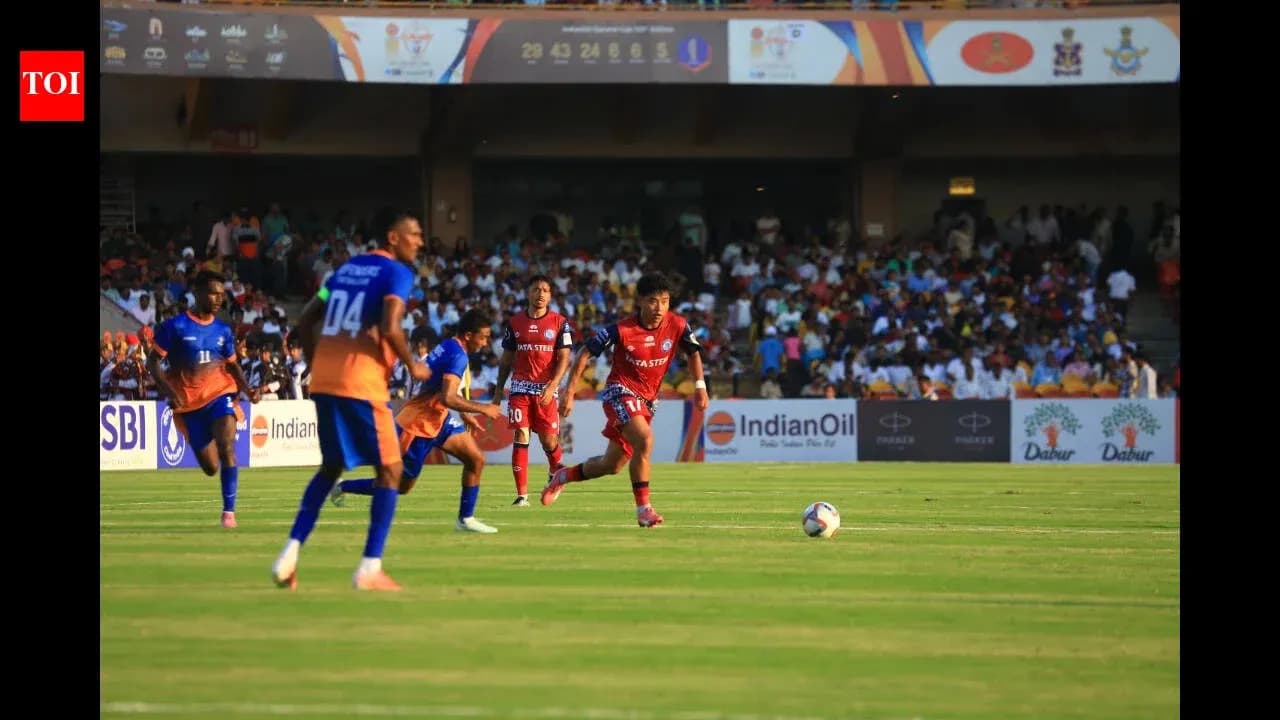
And still, the team plays on. Jamshedpur’s senior side is currently competing in the Durand Cup, a campaign now framed by the knowledge that this era is closing.
A blow to the ISL’s new model
The timing of Jamshedpur’s withdrawal stings for the league as well. For the first time, the ISL is operating under a club-led structure, with teams collectively running the competition through a dedicated operating entity. The All India Football Federation retains only a 10% ownership stake in the league framework.
In that context, losing a franchise backed by Tata Steel is more than just a change of names on the fixture list. It raises uncomfortable questions about the economics of Indian club football and the cost of sustaining a team at the top level, even for a corporate giant with deep roots in the sport.
Tata’s legacy in Indian football
That legacy is substantial. Long before the ISL, the Tata Group’s Mumbai-based side collected some of the country’s oldest and most prestigious trophies, including the Durand Cup, IFA Shield and Rovers Cup. The group then doubled down on development, creating a residential football academy that, over nearly three decades, has supplied close to 150 players to various Indian teams.
Tata Steel also helped connect Indian football to the wider world, bringing clubs like PSV Eindhoven and Sao Paulo to the country for friendlies against India, giving fans and players a rare glimpse of elite-level football up close.
That history is why this decision lands with such weight. This is not a disinterested owner walking away from a passing fad. This is one of Indian football’s longest-standing patrons stepping back from the top tier of the domestic game.
The statement insists that Tata’s work in youth and grassroots football will continue. The academy pipeline, the search for young talent, the effort to build pathways from local grounds to national and international stages — all of that, the group says, remains intact.
But when the ISL kicks off without the roar of The Furnace, without the red shirts of Jamshedpur pressing high and playing hard, one question will hang over the league and the game itself: if even a project like this cannot be sustained at the top, who can?