.svg&w=384&q=75 "Naijagoal logo")
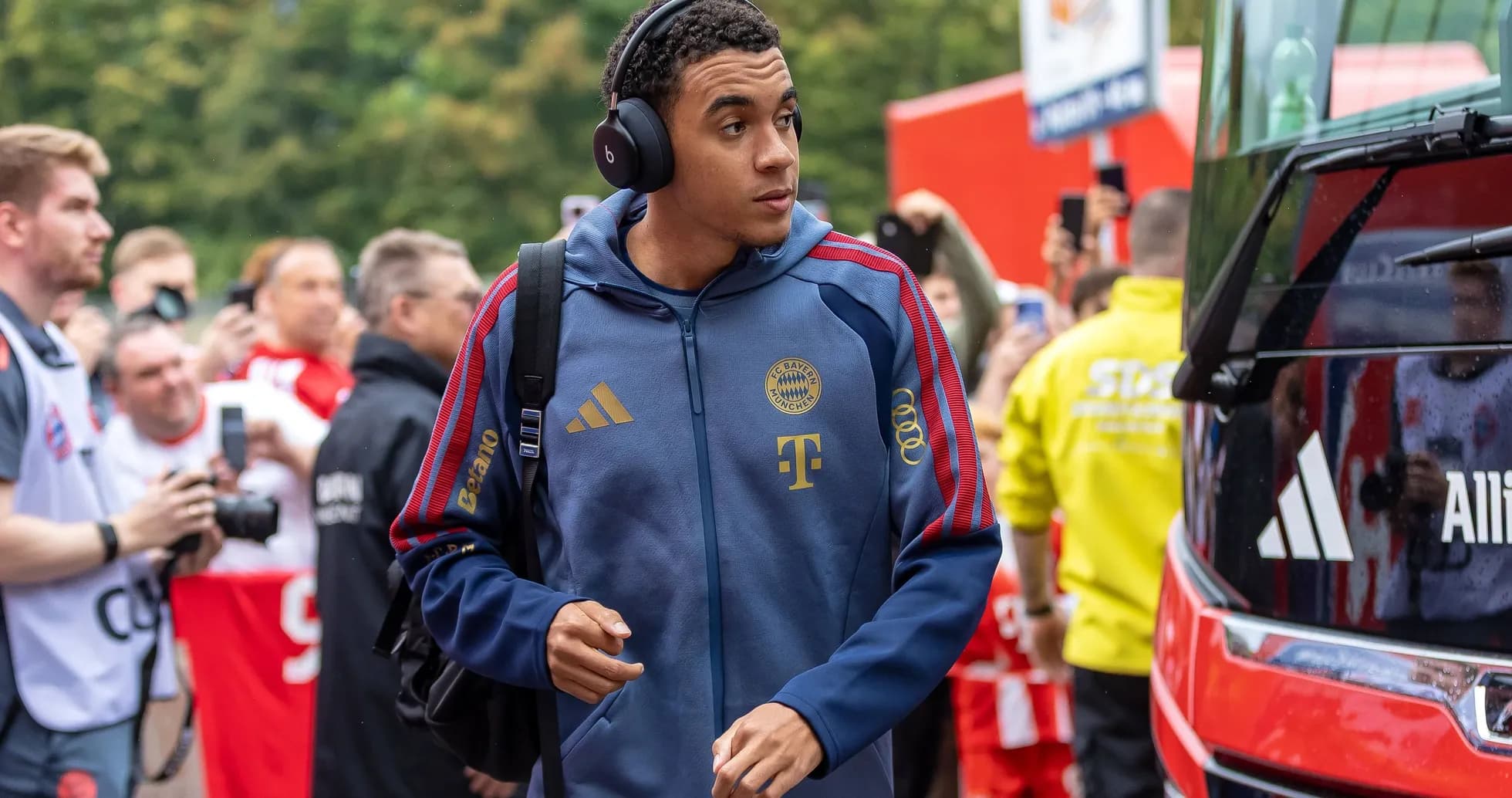

Jamal Musiala Addresses Health Concerns After Collapses
Jamal Musiala has moved to calm fears over his health after collapsing twice in four days, revealing he has been diagnosed with brief, treatable neurological episodes.
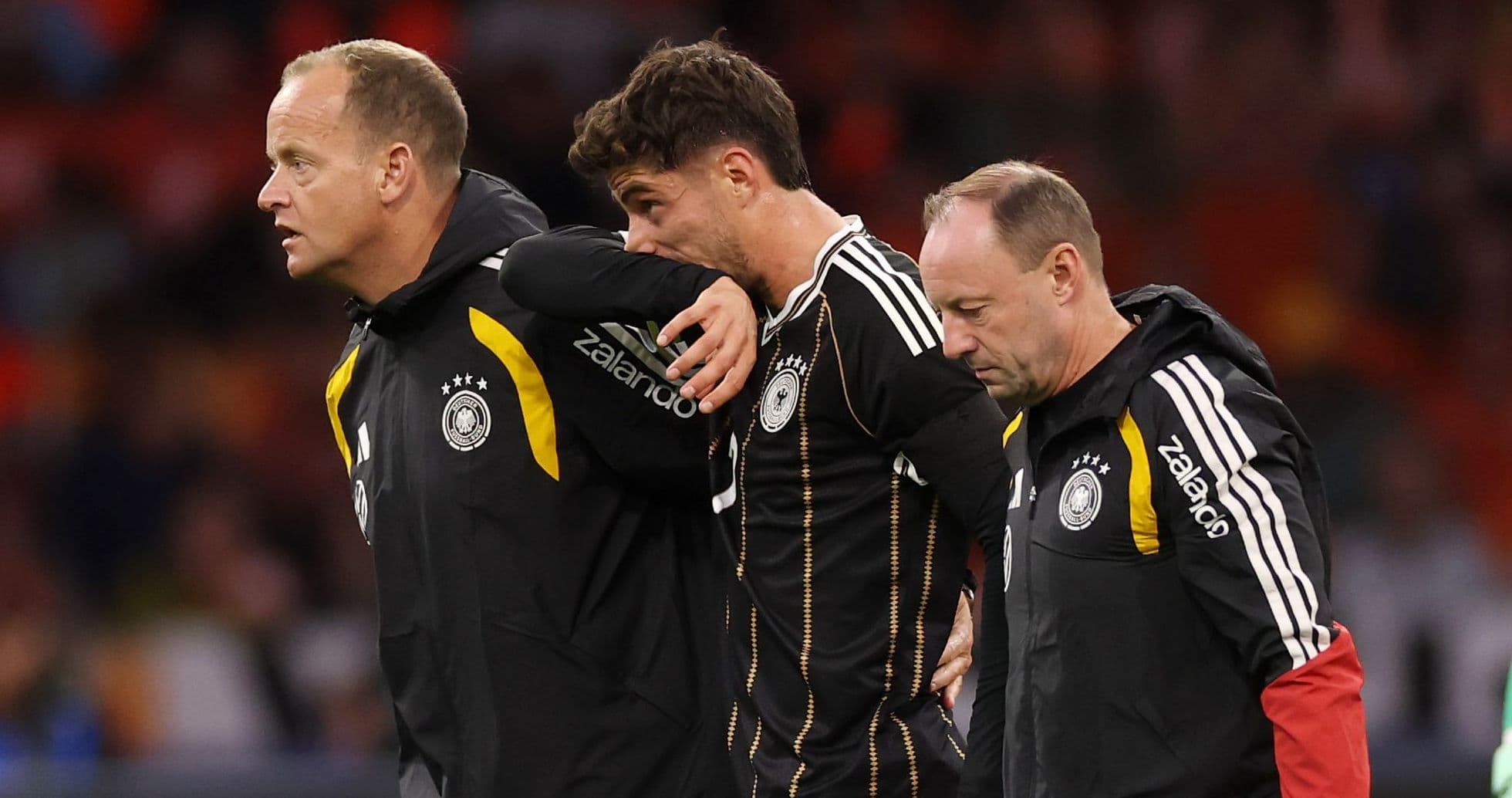
The Bayern Munich and Germany midfielder went down again earlier this week during a 4-2 friendly win over Heidenheim, just six minutes after coming on as a substitute. It was a chilling repeat of what had happened against RB Leipzig in the Telekom Cup days earlier, when he also suddenly slumped to the turf.
On both occasions, medical staff rushed on, helped him from the pitch and took him straight for tests. Images of the 23-year-old looking dazed and confused spread quickly, raising immediate concern that one of European football’s brightest talents might be facing a serious, possibly career-threatening problem.
Musiala: ‘Easily treatable’ episodes
Musiala chose to address the situation himself. In a post on Instagram after the Heidenheim match, he explained that doctors had diagnosed him with “brief, temporary but easily treatable episodes of absence, which are caused by a neurological dysfunction.”
He acknowledged the shock of the scenes but underlined his belief that this is a hurdle, not a roadblock. The Bayern playmaker stressed he remains “optimistic” about both his treatment and his ability to continue playing at the highest level.
Behind the scenes, Bayern sources echoed that message. Speaking to German press agency DPA, club insiders made it clear there is currently no indication that Musiala’s career is in danger. They pointed out that his participation in the last two games had been signed off after extensive talks with medical specialists and described his involvement as “completely unproblematic” from a clearance standpoint.
What Musiala is dealing with
The episodes Musiala referenced are known as absence seizures, historically called “petit mal.” They are a form of epilepsy, typically split into typical and atypical types.
In a typical absence seizure, a person abruptly stops what they are doing and appears to “switch off” for 10 to 20 seconds. They may stare blankly, sometimes with a brief upward flutter of the eyes, before snapping back to normal as if nothing happened.
The Epilepsy Foundation describes the cause as “brief abnormal electrical activity in a person’s brain.” These seizures can develop in adults and remain undiagnosed for long periods, which helps explain how a top-level athlete can reach this stage of a career before an issue surfaces so visibly.
The condition can be frequent – the foundation notes that some people experience “hundreds of brief absence seizures a day” – yet still be manageable. With targeted medication and monitoring, many live without restrictions on physical activity, a key point in the context of an elite footballer’s workload.
Caution at Bayern as season looms
For Bayern, the timing is delicate. The German champions are about to launch their competitive season with a high-profile clash against Borussia Dortmund at Signal Iduna Park in the newly rebranded Franz Beckenbauer Supercup.
After that, the Bundesliga title defence starts in Munich on Friday, August 28, against VfB Stuttgart, with expectations as heavy as ever after last season’s domestic double.
Inside the club, the stance is clear: no risks. Officials and medical staff will monitor Musiala closely over the coming days and weeks, tracking his response to treatment before deciding when he can safely return to competitive action.
Bayern know what he means to their future. The question now is not whether Jamal Musiala will play again, but how quickly he and the club can turn a frightening episode into a controlled, managed part of a long career.