.svg&w=384&q=75 "Naijagoal logo")

Jamal Musiala's Absence Seizures: Bayern's Response and Support
Jamal Musiala had barely stepped onto the pitch before the worry set in again.
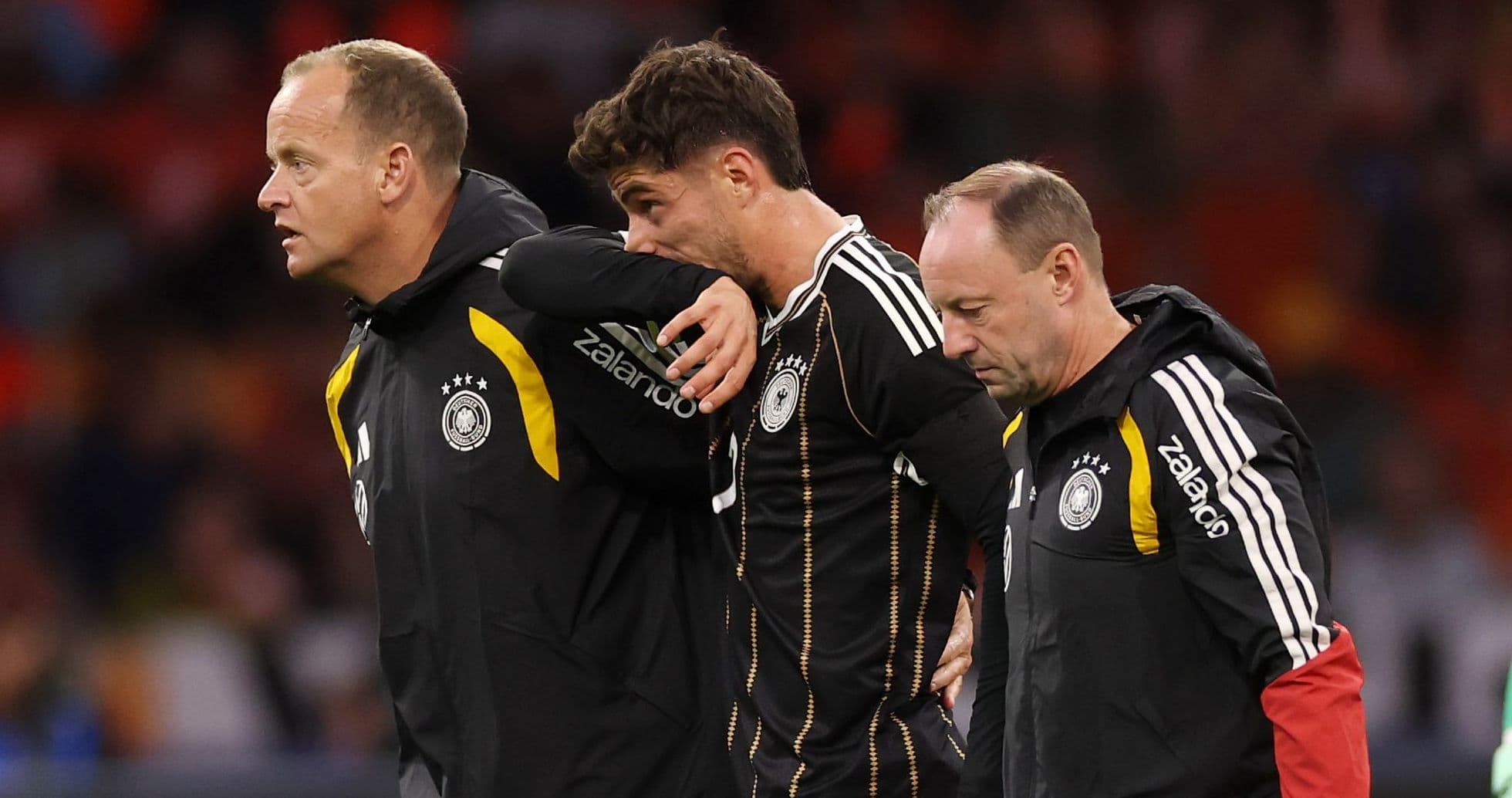
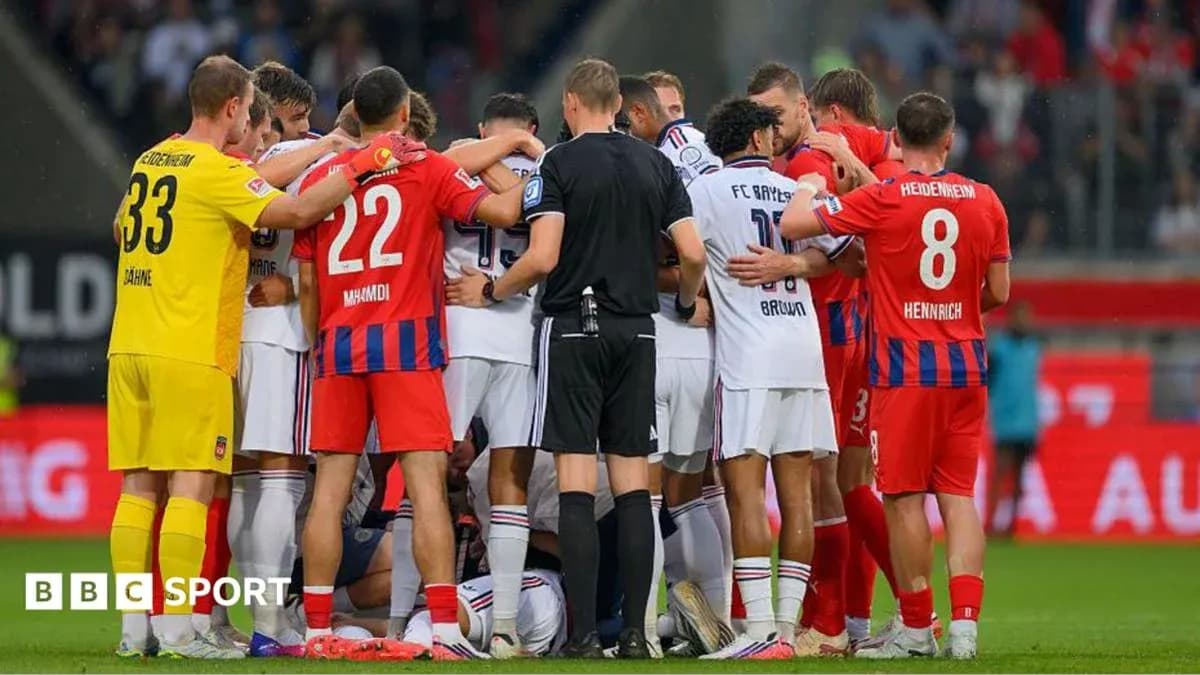
Eight minutes after coming on as a second-half substitute in Bayern Munich’s pre-season friendly against Heidenheim on Tuesday, the 23-year-old collapsed – the second such incident in four days, and a chilling repeat of what happened against RB Leipzig on Saturday.
Once more, team-mates rushed towards him. Once more, Harry Kane was among the first to comfort him.
This time, though, there was an explanation.
Musiala later revealed he is experiencing “easily treatable absence seizures” caused by a form of “neurological dysfunction”. A phrase that sounds clinical, almost harmless, until you picture one of Europe’s brightest attacking talents suddenly losing balance in front of tens of thousands of people, twice in the space of a long weekend.
Bayern knew before the World Cup
Inside Bayern, this is not a completely new story.
Honorary president Uli Hoeness admitted to Sky Sports that the club had been aware of Musiala’s issues for some time, dating back to before the World Cup. Until last weekend, though, the problem had never surfaced so starkly during a match.
“We have been aware of the problems for some time,” Hoeness said. “But last weekend against Leipzig was the first time it happened on the pitch and was visible to everyone.
“We thought that if it didn't happen again so quickly, the medication he is taking would help. But when it happened again four days later, in the same way, I was stunned.”
So were many Bayern supporters. Social media filled with questions: why was Musiala back on the field so soon after collapsing on Saturday?
The club’s hierarchy moved quickly to defend the decision. Bayern insist the Germany international was cleared to play by medical specialists and that the process was thorough.
“We've already taken precautions,” Hoeness explained. “The doctors treating him, the neurologists and specialists, have provided us with written confirmation – because this was absolutely essential for us – that, in their view, there are no concerns regarding Jamal taking part in high-performance sport.
“Without that, we would have been acting negligently. Since we've had this written confirmation, we've been sleeping a little more soundly.
“But I must say, I'm rarely at a loss for words or without a clear solution. We'll have to feel our way through this new situation first.”
Kane: “Just about supporting Jamal”
Inside the dressing room, the reaction has been emotional rather than procedural.
“Jamal is obviously going through a bit of a difficult moment right now,” Kane told BBC Sport on Wednesday. “I know he posted on social media about the small condition he has and from our point of view it is just about supporting Jamal.
“He is going through something that not everyone goes through, but there are also people who have dealt with it before and he is doing everything possible to be his best version.”
Kane spoke like a captain who has seen a team-mate pushed to the limit by misfortune.
“He is a great player, extremely talented,” he said. “He is a big part of our team. We feel really sorry for him and frustrated for him when things happen like they do in the last couple of games.
“He has the full support from everyone here at Bayern and his friends and family, and we will be there to help him deal with it.
“He came off the back of a tough injury last season, I know how much he works behind the scenes and on the training pitch. From our point of view it is just to be there to support him and not just from my point of view, but the whole team as well.”
Musiala himself tried to bring calm. In a statement on Instagram after Tuesday’s collapse, he said the absence seizures had become part of his everyday life.
What are absence seizures?
Strip away the fear and the headlines, and the condition Musiala has described is one that neurologists know well.
Absence seizures are a type of generalised seizure that typically affect children and young adults. They come in two forms: typical and atypical.
Dr Meneka Sidhu, consultant neurologist at the National Hospital for Neurology and Neurosurgery in London, explains that typical absence seizures usually last only a few seconds. From the outside, they can look like nothing more than a brief daydream – a blank stare, a pause in movement.
In reality, the person is experiencing a short-lived loss of awareness. They may lose balance, become unresponsive for the duration of the episode, and then snap back as if nothing happened.
“It can be very short-lasting, and the person can continue like nothing happened,” Dr Sidhu said.
Atypical absences can be more disruptive. They tend to last longer and may be accompanied by automatic movements – fidgeting with the hands, eyelid fluttering, lip smacking. In some cases, people fall.
If absence seizures repeat over more than 24 hours, that pattern can point towards epilepsy, though medication often brings the condition under control.
“For anybody affected by epilepsy, it is important to try to identify triggers,” Dr Sidhu added. “For people who play sport, triggers may include hyperventilation and dehydration.
“When effectively treated, there is no reason absence seizures should stop anyone playing sport.”
That last line matters in Musiala’s world. Elite sport has already seen athletes manage similar issues. Rugby player Tommy Freeman, for instance, began having absence seizures at 14, was later diagnosed with epilepsy and now plays for Northampton and England while managing the condition with tablets.
A brutal 18 months
The seizures are only the latest blow in a period that has repeatedly derailed one of Europe’s most gifted young attackers.
Musiala’s 2024-25 campaign ended in early April because of injury. Barely a week later, he was involved in a serious traffic accident.
He still forced his way back two months on to play at the Fifa Club World Cup, only for disaster to strike again. In the quarter-final against Paris St-Germain, a collision with Gianluigi Donnarumma left him with a broken leg and dislocated ankle. He missed 196 days.
When he did return, it was with a metal plate in his foot, which stayed in place from January until the end of this summer’s World Cup in North America. Musiala still managed four appearances for Germany at the tournament, playing through discomfort for his country.
The plate was finally removed in July. That surgery cut into his pre-season, limiting his ability to train properly just as Bayern began shaping their plans for the new campaign.
“Musiala hasn't been much of a factor in the past 18 months,” German football expert Constantin Eckner said. “He came back for the Club World Cup but suffered a broken leg when he collided with Gianluigi Donnarumma.
“It took him months to recover from that. He just had a metal plate removed from his left foot so he played with that for half a year and had to deal with ankle issues.
“Naturally, his performances left much to be desired. The start to the upcoming season would have been difficult anyway, because he didn't take part in team training for some time due to the surgery in which the plate was removed. Now, there's another stumbling block.”
Bayern’s insurance policy
Clubs at Bayern’s level do not wait around for problems to solve themselves. They plan for them.
Part of that planning arrived this summer in the form of Morocco attacking midfielder Ismael Saibari, signed for £43m. Eckner believes that move was not just about competition, but protection.
“Musiala is Bayern's top earner alongside Harry Kane, but his contribution hasn't been anywhere close to Kane's,” he said. “He is still young and things can change again.
“He has a release clause in his contract that could be triggered next summer, but the fee would be in the nine digits. It is unrealistic that any club would be willing to pay that for him at the moment.”
So Bayern find themselves in a delicate position. They pay Musiala like a cornerstone of their future, they know his ceiling, they also know his recent reality: injuries, surgery, now a neurological condition that needs careful management.
The medical experts say he can keep playing top-level football. His team-mates are ready to carry him through the turbulence. The club have built a squad that can cope if he needs more time.
The next question is the one only Musiala’s body can answer: when does all that talent finally get the clear run it deserves?