.svg&w=384&q=75 "Naijagoal logo")

Ireland's Second Half Revival Under Heimir Hallgrimsson
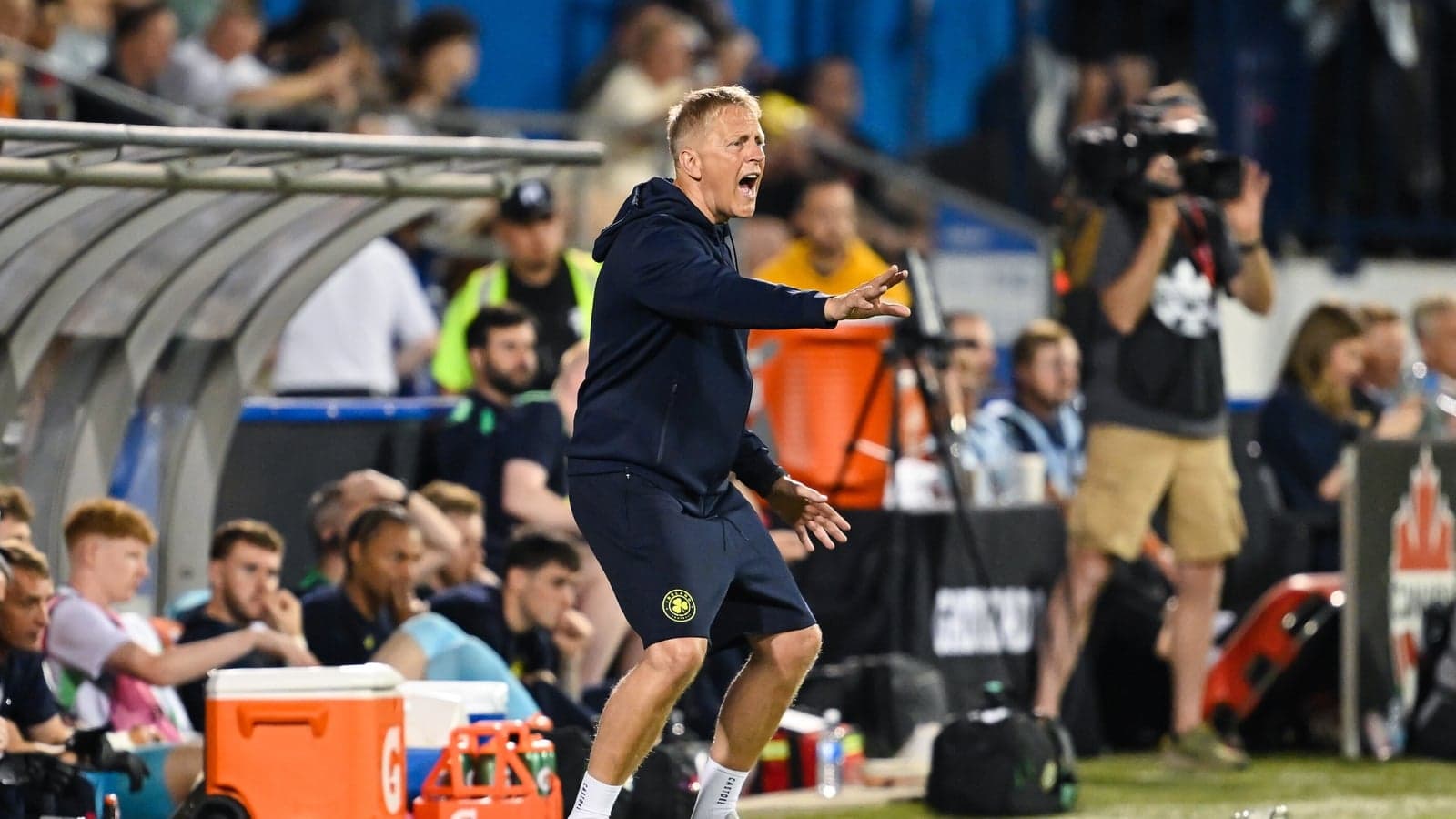
Heimir Hallgrimsson does not rattle easily. Since taking the Republic of Ireland job, he has largely projected calm, even when results have wobbled. Montreal was different.
For the first time in his tenure, you could see it – real irritation, bordering on anger – as he dissected a first half against Canada that he simply did not recognise from his team.
Ireland trailed 1-0 at the break after Jake O'Brien turned into his own net. The scoreline flattered them.
“It was unlike everything we have done in recent games,” Hallgrimsson told RTÉ Sport’s Tony O’Donoghue, and the words carried an edge. The manager wasn’t hiding behind the experimental nature of his starting XI, nor the heat, nor the end-of-season legs. He went straight for the performance.
Everything felt off. Flat in possession. Late to second balls. Reacting instead of dictating. Hallgrimsson spoke of “no decision making”, of a team waiting to see what Canada would do and then shuffling after them. For a coach who has spent months drilling a proactive, front-foot identity, that cut deep.
He had seen warning signs even before kick-off. The players, he said, looked “sluggish in the warm-up”. Maybe it was the humidity. Maybe the heat. Maybe the training load across a long camp. Whatever the cause, Canada seized on it and fully merited their lead.
“They deserved to score and were lucky to go 1-0 down at half-time,” he admitted. Harsh on his own side, but accurate.
The interval, then, was never going to be gentle.
Hallgrimsson spoke of a clear message in the dressing room: be braver, step higher, speed everything up. Press with conviction. Take responsibility on the ball. No more waiting, no more drifting. The response arrived almost immediately after the restart.
Liam Scales and Jamie McGrath came on and the whole shape of Ireland’s play changed. With them, the team looked more balanced, more willing to take the ball in tight areas, more aggressive in their choices. The passes snapped rather than floated. The press had bite.
“As much as I was unhappy with the first half, I was much happier with the second, really happy,” Hallgrimsson said. The contrast was, in his words, “black and white”.
The equaliser, when it came, was scruffy but symbolic. Troy Parrott stepped up from the spot and saw his penalty saved, but Chiedozie Ogbene had read the moment. He had mirrored Parrott’s run-up from outside the box, gambling that any spill might drop into his orbit. It did. One touch, one tap, 1-1.
“I had confidence that Troy was going to score,” Ogbene explained. “I try to mimic his run up and see what happens. I was outside the box, mimicked his run up, I was fortunate the ball landed on my feet and I was able tap it in.”
Fortune favours the alert. Ireland, finally, had life.
The goal energised the visitors and the game opened up. Chances came at both ends, but the two clearest fell Ireland’s way late on. Dawson Devoy, starting on his senior debut, and teenager Mason Melia both found themselves with sights of a winner. Neither could convert.
Hallgrimsson didn’t try to dress it up as dominance. “We could have stolen it but I think it would have been a theft,” he said, with a wry honesty. A draw felt about right. “We were happy with the draw but it would have been nice to steal it at the end.”
Even so, the night carried a deeper significance than a 1-1 friendly in June usually does.
Devoy’s inclusion from the start made him the first League of Ireland player to be capped by the senior side since Jack Byrne in November 2020. By full-time, the domestic league’s imprint on the game sheet had grown even stronger.
As the clock ran down, Hallgrimsson turned again to youth and to home. Alongside Portugal-based midfielder Joe Hodge, St Pat’s attacker Kian Leavy and Shamrock Rovers winger Adam Brennan came off the bench to make their debuts. Both are at the beginning of their international journeys; both were trusted in a tight contest away from home.
There were also first starts for recent debutants Jaden Umeh and Corrie Ndaba, further evidence of a manager determined to widen the talent pool, not just pay lip service to it.
“I’m really happy with the players that came with us; we had 21 involved in Spain, 27 in these camps,” Hallgrimsson said. This was no end-of-season holiday. “It would have been easy for us to make it a joke camp after a long season, players are tired, and after that defeat in Czechia.
“We used this as 24 days in camp; we used it to think about the future and to deepen the squad. This camp will not only benefit us now but also in the future.”
That long view framed everything: the selection, the debuts, the tactical tweaks. The Nations League in the autumn looms large, and Hallgrimsson wants options, competition, and a group hardened by shared time rather than scattered windows.
On the pitch, the senior figures can feel that shift too. Ogbene, who spent last season on loan at Sheffield United, welcomed the injection of fresh faces and fresh energy.
“All these guys deserve to be here, they showed well in training and there was a good feeling about this camp,” he said. For a player who has ridden Ireland’s ups and downs in recent years, his closing words carried weight: “I have goose bumps in my stomach for the future of Ireland. I’m just so excited.”
A flat first half in Montreal stung the manager. The second half, and the faces that drove it, hinted at why he might soon share Ogbene’s excitement.