.svg&w=384&q=75 "Naijagoal logo")

International Break Disruption: How Teams Adapt
The season has barely found its rhythm and already the music has stopped.
The first international break is here – and this time, it lingers. Three weeks without Premier League or Championship football, instead of the usual two. For supporters who already grit their teeth through these pauses, that sounds like an eternity.
But the calendar makers insist there’s logic behind the disruption. The old September and October windows, each with two games, have been welded into one four-game block. One longer stoppage instead of two shorter ones. In theory, club football gains a week back across the season.
Tell that to the players left behind.
Three weeks is a long time for elite athletes to go without a competitive minute. So across the country, clubs are improvising – part holiday camp, part boot camp, part medical ward.
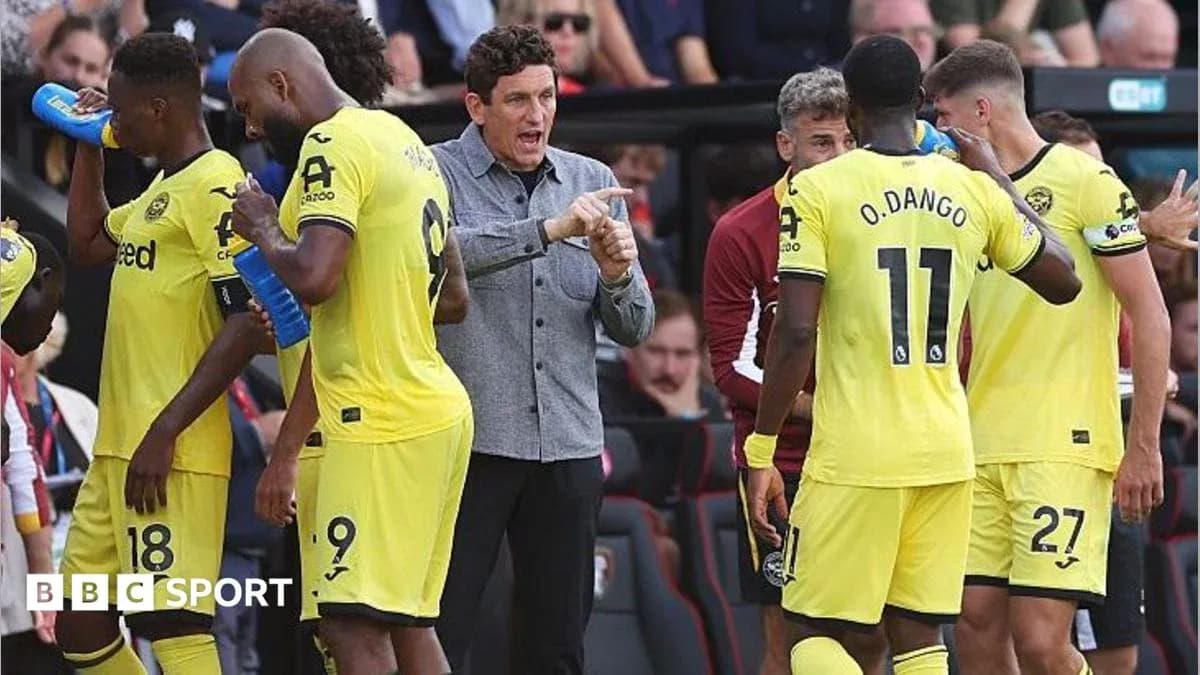
Brentford: a quiet training ground and a reset
At Brentford, the training pitches will feel emptier than most.
The bulk of the Bees’ squad has disappeared on international duty. Around 12 players remain, among them Callum Wilson and Igor Thiago, plus five working their way back from injury. Their break is even longer than most: they hosted Chelsea on the Friday before the pause, buying a couple of extra days.
Keith Andrews has opted for a clean break to start. His first-team players have been handed a week off, each with an individual training programme to follow. They are free to leave the country, but nobody at the club expects long-haul trips to be waved through. Rest is one thing; jet lag is another.
The group will gather again on Saturday, 26 September, to start building back up. The key date circled in red is the weekend of 3 October, when Brentford will play a behind-closed-doors friendly against another English club.
That game could be a gentle reintroduction for the likes of Nathan Collins and Sepp van den Berg, both edging towards full fitness. The rest of the squad for that match is likely to be fleshed out with under-21 players, a useful test for the academy and a soft landing for the seniors.
The second international window will be far less dramatic in west London. Brentford play Brighton on Sunday, 8 November and are back again against Everton on Saturday, 21 November. With fixtures bracketing the break, Andrews is planning something closer to a normal training block – perhaps the odd day off, but no friendly, just a steady march towards the Toffees.
Liverpool and Villa: two very different plans
At Liverpool, there is no grand tour, no trophy match pencilled in. Andoni Iraola will work with what is left – a small group, a few days’ rest, then training through the lull.
The problem for him lies at the other end of the break. With so many players away, he expects to have “no more than three days probably to prepare” for Manchester City’s visit to Anfield on 11 October. Three days to reintegrate jet-lagged internationals, assess knocks, and get a game plan ready for the champions. It is hardly ideal, but it is the reality of a squad full of internationals.
Aston Villa, by contrast, are turning the pause into an occasion.
Unai Emery is heading back to familiar ground, returning to former club Sevilla, where he lifted the Europa League three times in succession. Villa will face Sevilla in the 15th edition of the Antonio Puerta Trophy on Friday, 2 October.
The fixture carries a weight beyond pre-season style fitness. It is played in memory of Antonio Puerta, the 22-year-old Sevilla wing-back who died on 28 August 2007 after suffering multiple cardiac arrests during a La Liga match against Getafe. For Emery, for Sevilla, and now for Villa, it is a chance to honour a player whose loss still echoes around the Ramon Sanchez-Pizjuan.
Championship: fewer call-ups, more opportunity
Drop down a division and the picture changes.
Championship squads are not stripped bare in quite the same way. Many clubs lose only a handful of players to international duty. Blackburn Rovers, for example, have just four call-ups.
For Tony Mowbray, that is a blessing.
Rovers have been hit by an injury crisis in the opening weeks of the season, with more than 10 players ruled out at various stages. The break offers breathing space – a chance to ease players back in, rather than rush them.
Gady Beyuku and Moussa Baradji have recently returned to action and can now build fitness without the relentless churn of league and cup fixtures. Scott Wharton is close to a comeback too. The timing suits Blackburn.
After their trip to Portsmouth on Saturday, Rovers headed back to Lancashire and into a more measured routine. A few days on the training ground this week, time to reset patterns and work on details that get lost in the chaos of Saturday–Tuesday football.
Mowbray, who came back to the club in the summer, also gains something more valuable than rest: time with his players. With the Carabao Cup and the league crowding the early schedule, this is his first real window to shape the team on the grass.
But he is wary of turning the break into a slog. The plan is to give the squad a few days off at the end of the week. Players such as Yuri Ribeiro will be able to fly home to Portugal if they choose, reconnect with family, switch off.
The cycle then repeats. Training in the first half of the second week, a short weekend break, then back into the usual pre-match routine in week three before Cardiff come to Ewood Park.
Behind the scenes, Mowbray is also trying to line up a behind-closed-doors friendly against a Premier League or League One side. That game would serve two purposes: vital minutes for those returning from injury and sharpness for squad players starved of action.
When the shorter, two-week break arrives in November, the pattern will change again. Players might still get a brief spell off, but any matches are likely to be in-house – senior pros mixed with under-21s, internal games designed purely to maintain rhythm.
League One: fixtures, gaps and the Trophy safety net
The three-week shutdown created an unusual possibility lower down the pyramid: a League One club with a full squad and nothing competitive to play.
League One continues through international windows unless a club has three call-ups that meet the EFL’s criteria, at which point a postponement can be requested. This time, that rule has bitten hard. Only four of the 12 league matches have survived on each of the two affected weekends.
Many clubs saw this coming and moved early, slotting Football League Trophy fixtures into the three-week window. Rotated sides are the norm in that competition, so the games can still go ahead even when league fixtures fall by the wayside.
Twelve teams will play two Trophy ties across the break, with another 10 playing once. That scheduling has quietly solved a problem: keeping players ticking over and supporters with something to watch.
That left just Leyton Orient and Reading at risk of having a blank calendar. Both have had only one league match postponed, so they will not be staring at three empty weekends. There will be football. Just not quite in the form anyone expected when the season kicked off.
The calendar has changed. The question now is who uses this strange, stretched break to heal, refine and reload – and who returns three weeks from now looking like they’ve lost the thread of their season.