.svg&w=384&q=75 "Naijagoal logo")

Inter Dominates Monza in Serie A Season Opener
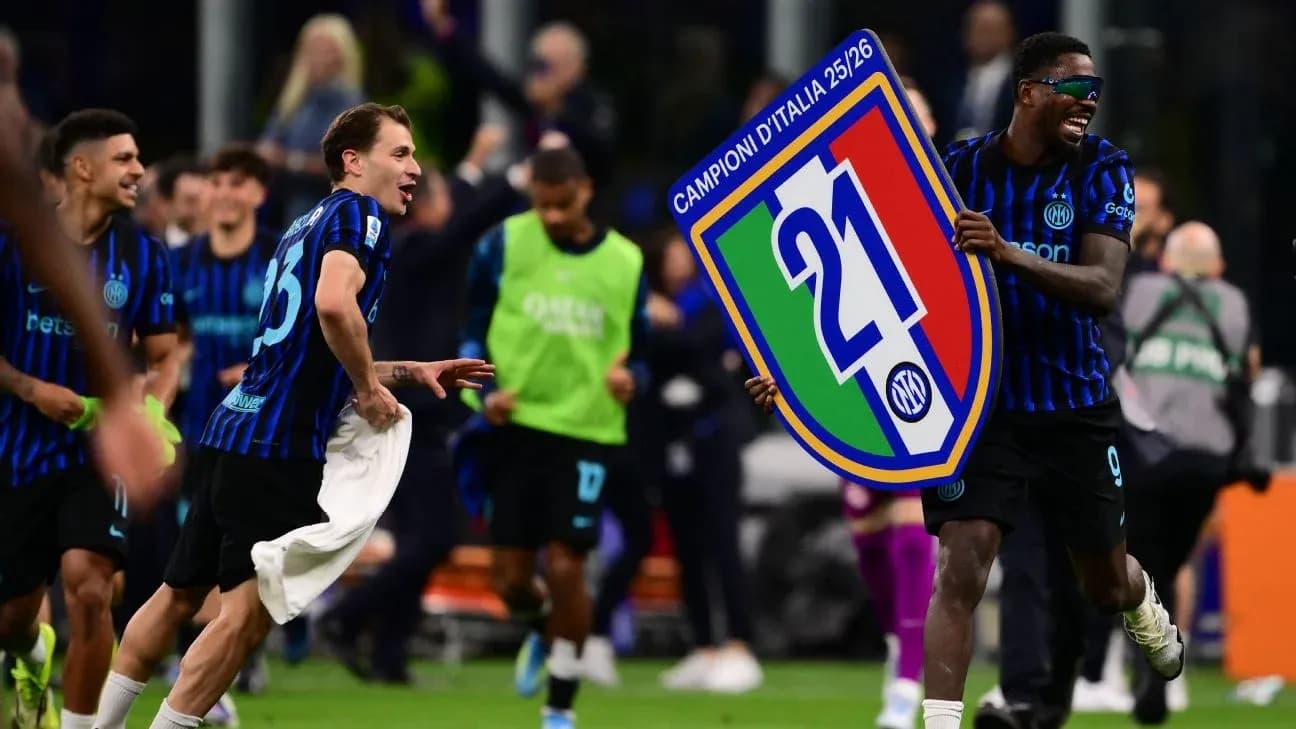
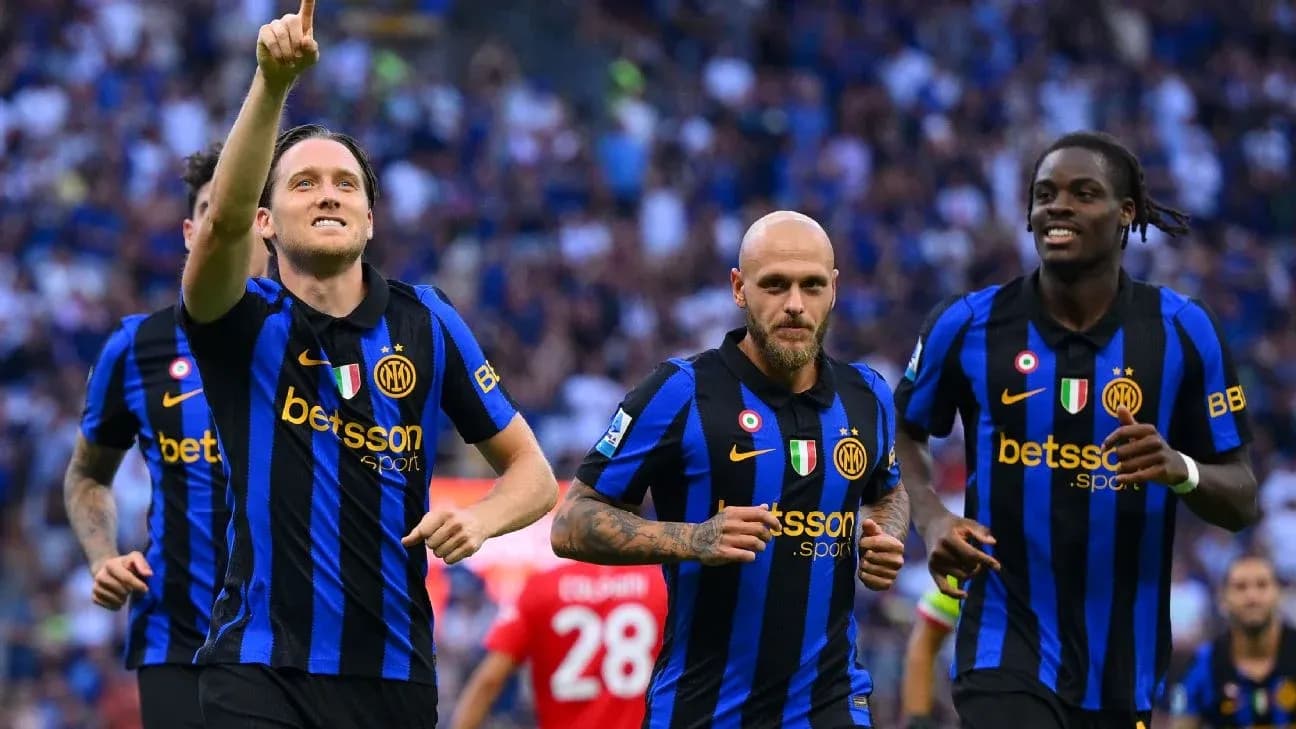
San Siro’s first whistle of the 2026–27 Serie A season framed a story of continuity for Inter and crisis management for Monza. The champions-elect narrative is premature after one game, but the opening 4-1 win over Monza felt like a statement: a new-look Inter under Cristian Chivu, same ruthless edge.
Following this result, Inter sit 1st with 3 points, a goal difference of +3 (4 goals for, 1 against) from 1 match. All of that damage was done at home: 4-1 at San Siro in their only fixture so far. Monza, beaten 4-1 on their travels, are 20th with 0 points and a goal difference of -3 (1 goal for, 4 against) from 1 match, their only outing away from home.
I. Squad shapes and seasonal DNA
Chivu’s Inter lined up in a 3-5-2 that looked familiar in structure but subtly different in personnel and dynamics. J. Martinez started in goal behind a back three of Y. Bisseck on the right, M. Akanji centrally and A. Bastoni on the left. Ahead of them, a five-man band of F. Dimarco, P. Zielinski, H. Calhanoglu, N. Barella and A. Diouf set the tone, with F. Esposito and L. Martinez as the striking pair.
The numbers already sketch Inter’s early identity. Overall this campaign they have scored 4.0 goals per game and conceded 1.0, all at home. There is no clean sheet yet, but the attacking volume and variety are striking: four different scorers among their key contributors, and a midfield that dominates the ball and territory.
Monza arrived in a 3-4-3 under Ivan Juric, but this was a side stripped of experience and leadership. S. Pizzignacco was shielded by a back three of E. Kouadio, L. Lucchesi and A. Carboni. The wing-backs S. Birindelli and A. Bakoune flanked a central pair of F. Ondoa and M. Mout, with a front three of A. Colpani, G. Varela and R. Mangas.
Their early-season profile is fragile: on their travels they are averaging 1.0 goal scored and 4.0 conceded, with no clean sheet and no wins in any dimension. The defensive structure is conceding heavily without the ball, and the lack of control in midfield leaves their back three exposed.
II. Tactical voids and absences
The absences list explains a lot about the tone of this fixture.
For Inter, H. Mkhitaryan was suspended, D. Spence inactive and M. Spinacce injured. That forced Chivu to lean fully into the new midfield core of Calhanoglu, Barella, Zielinski and Diouf. Rather than weakening Inter, it accelerated the transition: Diouf became the all-action connector, while Zielinski operated as a high-volume passer between the lines.
Monza’s missing players, by contrast, ripped out their spine. E. Akinsanmiro (muscle injury), P. Ciurria (inactive), L. Colombo (injury), D. Mota (suspended), M. Pessina (knee injury), D. Thiam (suspended due to yellow cards) and I. Toure (knee injury) left Juric without key outlets in attack and leadership in midfield. The result was a young, raw XI that struggled to manage Inter’s tempo.
Disciplinary patterns underline the imbalance in control. Inter’s season card map shows 2 yellow cards overall, with 1 arriving between 31-45 minutes and 1 between 46-60 minutes, both in this match. Calhanoglu, who has 1 yellow card and no reds, embodies that edge: aggressive in the press, walking the disciplinary line. Lautaro Martinez also sits on 1 yellow, his combative style evident even in a modest attacking display.
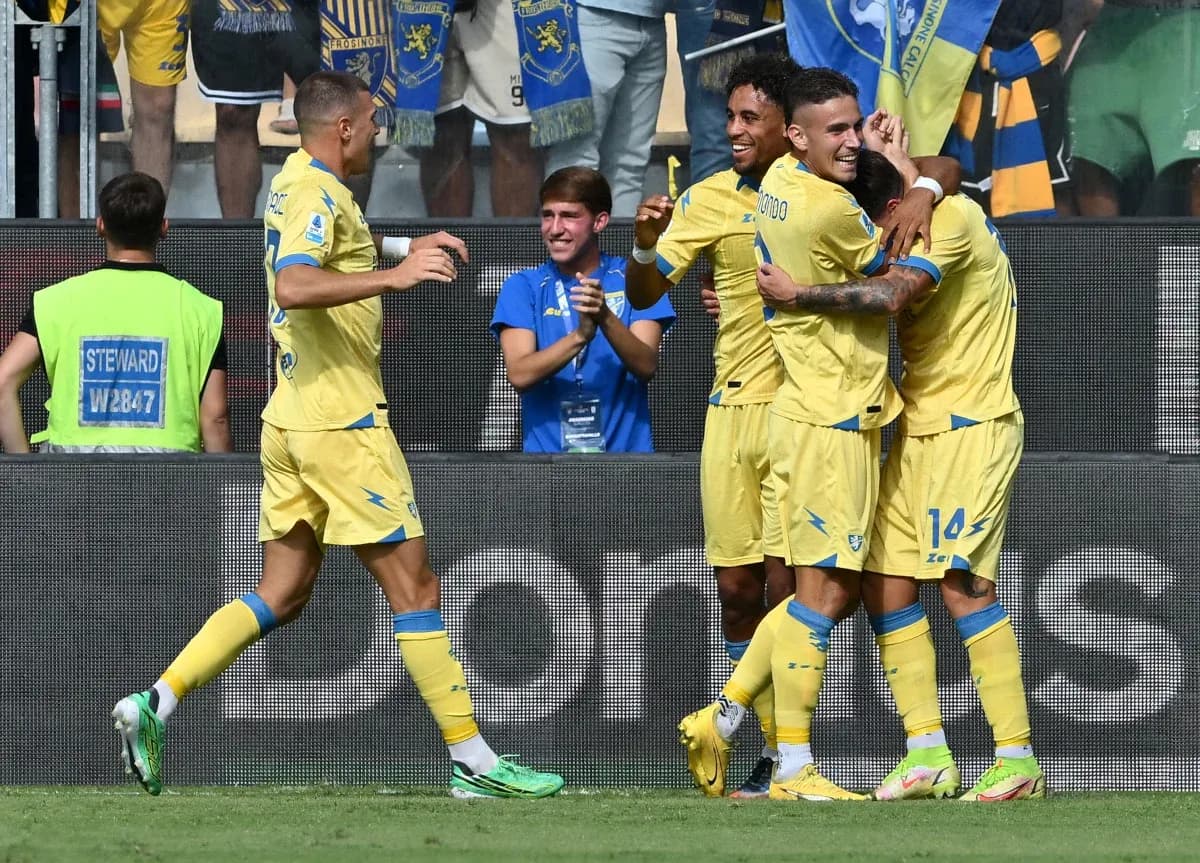
Monza’s yellows arrive later and under pressure. Their season data shows 2 yellow cards in total, split evenly: 1 between 61-75 minutes and 1 between 76-90 minutes, again all in this game. Lucchesi and Kouadio, each with 1 yellow, were dragged into late challenges as Inter’s forwards and midfielders attacked space relentlessly.
III. Key matchups – Hunter vs Shield, Engine Room
The “Hunter vs Shield” duel was defined by Inter’s forwards and attacking defenders against Monza’s back line.
F. Esposito, already on 1 goal and 1 assist in Serie A with a rating of 7.7, led the line with an authority that belied his age. Three shots (1 on target), 2 key passes and 4 fouls drawn show a forward who not only finishes but also destabilises defensive structures. His direct opponent zone – largely Kouadio’s channel – was repeatedly manipulated. Kouadio, with 2 tackles and 7 interceptions but 2 fouls and 1 yellow card, was busy firefighting rather than dictating terms.
From deeper, Y. Bisseck emerged as an attacking weapon. He scored 1 goal from his only shot on target and completed 66 passes at 95% accuracy, adding 1 key pass and 2 interceptions. For a defender to rank among the top scorers underscores Inter’s layered threat: even when Monza tracked the strikers, a centre-back could step through the line and punish them.
On the Monza side, G. Varela offered a glimpse of resistance. With 1 goal from 3 shots and a 7.2 rating, he was their only scorer this season so far, exploiting the rare moments when Monza escaped the press. But his 1 duel won out of 9 highlights how isolated he was against Inter’s back three.
The “Engine Room” duel was even more decisive. A. Diouf, already leading Serie A in assists with 2, completed 35 passes at 94% accuracy, produced 3 key passes and attempted 2 dribbles, succeeding with 1. He functioned as the vertical accelerator, turning Inter’s possession into penetration. Alongside him, Calhanoglu’s 60 passes at 93% accuracy, 1 goal, 1 tackle, 1 block and 1 interception made him the metronome and first line of counter-press.
Monza’s M. Mout tried to answer. He delivered 35 passes at 71% accuracy, 1 key pass, 3 tackles and 2 interceptions, plus 1 assist – a commendable individual effort in a losing cause. But the contrast in precision and support around him was stark. Inter’s midfield three moved as a unit; Mout often operated as a lone firefighter in front of an overworked defence.
IV. Statistical prognosis and tactical trajectory
With no penalties taken or missed by either side this season, the story is written entirely in open play and structured attacks. Inter’s 4.0 goals per game overall, driven by contributions from a defender (Bisseck), a deep playmaker (Calhanoglu), a box-to-box connector (Diouf via assists) and a young centre-forward (Esposito), suggest an attack that is diversified rather than dependent on a single star.
Defensively, conceding 1.0 goal per game overall – again, all at home so far – leaves room for refinement, but the underlying signs are positive: high passing accuracy in the back three, interceptions in advanced zones and the ability to suffocate opponents into late, frustrated fouls.
Monza, by contrast, have a defensive average of 4.0 goals conceded per game on their travels and a goal difference of -3 overall (1 for, 4 against). Their 3-4-3 has promise in transition – as Varela’s goal and Mout’s assist show – but without the missing senior figures, it currently lacks the control and compactness needed to survive long spells without the ball.
Narratively, this match reads as a prologue to two very different seasons. Inter’s squad looks deep, tactically coherent and already statistically dominant. Monza’s looks stretched, youthful and forced into reactive football. Unless reinforcements return quickly and Juric can stabilise the defensive structure, the early numbers hint at a campaign spent fighting against gravity, while Inter’s 3-5-2, powered by Diouf’s engine and Esposito’s emergence, is already built to climb.