.svg&w=384&q=75 "Naijagoal logo")

Harry Kane's Future: Can He Lead England to Euro 2028?
Harry Kane has spent a decade making the extraordinary feel routine. Records fall, numbers swell, pressure mounts – and he just keeps scoring.
By the time Euro 2028 rolls around on home soil, the expectation is that England’s captain will still be at the heart of it all, dragging his country into another deep run after steering them to third place at the 2026 World Cup. That is the plan. The assumption, even.
But football has a way of asking awkward questions of ageing legs.
Kane is already out on his own as England’s all-time leading scorer, with 85 goals. He is closing in on another landmark, just four caps shy of Peter Shilton’s record 125 appearances. If he stays fit, that particular piece of history feels inevitable.
The bigger unknown lies beyond that.
At Bayern Munich, Thomas Tuchel leans heavily on his No.9. There are not many alternatives. Kane, now 33, remains the reference point, the finisher, the organiser of attacks and the man expected to solve problems when games get tight. Bayern’s system, and often their season, bends around him.
But how long can that last at the highest level?
Cristiano Ronaldo and Lionel Messi stretched the lifespan of the modern superstar, appearing at the last World Cup at 41 and 39 respectively. They tore up the traditional age curve, operating as outliers in a sport that usually shows little mercy to those on the wrong side of 30.
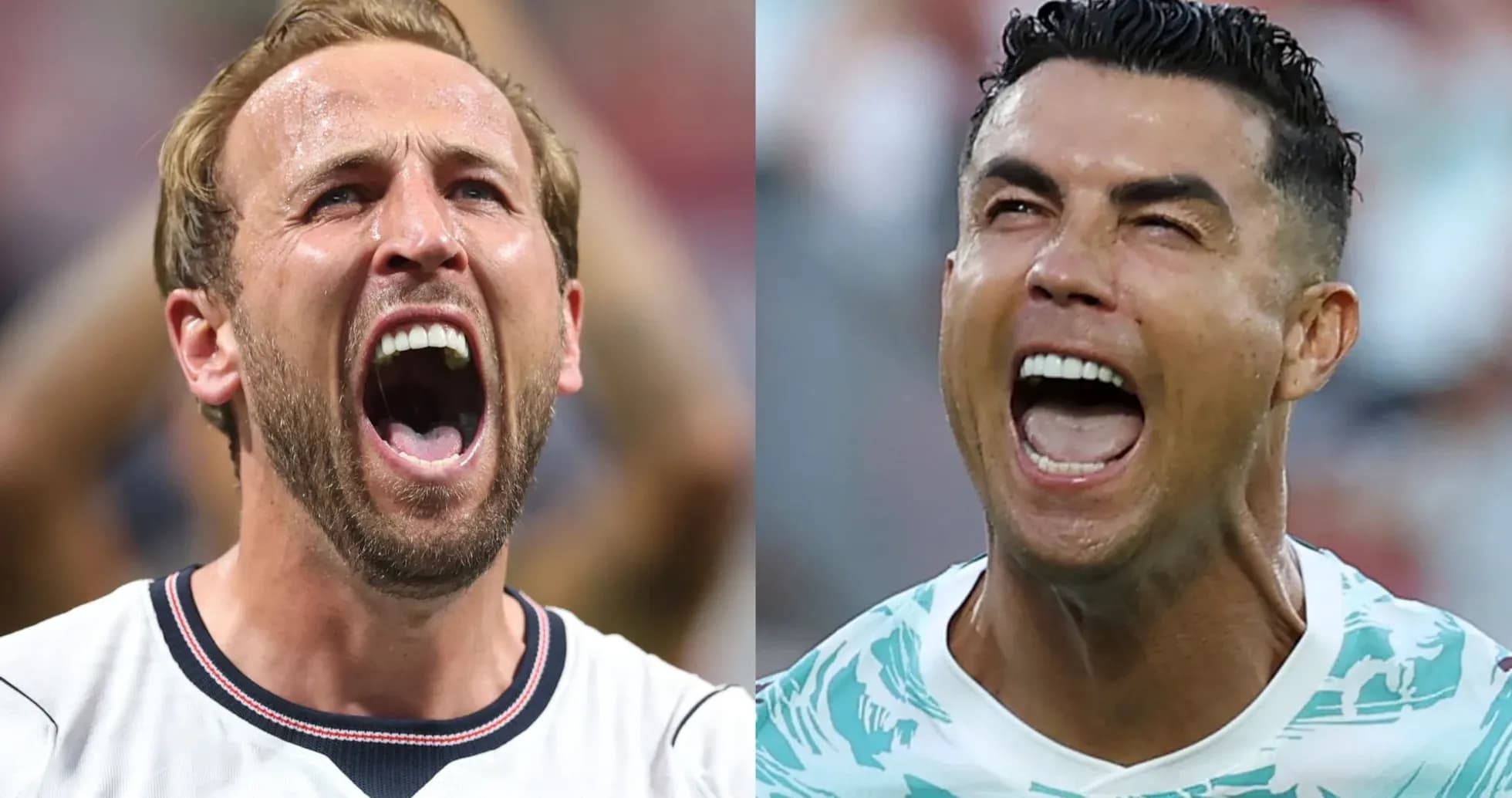
Can Kane live in that rarefied company, still leading the line for England at another World Cup in four years’ time?
Chris Waddle is not convinced that the question has a simple answer. Speaking in association with BetBrain, the former England winger cut through the sentiment and went straight to the reality of elite football.
“Fitness is a great thing to have. Some players develop, get better as they get older. Some find it easier. Not easier, but easy,” he told GOAL, highlighting the fine balance between experience and decline.
For Waddle, the real inspection point is not some distant World Cup, but the next major stop: Euro 2028. A home tournament, a heavy burden, and a nation that will inevitably look to Kane again.
“We'll see how his legs are in two years' time, at the Euros even. People will be questioning that,” Waddle said. “The thing with Harry's advantage is he's a fit lad, we know that. He doesn't rely on pace. He's got a great football brain.”
That, in many ways, is Kane’s trump card. He has never been built on raw speed. His game is about timing, positioning, the angles of his movement and the weight of his passes. Strikers who depend on acceleration often fall off a cliff when it goes. Those who live off their head and their touch can bend time for a little longer.
Still, tournaments are unforgiving. They expose decline quickly.
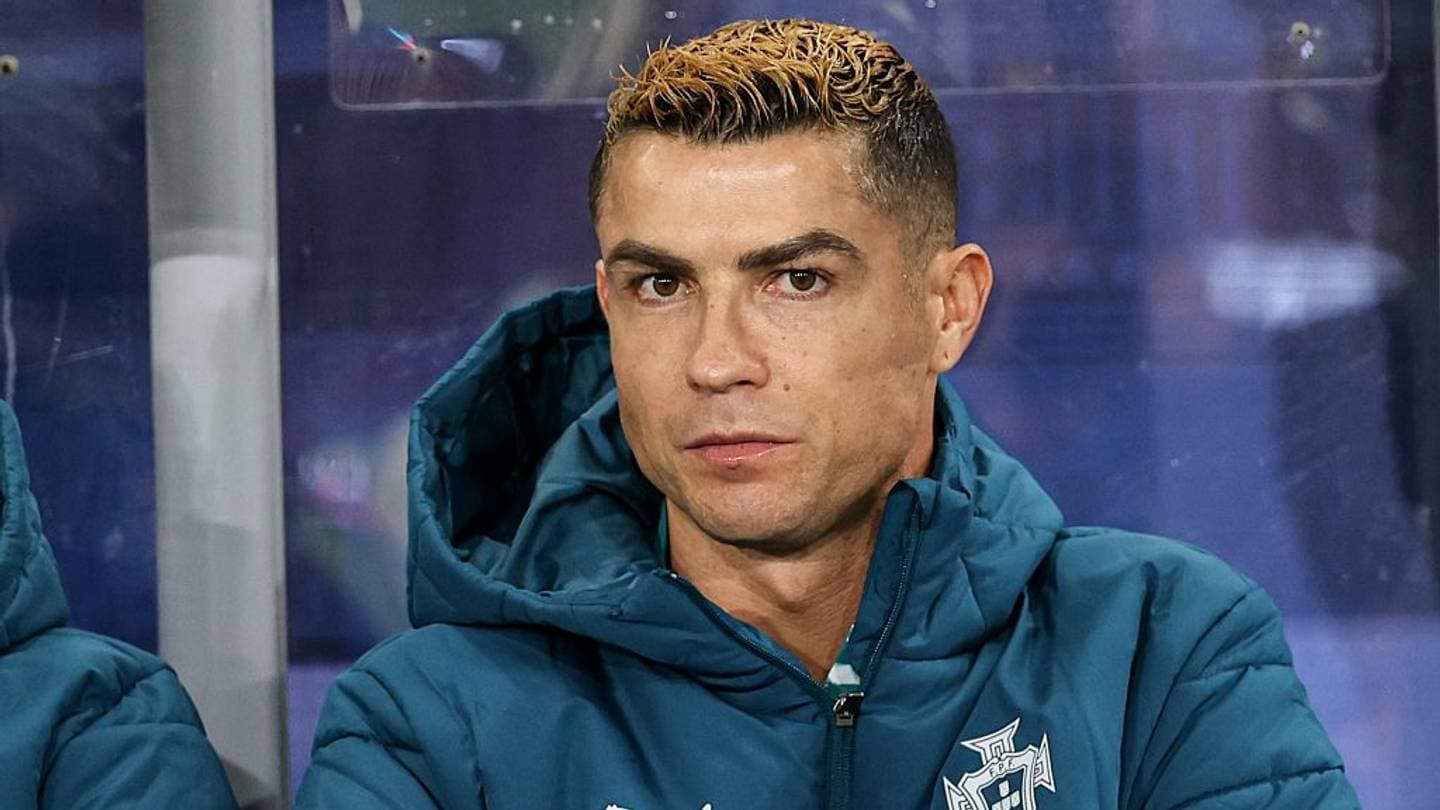
“Sometimes you see players in tournaments and you think, ‘His legs are going there’,” Waddle admitted. He pointed to Ronaldo as the clearest example. “I'm looking at Ronaldo as an example. I watched Portugal play in the World Cup and his legs were gone in my eyes for that level of football.”
Messi, Waddle argued, still had flashes of genius, even if the chaos around him made life harder than it needed to be. “Lionel Messi still had bits of brilliance until the rest of his team-mates decided to try and kick everybody out of the country.”
The contrast is stark. One great clinging to the stage as the game races past him, another still able to bend matches to his will in moments. Both, though, had already begun to choose their environments more carefully.
“So I think there's a time and a place where you've actually got to think, ‘Yeah, he can still play, and he can still play like Messi does in Miami, a good level for him’,” Waddle said. “You know, Ronaldo in Saudi can still handle it.”
The message is clear: there is a level for every stage of a career. The Champions League pace is not the same as the tempo in MLS or the Saudi Pro League. At some point, even the most relentless of forwards has to pick his battles.
“And Harry, eventually he'll come to a time where you think the Bundesliga is too quick. Where do you go from there?”
That is the crossroads that looms in the distance. Bayern demand intensity, constant pressing, repeated sprints, a frontman who can both finish and initiate. The Bundesliga, with its transitions and high lines, asks questions of every forward’s legs.
Kane will not be immune to that, no matter how smart his movement or how refined his finishing.
“The next World Cup, it's a big ask for him, I think, to play in that tournament,” Waddle said, stripping the conversation back to its core. Can Kane still dominate at that level in four years? Or will he be a great player playing one tournament too many?
“I think some of these players can think, ‘Yeah, I'm still playing football, but that level's out of me now, and I've enjoyed it’,” Waddle added. “I think some of these players try and play too long and it doesn't look great on them.”
It is a warning as much as an observation. The game is littered with legends who stayed a year too late, their final images coloured by frustration instead of glory. Kane’s career to this point has been defined by ruthless decision-making in front of goal. At some stage, he will need that same clarity about himself.
“But I'm sure Harry will know when the time's right to say, ‘No, I can't play for England anymore’,” Waddle concluded.
Between now and that moment lies Euro 2028, another World Cup cycle, and the chance for Kane to stretch his legacy even further. The numbers will keep rising. The questions will, too.
How long England’s record scorer can keep answering them at the very top is now the most intriguing chapter of his story.