.svg&w=384&q=75 "Naijagoal logo")

Guardiola Rejects Italy's National Team Offer: A Major Setback
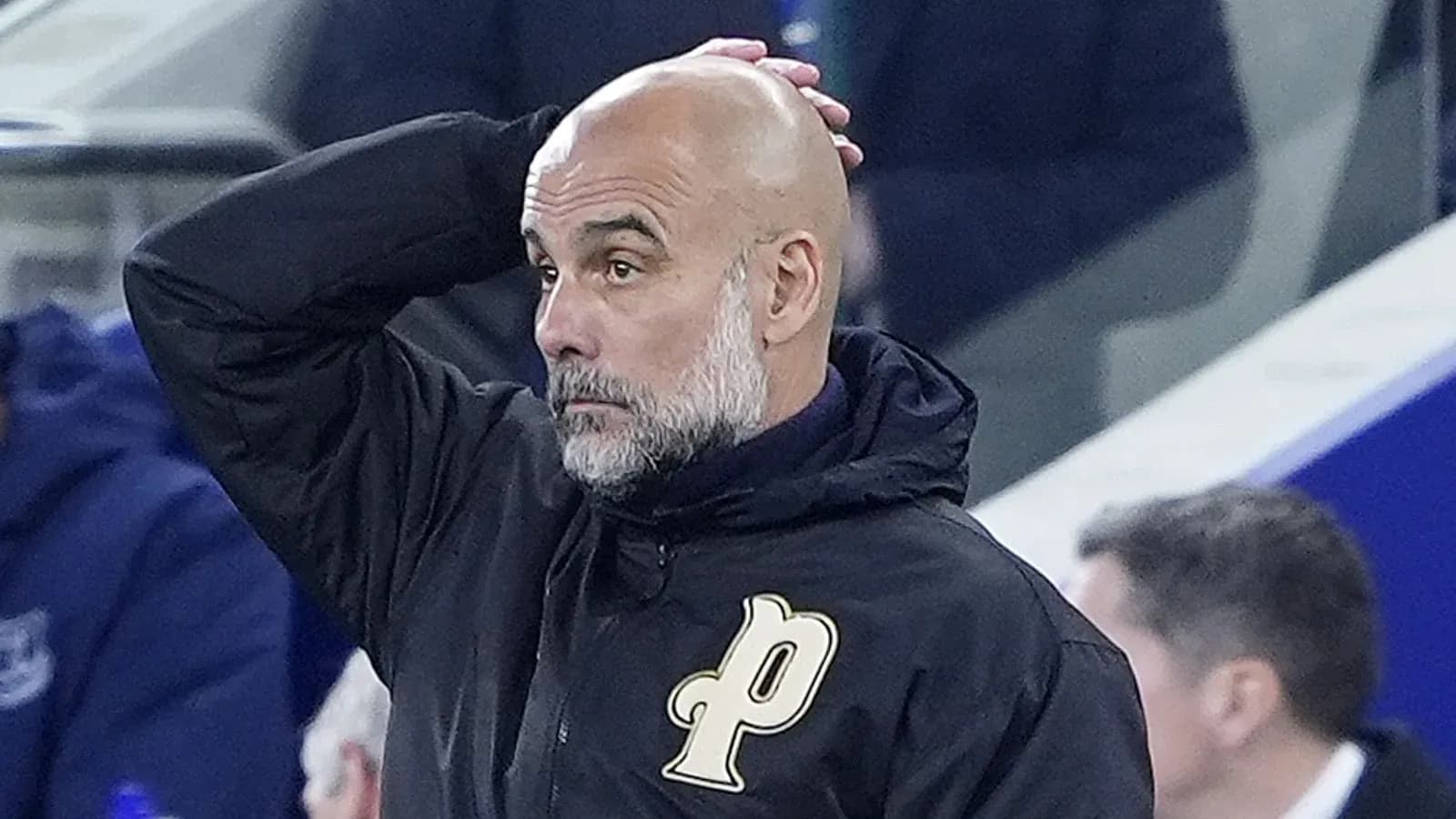
Pep Guardiola has rejected an approach to become Italy’s new head coach, turning down a sweeping offer to rebuild a broken footballing giant.
According to Sky in Italy, Guardiola informed the Italian Football Federation (FIGC) of his decision on Thursday night, citing personal reasons that stretch beyond football. For a nation still reeling from serial failures on the biggest stages, it is a heavy blow.
Italy’s grand pitch – and Guardiola’s refusal
This was no routine job interview. FIGC officials, led by Paolo Maldini and his advisor Leonardo, spent three days with Guardiola in Barcelona, outlining a plan that went far beyond a standard national team brief.
They were not simply asking him to replace Gennaro Gattuso on the touchline. They were offering him the keys to an entire footballing reset.
In the FIGC’s vision, Guardiola would sit at the centre of an ambitious ‘Azzurro project’ designed to rebuild Italian football from the ground up. The overhaul would stretch from the senior side right down through the youth ranks, reshaping the identity and structure of every national team.
The federation was even prepared to rip up its financial framework. Reports in Italy say the FIGC were ready to make an “exceptional” adjustment to their budget to land him – a rare admission of just how desperate the situation has become.
Italy have not qualified for an expanded World Cup this summer. They have missed out on the last three major tournaments since winning Euro 2021 under Roberto Mancini. For a four-time world champion, it is an institutional crisis.
Maldini and Leonardo laid all of that at Guardiola’s feet. They presented the scale of the problem, the power he would have, the freedom to build something lasting. The Catalan, it is understood, listened carefully.
Then he said no.
A free agent, but not free to coach
For the first time in a decade, Guardiola is a free agent. His 10-year stay at Manchester City is over, a spell that yielded 20 trophies and a win ratio of 70.8 per cent. He leaves English football as the defining coach of his era.
Yet the very success that made him Italy’s dream candidate also explains his refusal.
Long before he walked away from the Etihad, Guardiola had warned that a break was coming. Speaking to Sky Sports a year before his departure, he made it clear that when his time at City ended, he would step away from the dugout.
After the club officially announced his exit, he doubled down. The decision, he said, came from a need to spend more time with his family and to escape the relentless grind of elite club management.
No plans for [coaching] for a while. Otherwise I would be here. I need to step back. I will not [coach] for a while.
“I feel I will not have the energy every day, with expectations to fight for the title. I know myself, I have that energy, but I feel like I will not have it [in the future].”
In a separate interview with Sky Sports, he went deeper into the personal cost of his career.
There are things that I have not done that I want to do. I still have my father alive. I want to spend more time with him. My kids... And a lot of things as a human being I can do. I'm fortunate I can decide, that's why I took this decision.
Italy’s offer, for all its power and prestige, collided with that promise.
England, the FA, and the one that got away
Guardiola’s name has hovered around international football for years, and not just in Italy.
In 2024, it was widely reported that he had reached a verbal agreement with the FA to replace Gareth Southgate as England manager. The deal never materialised. Guardiola changed his mind, stayed at Manchester City, and Thomas Tuchel eventually took the job instead.
Tuchel has since guided England to their best World Cup finish on foreign soil and is under contract until the end of Euro 2028, a deal extended in February. The door to Wembley appears closed for now.
Yet the idea of Guardiola in international football refuses to go away.
In a 2024 conversation with chef Dani Garcia, he hinted at where his future might lie.
What I'm not going to do is leave Manchester City and go to another country to do the same thing as I am now. I wouldn't have the energy to do so. I'm still here doing what I am today. But the thought of starting somewhere else, with all the process of the training and so on... no, no, no! Maybe a national team, but that's different.
Those words now hang over every federation with serious ambitions. Italy tested the theory and discovered the timing is still wrong.
International football: the middle ground that can wait
Sky Sports’ Callum Bishop has described Guardiola as “the biggest commodity in football management.” That was true when he left Barcelona. It remained true at Bayern Munich. It is arguably even more true now, after a decade of dominance at City.
Yet the man himself is not the same. He is older. He has spoken repeatedly of fading energy, of the toll of living in a world where every day is a must-win, where every training session is a puzzle, every press conference a battle.
He wants to rest. To be with his family. To live, as he put it, more as “a human being” than as a permanent tactician-in-residence.
But football obsessives rarely stay away for long. Guardiola is exactly that – a man who sees the game everywhere and in everything. The itch will return.
That is where international management starts to look like the perfect compromise.
A national team role would not demand the daily intensity of club football. He would not be on the training ground every morning, micro-managing every detail across 60 matches a season. Instead, he could drop into camp every few months, shape a group, imprint his ideas, then step back.
Across a European Championship or World Cup cycle, the appeal is obvious. New territory. New puzzles. The chance to test his philosophy in the one arena he has never conquered.
For now, though, even that is not enough to drag him back in.
Where does Italy turn now?
Guardiola’s refusal leaves the FIGC back where it started – only with the scale of its ambition laid bare and no marquee name to front it.
Roberto Mancini and Andrea Pirlo are understood to be among the alternative candidates. Both carry weight in Italy. Neither brings the shockwave effect of Guardiola.
The federation has already undergone a huge internal shake-up after failing to qualify for a third consecutive World Cup. Maldini and Leonardo were brought in specifically to lead that reset and to identify the right successor to Gattuso, who stepped down after missing out on this summer’s tournament in North America.
They thought they had their man. They built a project around him. They were prepared to reshape the system and the budget to accommodate him.
He listened. He walked away.
Italy will move on. Guardiola, at least for now, will not move at all. The question is not whether a national team will tempt him back into the game.
It is which one, and how long they are willing to wait.