.svg&w=384&q=75 "Naijagoal logo")

Gotham FC's Historic Win at Citi Field: A New Era for Women's Soccer
Ten years ago, a National Women’s Soccer League match at a baseball stadium was a punchline. A cramped, makeshift field in a minor-league park drew fury from the league’s own stars and became a symbol of how fragile the project still was.
On Wednesday night in Queens, a baseball stadium told a very different story.
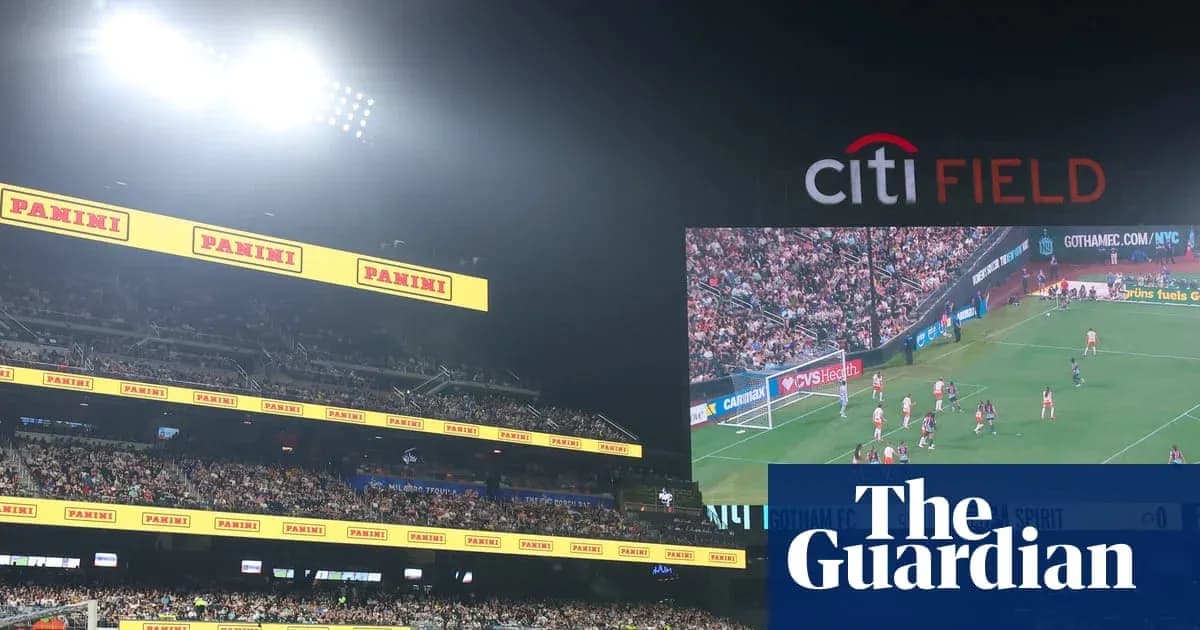
Gotham FC’s 1-0 win over the Washington Spirit at Citi Field pulled in 42,175 fans, the second-largest crowd in NWSL history and the biggest ever for a women’s sporting event in New York City. A decade after the “shocking and embarrassing” tiny pitch of 2016, the sightlines were still a little awkward, the grass not exactly pristine — but the symbolism was unmistakable. Ballparks are no longer a compromise. They are showcases.
A stage fit for a statement
The NWSL came back from its month-long pause for the men’s World Cup on 3 July, and if any fixture felt like a re-launch, it was this one. Gotham and Washington are not just rivals; they are standard-bearers.
San Diego still sit top of the table, but Gotham’s win drags them level on points with both the Spirit and the Portland Thorns, with Washington holding second only on goal difference. Between them over the past three seasons, Gotham and the Spirit have produced two league titles (both Gotham), two runners-up finishes (both Spirit) and three more trophies in other competitions. Their 2023 final felt like a hinge point for the league. This felt like the sequel.
The night carried a new name, too: the Queens Classic. It fit. High stakes, big stars, and the kind of ambition that now feels baked into the NWSL’s identity — with a layer of controversy that still hasn’t gone away.
Lavelle’s touch, Kerr’s return
On a hot, hazy night, it took a moment of pure quality to separate two heavyweights. Rose Lavelle supplied it.
In the 37th minute, the Gotham midfielder — the same player whose strike decided last year’s final — bent a gorgeous curler into the net for the only goal of the game. It was the kind of finish that cuts through heat, smog, and noise, and it gave the home side a lead they never surrendered.
The crowd leaned heavily Gotham, but Trinity Rodman’s No 2 shirt was everywhere. The Spirit forward buzzed around the final third, took five shots, and drew gasps almost every time she picked up the ball. She just never found the finish to match the occasion.
The loudest roar of the night didn’t come for the goal. It came in the 63rd minute, when Sam Kerr stepped over the touchline.
The Australian striker, back in the NWSL after six-and-a-half years at Chelsea, made her Gotham debut to a wall of sound. For her, this was more than a transfer. It was a loop closing. Kerr became the league’s all-time leading scorer in her first stint with the club when it was still called Sky Blue, scoring for a team that trained without running water and played in front of crowds barely scraping 3,000. Now she returns to a club drawing more than 40,000 in a baseball cathedral.
“I feel so spoiled to play at this club, because we keep bringing in incredible players,” Lavelle said afterward, nodding to a transfer spree that has delivered Kerr, Ireland captain Denise O’Sullivan and Norwegian midfielder Guro Reiten in the space of a month. Rodman, ever the competitor, joked that she welcomed Kerr back during a corner with a warning to “chill.”
From bare-bones to big-time
When Kerr left Sky Blue in 2018, the headlines were about everything but glory: poor results, poor facilities, and a shoestring operation that made survival feel like success. Training grounds without running water. Minimal resources. A club hanging on.
That version feels almost unrecognizable now.
Gotham have not just rebranded and retooled; they have repositioned themselves at the heart of New York’s sporting map. Last week’s announcement that the club will move into the city proper in 2028, at the future Etihad Park, underlined that shift.
The build-up to the Citi Field match looked like a major-league campaign. Subway ads. Targeted promotions. A $15 ticket initiative led by Mayor Zohran Mamdani. The payoff: 70% of ticket buyers were new fans.
“It was really special just to see how many people were there that that was their first Gotham game,” midfielder Jaedyn Shaw said. For a club once grateful for a four-figure gate, that is a different universe.
Washington, in their own way, mirror that journey. The Spirit have also climbed from the bottom, invested heavily and embraced a scale of ambition that the league’s structure doesn’t always make easy.
“In many ways, this is like a full-circle moment,” NWSL commissioner Jessica Berman said at half-time. “We know that with investment, if you build it they will come, and this is a proof point for that.”
She had the numbers to back it up. The Citi Field crowd more than doubled the total attendance across Gotham’s entire debut season in 2013 — 12 home games rolled into one night.
Growth, with an asterisk
The NWSL is in a sprinting phase. Over the last 12 months, the league has broken records for attendance, TV viewership and expansion fees. The Queens Classic fit that narrative neatly.
But the night also highlighted the other side of rapid growth: the strain.
Nearly a decade on from that infamous tiny field, players and coaches were quick to note that the Citi Field pitch, while acceptable, was hardly ideal. “That’s showbiz, baby,” Lavelle quipped. It was a line that landed because it felt true. The league is aiming for spectacle, sometimes at the cost of perfection.
The broadcast had its own stumble. The match went out in primetime on ESPN, yet Lavelle’s decisive goal arrived while the screen was split for an interview. The commentator and sideline reporter practically tripped over each other trying to react in real time. A defining moment, half-obscured.
And then there was the air.
New York spent the day under an air quality alert as smoke from Canadian wildfires drifted south. Temperatures hovered in the 80s and 90s Fahrenheit, with a heat index above 100. As the sun dropped behind the stands, Citi Field sat in an eerie orange-brown haze. The smell of smoke never really left.
The league has postponed games before because of air quality, but it has also taken heavy criticism for pressing ahead with marquee fixtures in dangerous conditions. The flashpoint came last year, when a nationally televised match between the Orlando Pride and Kansas City Current went ahead in extreme heat that sent more than a dozen spectators to hospital.
This time, the numbers stayed just below the NWSL’s own thresholds. With the air quality index above 150 — “unhealthy” by Environmental Protection Agency standards, but below the 180–200 range for a possible delay and the 200+ mark for postponement — the league opted for mitigation. Two hydration breaks per half were ordered.
Spirit coach Adrián González made clear he disliked the constant stoppages, saying they broke the rhythm of the game, but he also accepted they were necessary.
Rodman voiced the tension players feel between safety and spectacle.
“I think on both sides, we were just like, ‘Damn, another break, another break, another break,’” she said. “If we have to have a hydration break every 15 minutes, then we shouldn’t be playing the game, and that’s my opinion. … But at the end of the day, there’s 40,000 people, it’s a whole event. So it is really tough. I think it was a really hard situation for everybody to work around.”
That is the modern NWSL in a sentence: a league trying to honor the occasion without betraying the players who built it.
A night that lingers
By any traditional measure, Wednesday will go down as a triumph. A record crowd, a marquee matchup, a world-class goal, a superstar returning to the league she once dominated. For those who remember 2013 Gotham scraping together a few thousand fans across an entire season, the scale is staggering.
But the league’s reality lives in the middle ground. It has come a long way. It still has a long way to go. Both can be true, and both were visible through the smoky glow over Citi Field.
As the Spirit’s veteran midfielder Andi Sullivan put it, standing in a baseball stadium repurposed as a cathedral for women’s football: “It’s pretty cool when you’re out there and you realize that this is your job, and that this is what your dreams looked like, or maybe what they haven’t looked like along the way.”
The NWSL’s future will be shaped by how often nights like this feel normal — and by how willing it is to fix what still doesn’t.