.svg&w=384&q=75 "Naijagoal logo")

Gianni Infantino's Relationship with Trump Under Scrutiny
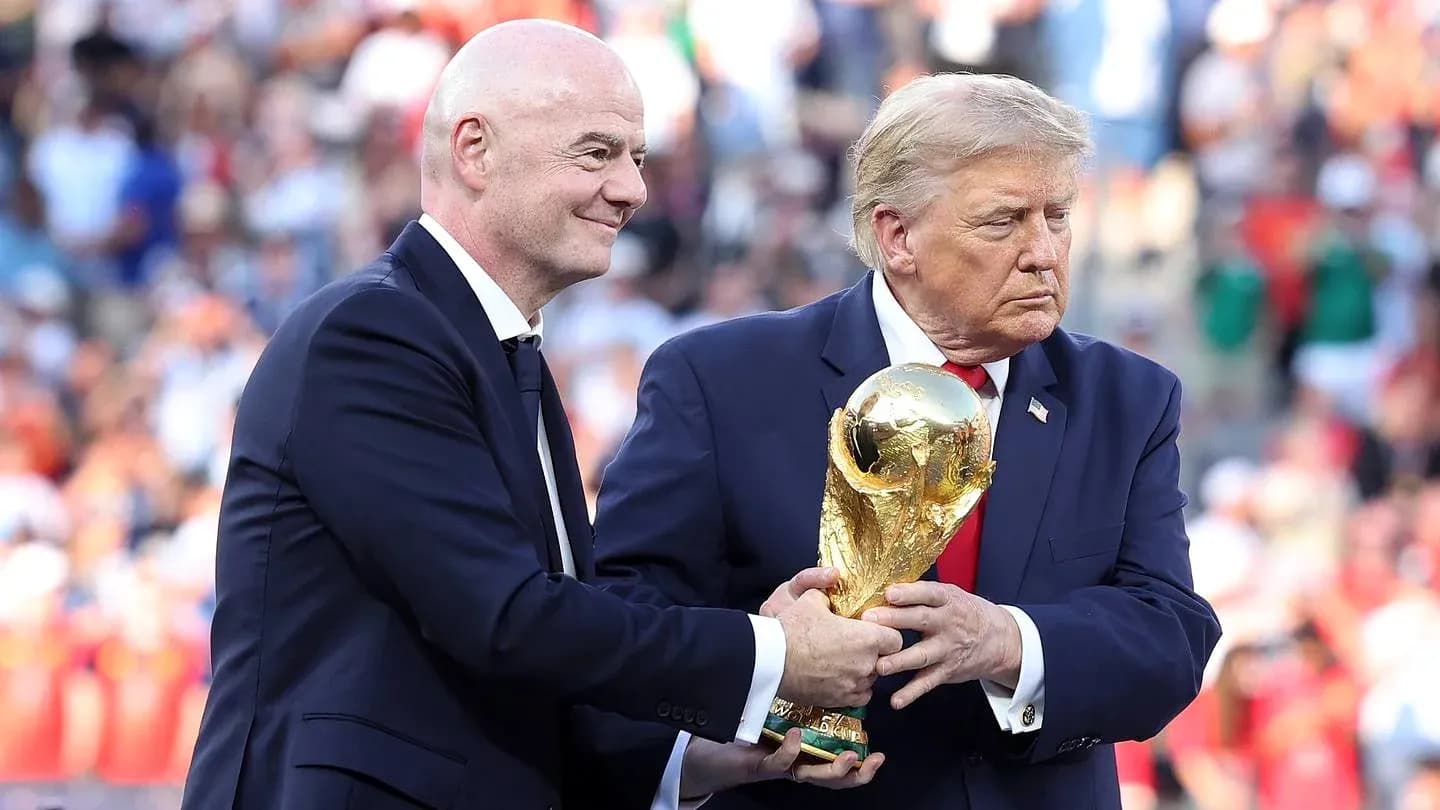
Gianni Infantino has been pulled into the heart of Washington’s political storm.
The FIFA president has been asked to appear before the House Judiciary Committee to explain, in detail, the nature and depth of his relationship with U.S. President Donald Trump, as concerns grow over how far the White House has reached into world football’s corridors of power.
A Relationship Under the Microscope
Infantino and Trump have never hidden their mutual admiration. That much has long been clear. But the scale of the U.S. President’s influence on FIFA business is now facing its most serious challenge yet.
The flashpoints are striking.
- Infantino awarded Trump the first-ever FIFA Peace Prize.
- He claimed an office in Trump Tower in New York City.
- The World Cup draw was moved to Washington’s John F. Kennedy Center, a venue that had effectively been taken over by Trump’s team.
Then came this summer’s World Cup, and the moment that turned quiet unease into formal complaint.
Trump personally reached out to Infantino to push for the lifting of a ban imposed on USMNT striker Folarin Balogun. The ban was scrapped. The decision triggered a formal protest from the Norwegian Football Federation, which has been one of the loudest critics of Infantino’s leadership.
What had looked like political proximity suddenly resembled political leverage.
Raskin Turns Up the Heat
Into that gap stepped Rep. Jamie Raskin.
A senior Democrat and a prominent figure on the House Judiciary Committee, Raskin has written to Infantino to request a formal interview about his relationship with Trump, including any dealings conducted away from the public eye.
His language is blunt.
“The most recent quid pro quo that FIFA and President Trump orchestrated is not a victimless crime,” Raskin wrote. “It hurts Americans.
“FIFA has taken its newfound favored status in the Trump Administration as a sign that it may rip off its consumers, most notably, by employing illegal price gouging and fraudulent sales tactics for the World Cup.”
The letter accuses FIFA of “outright bribery” and draws a direct line between Infantino’s conduct and the corruption scandals that toppled his predecessor, Sepp Blatter. Raskin alleges that Americans have been “defrauded and manipulated” over the finances surrounding the World Cup, an area already under investigation by New Jersey attorney general Jennifer Davenport.
Raskin’s letter does more than ask questions. It “serves as notice” for Infantino to preserve and produce evidence: all communications “between FIFA personnel and individuals affiliated with the Trump Administration or its inaugural committee” must be kept, and Infantino is requested to sit for a transcribed interview to defend his dealings with the President.
For a governing body still trying to convince the world it has moved on from its darkest days, the optics are brutal.
Power, Politics and the 2031 World Cup
What does it all mean in practical terms?
For now, not as much as the rhetoric might suggest. Democrats remain in the House minority, which sharply limits Raskin’s immediate power to compel testimony or documents from Infantino, FIFA or Trump.
Any serious legal move would require a majority vote. That pushes the real leverage point to November’s midterm elections. If Democrats gain seats and flip the balance, the tone of Raskin’s letter could turn from warning shot to opening salvo.
World football cannot ignore the timing. The process to award hosting rights for the 2031 Women’s World Cup is looming, with the tournament expected to be co-hosted by the U.S., Mexico, Costa Rica and Jamaica. Scrutiny on every step of that bidding process will now intensify, especially where U.S. interests intersect with FIFA decisions.
The question hanging over Zurich is no longer just about governance. It is about how much political capital the world’s most powerful office has invested in the world’s most powerful sporting body—and what was offered in return.
The White House Fires Back
The response from the White House came quickly and with characteristic aggression.
Speaking to The Athletic, spokesperson Davis Ingle launched a personal attack on Raskin.
“Lightweight Jamie Raskin [is] a stupid person’s idea of a smart person,” Ingle said in a statement.
From there, the statement pivoted to a full-throated defence of Trump’s role in delivering the 2026 FIFA World Cup.
“No other president in history could have pulled off the historic feat that President Trump delivered for the American people and the world,” Ingle continued. “Thanks to his bold vision and decisive leadership, the 2026 FIFA World Cup generated billions of dollars in revenue, created a massive economic boost across host cities, and delivered a safe, secure and seamless experience for millions of fans and athletes from around the globe.
“It will undoubtedly go down as one of the greatest and most successful sporting events in history.”
The message was clear: any attempt to cast Trump’s relationship with FIFA as corrosive will be met with political fire and a reminder of the tournament’s financial and logistical success on U.S. soil.
Football Caught in the Crossfire
FIFA has long insisted it stands above politics. That claim now looks thinner than ever.
Infantino faces a demand to explain how far he allowed the Trump White House into FIFA’s decision-making. Trump’s allies, in turn, are framing the World Cup as one of the defining achievements of his presidency.
The next move rests with voters and lawmakers. If November reshapes Congress, Infantino may yet find himself answering questions in a very different kind of arena—under oath, under lights, and under the gaze of a world that has heard these corruption stories before.
How many more times can football’s governing body walk this tightrope before it finally falls?