.svg&w=384&q=75 "Naijagoal logo")
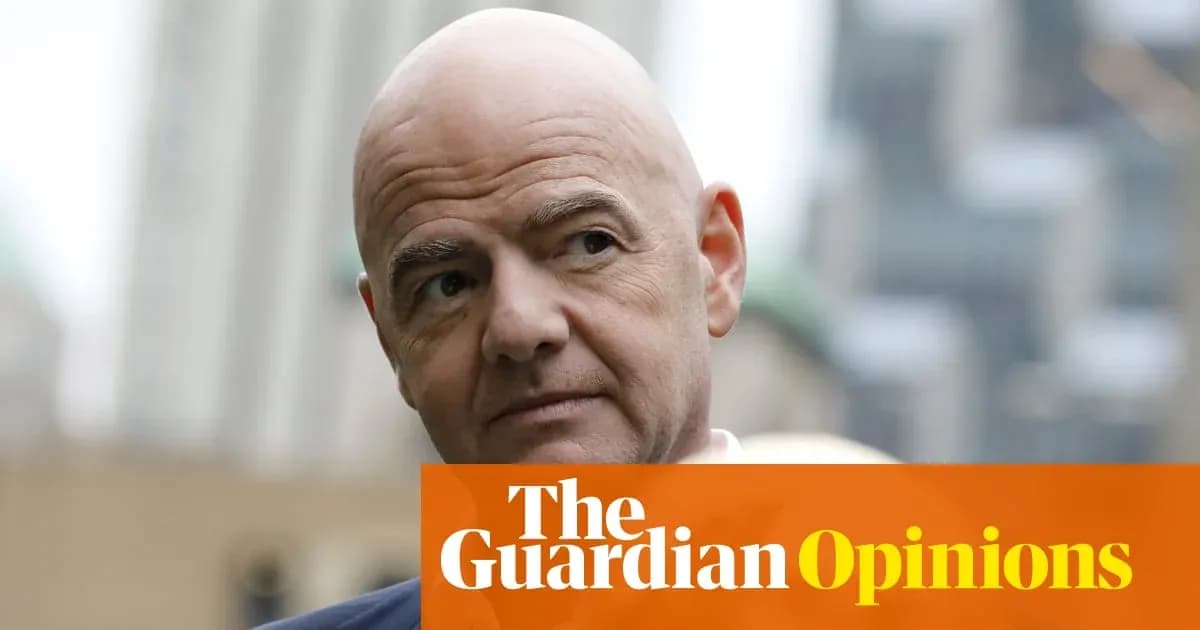

Gianni Infantino's Transformation: From Bureaucrat to Power Player
Gianni Infantino once sold himself as football’s great reset. A clean break from Sepp Blatter, a lawyer with a spreadsheet, a “typical Swiss bureaucrat” who would restore Fifa’s image and open the blinds after years of darkness.
He talked about accountability. He talked about transparency. He even talked about everyone in the world applauding Fifa.
But the line that really mattered in 2016, the one that won him votes, was simpler: expect a “very significant increase” in funding. The money would flow. The rest, delegates were invited to believe, would take care of itself.
Even then, there were whispers about private jets.
From bureaucrat to would‑be head of state
Eight years on, nobody calls Infantino a faceless functionary. Inside football, the language has changed. One description, heard more and more often in boardrooms and corridors, lands with a thud: “He thinks he’s running a nation state.”
That line feels especially sharp this week, as Fifa moves to sell a slice of the World Cup’s commercial rights to outside investors without bothering with consultation. Not a tweak. A structural shift in the sport’s biggest asset, floated as if it were an internal corporate reorganisation.
It fits a pattern. Infantino’s presidency has been built on two obsessions: grow professional football, and grow the money that comes with it. The longer he has stayed in office, the more everything has bent towards that vision.
The expansion drive started almost immediately. In 2016, barely settled into the job, he pushed to enlarge the World Cup for the first time and floated an enhanced Club World Cup. Two years later came the idea of a global Nations League, housed in a new corporate vehicle and bankrolled by external investment. That plan was ultimately shelved under pressure, but the direction of travel was obvious.
By 2017, the 2026 World Cup was confirmed at 48 teams. In 2021, as the Super League rebels plotted their breakaway, those clubs reportedly expected Fifa to be onside, or at least quietly tolerant, before the project collapsed. At the end of that same year, Infantino went public with the most audacious proposal yet: a biennial World Cup.
The appetite for more never eased. It accelerated.
Expansion as a way of life
Once football emerged from the Covid-19 pandemic nursing heavy financial losses, the tempo quickened again. Fifa used its Forward Programme to help plug some of the gaps, but the real answer, in Infantino’s eyes, lay in more product, more tournaments, more inventory to sell.
Out came a 32-team Club World Cup, immediately followed by talk of making it even bigger. The 2034 World Cup went to Saudi Arabia in a rush that caught nobody inside the game by surprise but still stunned with its lack of contest. The 2030 edition was stretched across three continents and six host countries, a geographical sprawl that raised as many questions as it answered.
Even that may not be the end point. There is already discussion of taking the World Cup to 64 teams. At the margins of all this, smaller but telling changes appear, such as the introduction of mandatory hydration breaks.
So what is driving this relentless expansion? That question now circles almost every major meeting of football’s power brokers.
One explanation comes up again and again: patronage. Bigger tournaments mean bigger revenues. Bigger revenues mean bigger cheques to Fifa’s 211 member associations. And bigger cheques tend to mean loyal voters when it is time to renew a mandate.
Infantino has also quietly rewritten the rules on how long a Fifa president can serve. He is effectively locked in for a third full term. On paper, that will be his last. By then, he will have more than trebled Fifa’s revenues compared with the era he inherited.
Is that not enough?
A job for tomorrow?
The latest commercial scheme has spawned a second theory. By carving out a new vehicle to house World Cup rights and selling equity to investors, Infantino could be building his own landing spot for life after the presidency.
Reports in the Times suggested he could become CEO of the new venture once he steps down, collecting a salary closer to that of a blue-chip executive than the head of an NGO. Fifa has denied any such conversations, and there is no proof they have taken place.
Even if that role eventually materialises, it still feels like only part of the story. The sheer scale and speed of the changes – the constant reshaping of the calendar, the tournaments, the commercial structures – suggest a deeper motivation than a lucrative retirement job.
Which leads to the third, more blunt reading of Infantino’s reign: this is about status and power.
The narrative is well known inside football. The Italian kid, working class in wealthy Switzerland, bullied for his ginger hair, now seated at the top table. A man who once needed the patronage of others now controls the sport’s biggest patronage machine.
As an adult, he has never hidden his taste for the high life or for proximity to fame. In 2016 he surrounded his candidacy with a dozen former players, branded as Fifa Legends, to burnish his image. As president, his gaze has shifted from ex-pros to presidents and princes.
He has cultivated relationships with Vladimir Putin, the emir of Qatar, the crown prince of Saudi Arabia and, ultimately, the US president, Donald Trump. Each encounter has placed Infantino in a new frame, shoulder to shoulder with political heavyweights rather than sporting administrators.
Playing politics with the World Cup
That new status has brought with it a different kind of power – or at least the impression of it. Inside Fifa, pushback has been minimal. Across the game, resistance has been sporadic and fragmented. Time and again, Infantino has been able to force through changes that, a decade ago, would have triggered open revolt.
But political alliances rarely come cheap. They are unstable, transactional, and they tend to demand repayment.
The new commercial plan has already been framed by one senior football figure not as Infantino’s brainchild at all, but as the price of doing business with the most disruptive of his political acquaintances.
“Gianni has got in way over his head with Trump,” they said. “He [Trump] is now extracting his share of the World Cup rewards.”
If that is even partly true, the question for football is no longer what is eating Infantino, but how much of the game’s future he is prepared to trade to stay at that top table.