.svg&w=384&q=75 "Naijagoal logo")

Gianni Infantino's FIFA Project Collapse: A Turning Point for World Football
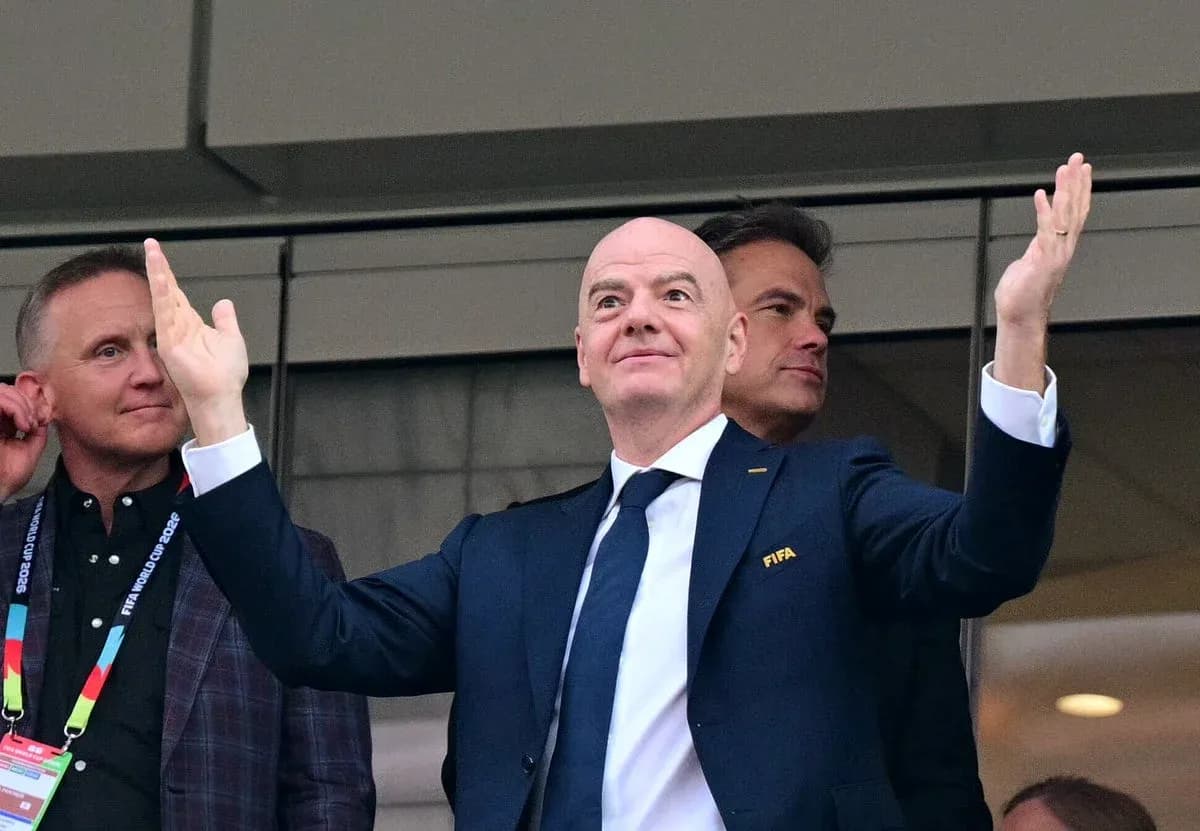
Gianni Infantino’s great gamble is over. The FIFA president who spent the week selling his vision of a part-privatised future for world football was forced into a late-night retreat on Friday, abandoning a project that had detonated a revolt across the sport’s power base.
The U-turn was as swift as it was stark.
“Having listened carefully to all the views, it has become clear that the project has created divisions… that are no longer in the interest of the objective set out in the first place,” Infantino said in a statement released late on Friday. “Our purpose has always been — and will always be — to unite and improve. As a result, this proposal will not proceed.”
By then, the damage was done.
A president isolated
The week began with FIFA trumpeting a bold restructuring. A new private entity, FIFA Forward Enterprises (FFE), would be created to run its flagship events — World Cups, Club World Cups and other major competitions. A 21 per cent minority stake in FFE would be sold to outside investors, a move FIFA projected would raise $4.2 billion.
The money was already earmarked. FIFA said the windfall would be channelled directly to its 211 member associations through a new funding stream, the FIFA Fast-Forward Programme (FFFP). Over the next four years, total development funding would, on paper, surge past $10 billion.
The sales pitch came with a sweetener and a warning.
If an association opposed the FFE plan but it still passed, it would receive $20 million in the 2027-30 cycle, then $22 million in 2031-34 and $24 million in 2035-38 — regardless of whether FIFA actually sold any stake in FFE. Those who backed the proposal would be rewarded with $40 million in 2027-30, before the same follow-up payments.
It was a financial carrot big enough to change the landscape of the global game. Instead, it lit the fuse.
Confederations push back
UEFA moved first and hit hardest. Europe’s governing body warned that all 55 of its members were prepared to boycott FIFA competitions — including the World Cup — if the project went ahead. That was not sabre-rattling from the fringes. That was the sport’s most powerful bloc threatening to walk.
Concacaf then aligned itself with UEFA’s stance. The Asian Football Confederation (AFC) followed, issuing a statement of solidarity with both. Between them, those three confederations represent 137 of FIFA’s 211 members.
FIFA tried to hold its line. In a statement early Friday morning in Europe, it insisted “nobody is selling football” and stressed it “acknowledges and respects feedback and concern aired in public” while vowing to push on. The organisation “reaffirms its commitment to an open and democratic consultation,” it said.
The words rang hollow as the ground shifted beneath Infantino’s feet.
The AFC, having initially been more measured, made its position unmistakable when it publicly backed UEFA and Concacaf. South America’s CONMEBOL stopped short of outright rejection but underlined that financial and commercial decisions “must always serve the interests of football and never take precedence over its essence.”
The message was clear: the president was running out of allies.
Inner circle cracks
External opposition was one thing. What came next turned a political crisis into a personal one.
First, Carlos Cordeiro, Infantino’s adviser, resigned and torched the project on his way out. In a blunt statement, he called the proposal “a bad deal for FIFA’s Member Associations, a bad deal for football, and a bad deal for the long-term future of the game.”
Then Kevin Lamour, FIFA’s chief operating officer, went public. Speaking to The Associated Press, he accused Infantino of having “deceived” staff and said he would sleep better after speaking out, even if it cost him his job.
“It is the project of one person,” Lamour said. “Not only must this project not go ahead… but the time has now come for football political leaders to ask themselves the right questions and make the right decisions.”
At that point, this was no longer just a debate about commercial structures. It was a test of Infantino’s authority.
Joshua Kushner’s venture capital firm Thrive, the proposed investment partner, had not withdrawn by Friday night. It did not need to. FIFA’s own leadership pulled the plug first.
Hours after CONMEBOL’s carefully worded intervention, FIFA released the statement that killed the deal. Everything was off the table.
From power play to survival fight
Only days earlier, Infantino stood as the all-powerful figure at the top of an organisation boasting $15 billion in revenue from the men’s World Cup this summer. Inside the game, many had already resigned themselves to him gliding unchallenged into another term when elections are held in March 2027. Federations had begun filing formal letters of support.
That aura has been shattered.
The threat of a UEFA boycott was serious enough. Once Concacaf and the AFC lined up alongside Europe, Infantino faced the real prospect of being outvoted by the very members whose loyalty he had long cultivated through development money and expanded tournaments.
The rebellion spread inwards. Cordeiro’s resignation and Lamour’s public denunciation stripped away the image of a unified inner circle. A grand strategy to reshape FIFA’s commercial future morphed, in a matter of days, into a scramble to protect the presidency.
Infantino chose to retreat. The project is gone. The questions are not.
Trust on the line
Inside UEFA and Concacaf meetings on Thursday, The Athletic reported that delegates openly questioned Infantino’s future. The conversations went beyond the merits of FFE and into whether the man at the top still commanded confidence.
Lise Klaveness, president of the Norwegian Football Federation, did not mince her words. “My clear impression at the moment is that he has lost a great deal of trust,” she told VG. “We didn’t vote for him last time, and we’ve been sceptical about this. There are many good things about FIFA, but if you take a lax approach to governance principles and rules, you quickly lose trust.”
Trust is the currency Infantino has spent most recklessly this week. Once gone, it rarely returns at full value.
The road to 2027
For now, Infantino remains FIFA president. The statutes have not changed. The election date has not moved. But the landscape around him has.
The federations that publicly opposed his plan control a decisive chunk of the vote. Senior figures inside his own administration have broken ranks. The grand promise of billions in new funding has evaporated, leaving behind a trail of suspicion about how and why the project was driven so hard, and by whom.
Nominations for the 2027 FIFA presidential election must be submitted by November. Before this week, a contest looked unlikely. After this bruising climbdown, it looks almost inevitable.
The project of one person is dead. The battle for the most powerful job in world football has just begun.