.svg&w=384&q=75 "Naijagoal logo")

Germany’s Klopp Era Begins with Nations League Clash Against Netherlands
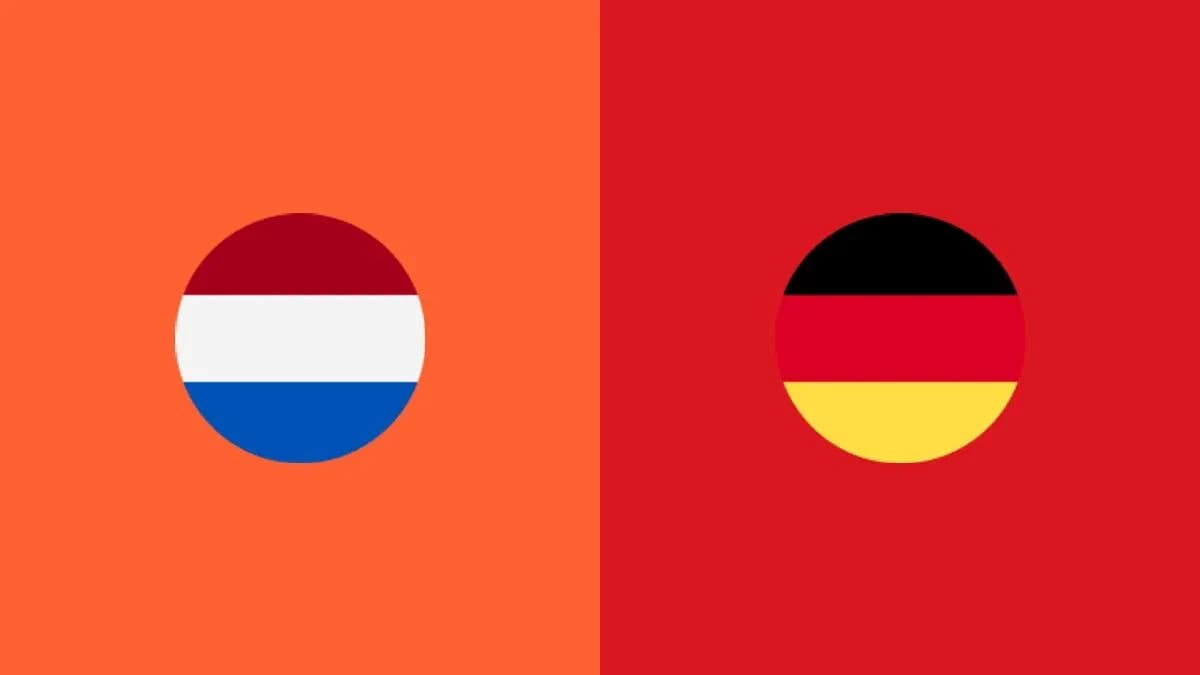
Germany’s Klopp era begins with a bang of an opener: a Nations League trip to Amsterdam, a new-look Netherlands, and a 24-year-old centre-forward who has been bullying Premier League defences.
Kick-off is set for 24 September 2026, 14:45 EST, 18:45 GMT. The stakes feel bigger than matchday one of a group stage usually does.
Xavi’s Oranje, without their record scorer
On the home bench, a strikingly different sight. Xavi takes charge of the Netherlands for the first time in competitive action, stepping in after Ronald Koeman’s side were dumped out of the World Cup by Morocco on progression rules following a 1-1 draw.
He has wasted no time in making a statement.
Memphis Depay, the country’s all-time leading scorer, has been left out of the squad. No fitness caveats, no suspension. Just a clean tactical decision from a coach who clearly wants to redraw the attacking blueprint.
The projected XI is bold and front-footed. Bart Verbruggen in goal. A back four of Denzel Dumfries, Virgil van Dijk, Micky van de Ven and Nathan Ake. In midfield, Joey Veerman, Ryan Gravenberch and Tijjani Reijnders bring control and legs. Ahead of them: Jeremie Frimpong and Cody Gakpo flanking Brian Brobbey.
No injuries or suspensions cloud Xavi’s options for now. This is his choice, not a compromise.
Brobbey brings muscle and menace
If there is one Dutch player Germany will have circled in red, it is Brobbey.
The Sunderland striker just hit a hat-trick in a wild 5-3 defeat to Manchester City, and he gave Arsenal’s title-winning defence a torrid afternoon not long before that. He doesn’t just score; he drags centre-backs into battles they don’t want.
Against a German back line still being reshaped, his power and penalty-box presence could define the rhythm of the night. Klopp’s staff will have spent hours plotting how to stop the 24-year-old pinning their centre-halves and opening lanes for Gakpo and Frimpong.
Klopp’s Germany: high energy, high risk
On the other side, there is a familiar face with a very unfamiliar squad.
Jurgen Klopp, the Liverpool icon, has replaced Julian Nagelsmann after Germany’s World Cup ended with a 1-1 draw against Paraguay and elimination in the knockouts. The mandate is clear: reset the mood, reset the style, reset the results.
He has started by ripping up the usual selection patterns. For four Nations League fixtures in September and October – against the Netherlands, Greece twice, and Serbia – he has named two separate 22-man squads. Rotation is not an option; it is the plan.
For Amsterdam and the first Greece game, the group reads like a blend of established talent and fresh faces: Marc-André ter Stegen, Alexander Nübel, Finn Dahmen, Hennes Behrens, Max Rosenfelder, Philipp Treu, Jonathan Tah, Nico Schlotterbeck, Nathaniel Brown, Josha Vagnoman, Yann-Aurel Bisseck, Joshua Kimmich, Nadiem Amiri, Yannik Engelhardt, Felix Nmecha, Anton Stach, Bambasé Conté, Kai Havertz, Chris Führich, Jamal Musiala, Lennart Karl, Younes Ebnoutalib, Serge Gnabry, Kevin Schade.
It is unconventional. It is also pure Klopp: energy, versatility, and a willingness to trust players who haven’t yet become household names.
Ter Stegen’s chance, Nubel’s shirt
One of the most intriguing subplots sits in goal.
Marc-André ter Stegen is back from serious injury and finally free of Manuel Neuer’s long shadow. For years, he has been the heir waiting in the hallway. Now the door is open.
But the first Nations League night may still belong to Alexander Nübel. The Besiktas goalkeeper is expected to start in Amsterdam, with Klopp rewarding his recent form and giving him the first crack at the No.1 jersey.
The battle is clear: Ter Stegen’s pedigree against Nübel’s momentum. The Nations League will not just shape Germany’s group position; it could decide who anchors their goal for the next cycle.
How Germany are expected to line up
Klopp’s projected XI has his fingerprints all over it.
Nübel in goal. A back four of Nathaniel Brown, Jonathan Tah, Nico Schlotterbeck and Joshua Kimmich. That last detail is telling: Kimmich, so often a midfielder, sliding to right-back to set the tone on the ball and in the press.
Ahead of them, Felix Nmecha and Nadiem Amiri form the double pivot, with Lennart Karl and Serge Gnabry likely to operate from wide areas. Jamal Musiala drifts between the lines, and Kai Havertz leads the line as a mobile, pressing centre-forward.
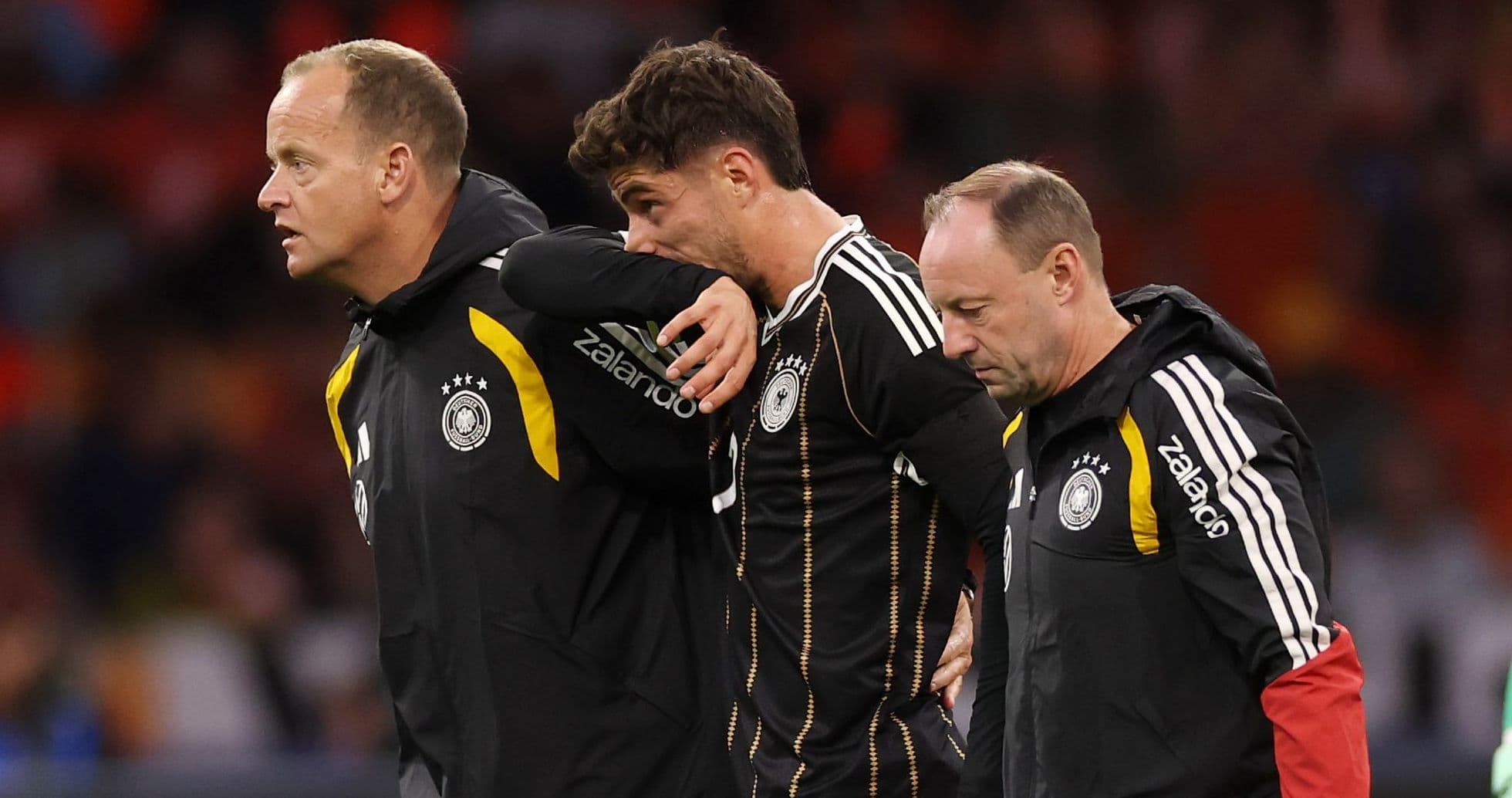
No injuries or suspensions currently restrict Klopp. This is his clean slate.
Form lines: goals at both ends
Both sides arrive with recent records that promise entertainment rather than control.
The Netherlands have three wins, one draw and one loss from their last five in all competitions. The highlight: a ruthless 5-1 demolition of Sweden. The low point: that 1-1 draw with Morocco at the World Cup that ended up costing them progression.
Across those five matches, Oranje scored 11 and conceded six. The pattern is obvious – they can hurt you, but they can be hurt.
Germany’s form is more jagged. Two wins, no draws, two defeats in their last five, with that 1-1 against Paraguay closing their World Cup journey. They tore Curacao apart 7-1 in their opener and edged Ivory Coast 2-1, but losses to Ecuador and Paraguay in the knockouts cut the campaign short.
Still, 13 goals scored and only five conceded in that span hint at a side that, when it clicks, can overwhelm opponents. Jamal Musiala has been central to that, with three goal contributions in his last three games for Bayern Munich. He arrives in Amsterdam in rhythm.
Selection headaches and absences
Both managers have had to tweak their plans, though the Dutch have been hit slightly harder in attack.
Justin Kluivert and Donyell Malen have withdrawn from Xavi’s squad through injury, trimming his options in the wide areas. The structure remains the same, but the depth behind Frimpong and Gakpo is thinner.
Germany, meanwhile, have lost Brajan Gruda from their group. It is a blow to Klopp’s pool of creative options, but the squad list still bristles with attacking variety.
History and the table: edge to Germany
These two know each other well, and the recent record leans Germany’s way.
Their last meeting, in October 2024, ended 1-0 to Die Mannschaft in this very competition. A month earlier, in September 2024, they shared a 2-2 draw when the Netherlands hosted in the Nations League.
Across the last five head-to-head clashes, Germany have won twice, the Netherlands once, with two draws. Eleven goals in those games suggest this fixture rarely settles into a stalemate.
The current Nations League Group 2 standings add another layer. Germany sit top. The Netherlands are third. For Xavi, this is not just a debut; it is a chance to drag his side back into the race.
For Klopp, it is the perfect stage to show that his Germany will not just be new in name, but in edge, intensity and results.