.svg&w=384&q=75 "Naijagoal logo")

Germany’s World Cup Setback and How Jürgen Klopp Could Spark a 2030 Revival
Germany's 2026 World Cup Disappointment
After a promising run at EURO 2024 on home soil, where Germany narrowly missed the semifinals due to a controversial handball call against Marc Cucurella, the national team stumbled badly at the 2026 World Cup. This setback followed years of inconsistent performances, including failure to advance past group stages in both the 2018 Russia and 2022 Qatar tournaments. The transitional period from Joachim Löw to Julian Nagelsmann brought hope, but early exits persisted, casting doubt over Germany’s direction.
The Arrival of Jürgen Klopp
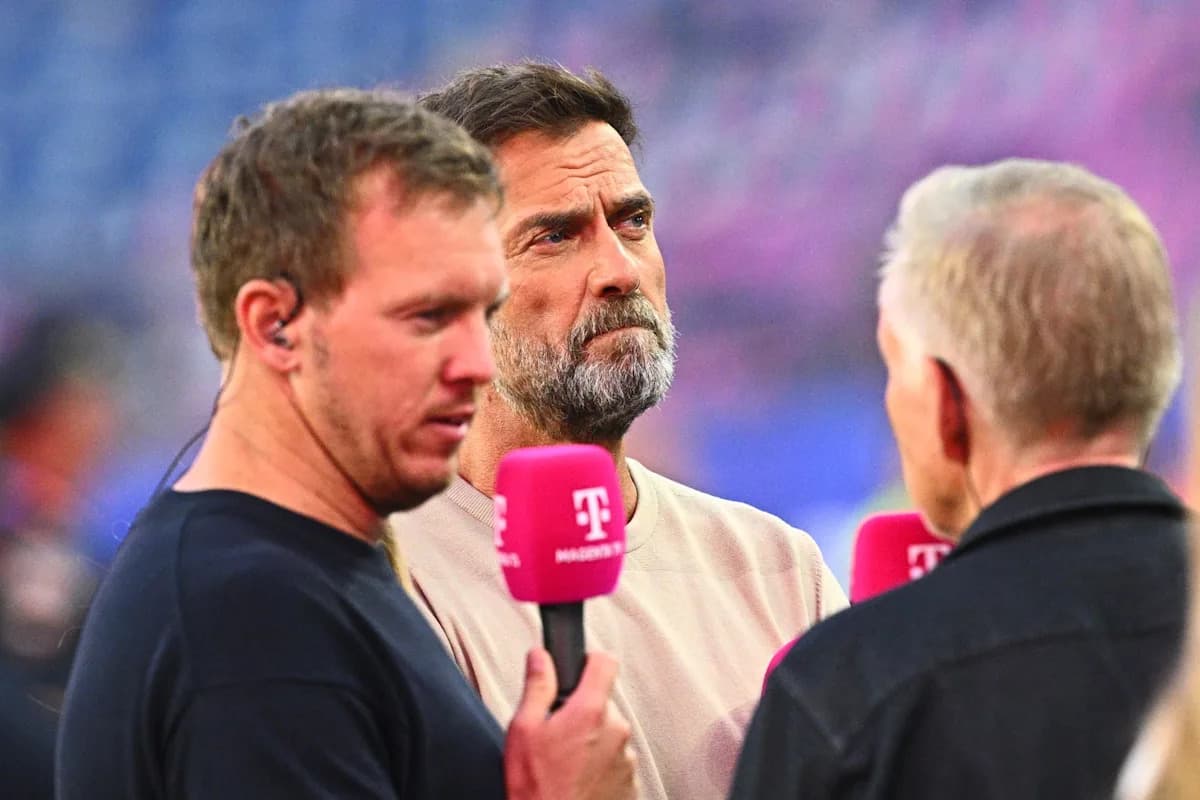
Now, Jürgen Klopp is poised to take charge after Julian Nagelsmann stepped down following the World Cup disappointment. Klopp will wrap up his punditry role with MagentaTV before activating a release clause from Red Bull GmbH to assume the national team manager position. Germans have long awaited Klopp’s return to their football scene, hoping he can restore the team to its former glory reminiscent of the 2014 World Cup triumph.
Klopp’s Impressive Track Record
His resume speaks volumes. Klopp secured Bundesliga promotion with Mainz, won league titles and cups with Borussia Dortmund, and ended Liverpool’s 30-year wait for a Premier League trophy in the 2019/20 season. His collection of accolades includes multiple domestic trophies, a Champions League title, UEFA Super Cup, and FIFA Club World Cup wins. This extensive experience on big stages stands in contrast to Nagelsmann’s relatively younger managerial career.
Klopp's comprehensive list of honors outshines Nagelsmann’s achievements and brings a wealth of high-level experience that Germany hasn't seen in quite some time at the national team helm.
Strong Bonds with the DFB
Klopp already enjoys excellent relationships with key figures within the German Football Association (DFB), including Bernd Neuendorf, Hans-Joachim Watzke, and Rudi Völler, who confirmed he will remain sporting director through 2028. These connections should ease Klopp’s transition and facilitate smoother cooperation at all levels. He plans to bring assistants Peter Krawietz and Zsolt Löw along, forming a trusted coaching unit.
Such established rapport can help navigate the pressures of international football, which could be critical as Germany looks to rebound in upcoming tournaments.
Authority to Reshape German Football
Reports suggest Klopp will be granted significant control over team selection, tactics, and youth development, similar to the early 2000s "Das Reboot" era that reshaped German football. This autonomy comes with risks but also offers huge potential rewards, especially given Klopp’s history of transforming squads at Mainz, Dortmund, and Liverpool despite fewer powers than he is expected to receive now.
Whether it’s squad choices, tactical adjustments during games, or influence over youth programs, Klopp’s impact could be profound, aiming to avoid another string of disappointing World Cups for Germany.
Balancing Youth and Experience
Klopp has a proven knack for blending young talents and seasoned veterans. His work with players like Robert Lewandowski at Dortmund and James Milner at Liverpool shows he can get the best from diverse groups. In Germany’s case, debates about age and experience often arise, especially after early tournament exits.
With Klopp, one might see players like Said El Mala getting extended opportunities, or perhaps veterans such as Robert Andrich or Niclas Füllkrug being recalled. His man-management skills suggest he can strike the right balance, benefiting a squad packed with both established Bundesliga and Champions League winners and emerging stars.