.svg&w=384&q=75 "Naijagoal logo")

Gabriel's Tug of War Reveals Manchester United's Unstable Future
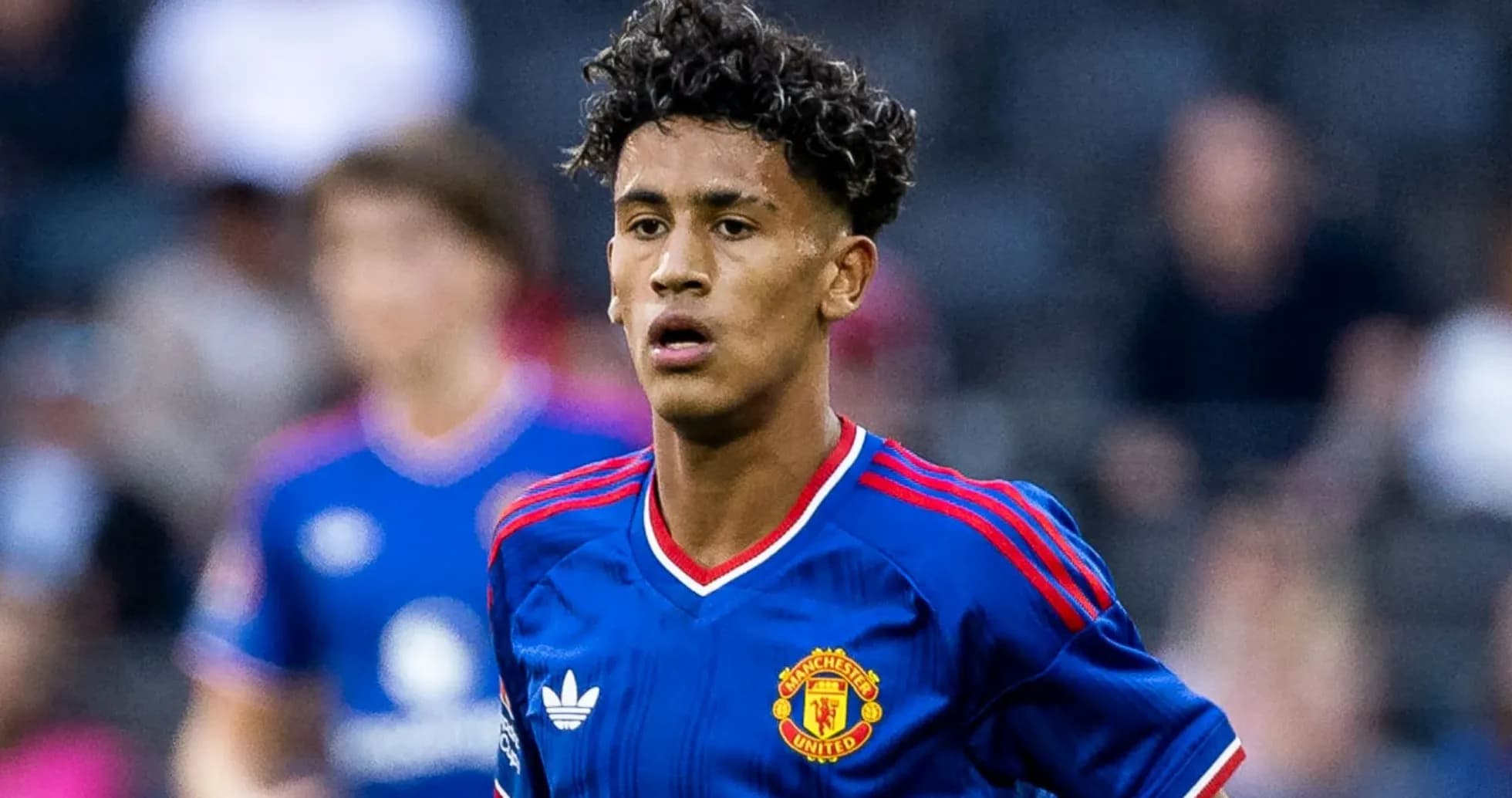
The biggest battle of Manchester United’s season might not be happening under the floodlights at Old Trafford, but behind closed doors in boardrooms and agent meetings over a 15-year-old who hasn’t kicked a ball for the first team.
Real Madrid, Barcelona, Paris Saint-Germain and Bayern Munich all want Gabriel. United insist they are not selling. Somewhere in the middle, a prodigy is weighing up whether the club that raised him is still the right place to grow.
A generational talent on the brink
Inside Carrington, they talk about Gabriel as a once-in-a-generation prospect. United’s hierarchy know it too, which is why senior figures are scrambling to convince him to stay rather than watch him walk away for nothing more than training compensation.
Sir Jim Ratcliffe, already under fire from a fanbase furious at a string of unpopular calls, cannot afford to be the man who lost him. Not this early in his reign. Not a player like this.
Gabriel is contracted until next summer, but there’s a catch. He isn’t tied down as a full-time scholar, and once he turns 16 on October 16, he can technically leave if he holds a European passport. Under post-Brexit rules, a dual national can move to an EU club before 18. United are now digging into his family background in detail.
His father, Joe O’Cearuill, played professionally and represented Ireland twice. His mother has Greek Cypriot heritage. If the paperwork lines up, the exit door swings open.
United kept him out of Manchester City’s grasp last year. This time, the pull from Europe’s giants feels stronger. Maybe too strong.
A no-show and a broken plan
The first worrying sign came on the training pitch. Or rather, the lack of it.
Gabriel had been scheduled to join first-team training on Saturday. He didn’t turn up. He hasn’t been seen at Carrington this week. For a club trying to show him a pathway, that absence speaks loudly.
Michael Carrick had planned to name him in the squad for Wednesday’s Carabao Cup third-round tie against Brighton. Had he stepped onto the Old Trafford turf, Gabriel would have become the youngest player ever to appear for United’s senior side. That landmark is gone, for now. His involvement has been ruled out.
United’s academy has not produced a true global superstar since Marcus Rashford. Gabriel has been the great hope since he walked through the doors at 11. A two-footed forward, slippery in tight spaces, balanced, quick, and ruthless when the goal opens up. The sort of talent that makes youth coaches speak a little faster and fans scour clips on social media.
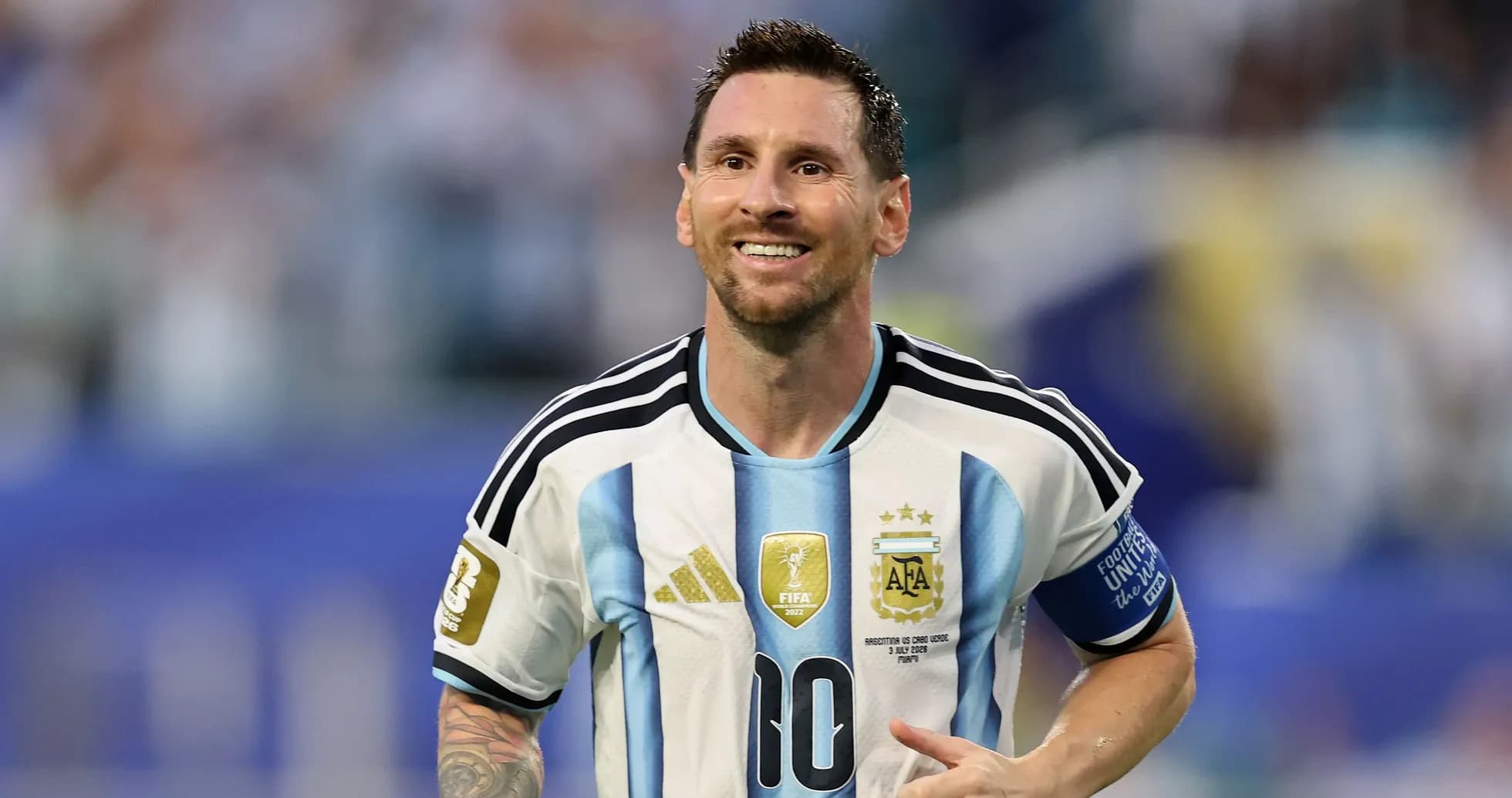
Comparisons with Lionel Messi are lazy and unhelpful, but stylistically, Neymar is the closer fit – a wiry, elastic forward who lives off sharp changes of direction and audacious touches. Gabriel even laces up in the same model of Nike boots as the Brazilian after signing a lucrative extension with the brand in March 2025.
The numbers back up the hype. Last season, he broke into United’s Under-18s at just 14, another record, and scored 20 goals in 21 league games. He swept the board: the inaugural Premier League U18s Player of the Year and United’s Jimmy Murphy Young Player of the Year, the youngest winner in the club’s history.
By August he was with the U21s. On debut against Ipswich he ran the show: two assists and a deft chip in a 5-0 win. A week later he scored again as United dismantled Leicester 4-1.
This is not a normal 15-year-old.
The Dowman effect – and the danger of shortcuts
So why the hesitation? Why the stand-off?
Because Gabriel is watching his peers and wondering why his story isn’t moving as fast.
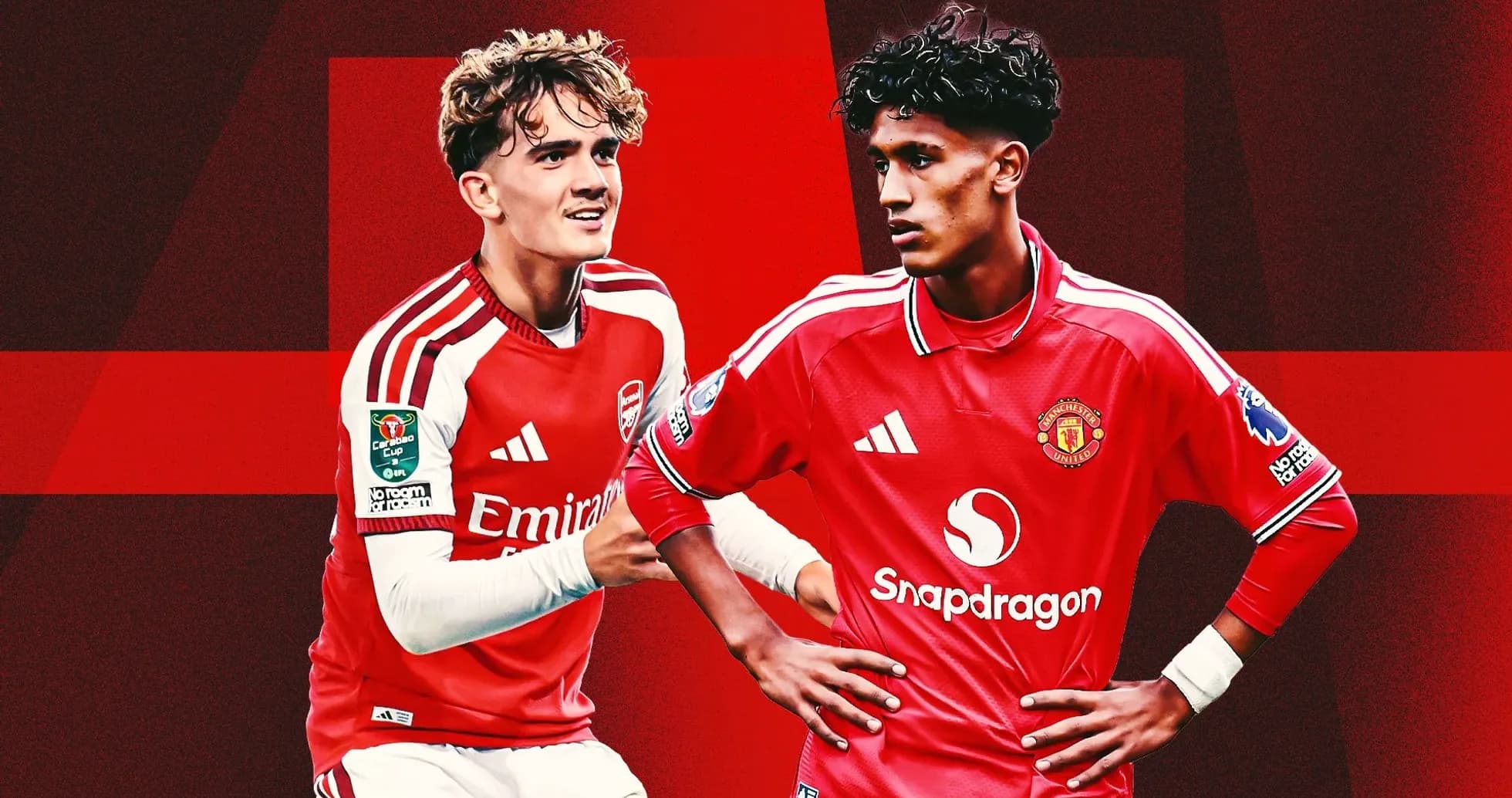
He only has to look to north London. Arsenal have thrown their arms around Max Dowman and the message is clear: if you’re good enough, you’re old enough.
Ethan Nwaneri set the tone back in 2022, becoming the youngest player in Premier League history at 15 years and 181 days against Brentford. His path has been bumpy – loans to Marseille and Borussia Dortmund, spells in and out of the side – but he already has more than 50 appearances for Arsenal and is still only 19.
Dowman has gone even further, even earlier. He became the second-youngest Premier League player when Mikel Arteta introduced him against Leeds in August 2025. In March, he broke James Vaughan’s long-standing record as the league’s youngest goalscorer with a brilliant solo strike against Everton at 16 years and 139 days.
By May he was the youngest title-winner in Premier League history. This week, he joined Wayne Rooney in a very exclusive club: only the second 16-year-old ever to score a brace for a Premier League club in a major competition, firing Arsenal to a 4-2 Carabao Cup win over Ipswich.
Fourteen senior games already. Flair, power, and a maturity that forces his manager to keep picking him. Arteta has even mentioned him in the same breath as Messi, while stressing the need to manage his minutes carefully.
“We have to look after him. He's 16 years old. You don't see that in this league,” Arteta said after the Ipswich tie. He spoke about the unique physical and mental demands of English football and the need to choose Dowman’s appearances carefully.
Dowman, though, has one huge advantage. Arsenal are flying. Arteta can rotate him in and out of a deep, confident squad without the sky falling in.
Gabriel does not have that luxury at United.
Too small, too soon?
There is also the body to consider. Dowman already looks built for Premier League contact. Gabriel doesn’t.
He is slight, often the smallest player on the pitch. His bravery and hunger bridge part of that gap, but only to a point. Throwing him into the Premier League pressure cooker too early could backfire badly.
If he came in and lit up games, Carrick would be under relentless pressure to start him every week, loading stress onto a still-developing frame. If he struggled, the noise would flip. Overhyped. Not ready. Another false dawn.
United cannot hide behind a stacked squad the way Arsenal can. Performances fluctuate, results swing, the margins are thin. Dropping Gabriel after a run of games would be painted as conservatism or mismanagement. Persisting if he faltered would be accused of indulgence.
Danny Simpson, who came through United’s academy in the final years of Sir Alex Ferguson’s reign, believes Carrick has handled the situation correctly so far.
Speaking to GOAL via Free Bets, Simpson drew the contrast with his own experience and Dowman’s current environment. At Ferguson’s United, he could come on for 10 minutes at 2-0 or 3-0 up, surrounded by serial winners. Arsenal’s “second XI”, he argued, are similarly strong and confident, making it far easier for a teenager to shine.
“It's easy to come on and have an impact and play well,” he said of Dowman’s situation. “I think maybe United at the minute is a bit different… I know we all want to see Gabriel play and it's exciting, but it's just a very different situation to Max Dowman at Arsenal.”
Simpson’s advice is simple: let Gabriel train with the first team, feel the level, and wait for the right moment. “His time will come.”
Yamal, La Liga and the lure of fast-tracking
Patience, though, is a hard sell to a teenager watching Europe’s brightest already living the dream.
Even if Gabriel accepts that Dowman’s context is different, he only has to flick on a Barcelona game to see Lamine Yamal, once just as skinny, now a fully-fledged star.
Yamal debuted for Barca in 2023 at 15 years, nine months and 16 days. He was light, vulnerable to heavy tackles, but his acceleration and intelligence allowed him to glide past trouble. La Liga’s rhythm helped: less raw physicality than the Premier League, more emphasis on structure and possession. A league built for technicians.
Drop that same 15-year-old into England’s chaos and he might not have exploded so quickly.
Gabriel can look at that and think: Real Madrid or Barcelona can put me on the fast track. Why wait?
The reality is more complicated. When Yamal broke through, Barca were on their way to the La Liga title under Xavi but had crashed out of the Champions League in the group stage. Raphinha, Ousmane Dembele and Ferran Torres were not at their current levels. There was space for a teenager to disrupt the hierarchy.
That space has shrunk. Barca now boast Yamal, a peak Raphinha, Anthony Gordon, Karim Adeyemi and Gabriel Jesus across their forward line. Real Madrid, under Jose Mourinho, can call on Kylian Mbappe, Vinicius Junior, Jude Bellingham and Yan Diomande. PSG and Bayern are hardly short of attacking options either.
Where, exactly, does a 16-year-old from Manchester walk straight into those rotations?
United’s line in the sand
Strip away the noise and the choice in front of Gabriel is stark.
At United, the pathway is clearer. The squad is thinner, the need for attacking inspiration is obvious, and the club has already invested years in his development. If he stays, opportunities will come – not all at once, not on his terms, but they will come.
If he insists on “everything now”, he risks becoming just another name in a superclub’s loan army.
United, for their part, cannot allow themselves to be dictated to by a player who is still 18 months away from sitting his GCSEs. Talent or not, the club’s stance is hardening. Carrick and the academy staff have guided him carefully so far and are convinced they can continue to do so. If he refuses to engage, they will not beg.
Any drawn-out saga only distracts from a season already veering off course. The sense from inside the club is that Gabriel, whether nudged by those around him or not, is acting with a level of entitlement that jars with United’s traditions.
The names that built those traditions – George Best, Sir Bobby Charlton, Ryan Giggs, David Beckham, Paul Scholes, Gary Neville – climbed the ladder the hard way. Nothing was gifted. Standards on and off the pitch were non-negotiable.
Former manager Ruben Amorim, heavily criticised during his brief tenure before being sacked in January, captured the mood before he left.
“There is a feeling of entitlement we have in our club,” he said. “Sometimes, difficult moments is not a bad thing for the kids. We don't always need accolades in everything. We are not helping.
“Nowadays, they [players] speak and go against the club because they feel entitled. Let's stay. Let's fight. Let's overcome. That is the way we can solve things.”
Amorim failed in many areas, but he was right about that.
Right now, with this mindset, Gabriel is not ready to carry the weight of United’s famous shirt. The lesson he faces is the same every great youngster has had to learn: no one is bigger than the club.
If that truth doesn’t land, United may decide that losing a phenomenon is a price worth paying to protect who they are – and let Gabriel discover, somewhere else, that shortcuts rarely lead where he thinks.