.svg&w=384&q=75 "Naijagoal logo")

Fulham Preview 2025-26: New Era with Álvaro Arbeloa
Guardian writers’ predicted finish: 15th
Last season: 11th
A riverbank era ends
By the time Marco Silva finally walked away from Craven Cottage, the surprise was that it had taken five years. He had restored Fulham’s Premier League status with style, turned a patchwork squad into a snarling, watchable unit and made a club long associated with fragility look upwards rather than over its shoulder.
He never hid what he wanted next. European football. A budget to match his ambition. A squad built for more than survival and the occasional flourish. The Khans did not go that far. The tension was always there in the background, and when Benfica came calling, the cord snapped.
Silva leaves behind a team that had become awkward company for anyone, a group of supposed cast-offs who rediscovered their value on the banks of the Thames. They played, at their best, with a looseness and aggression that made Craven Cottage fun again. That, as much as the league positions, is what Fulham now risk losing.
Arbeloa, Madrid and a new Fulham
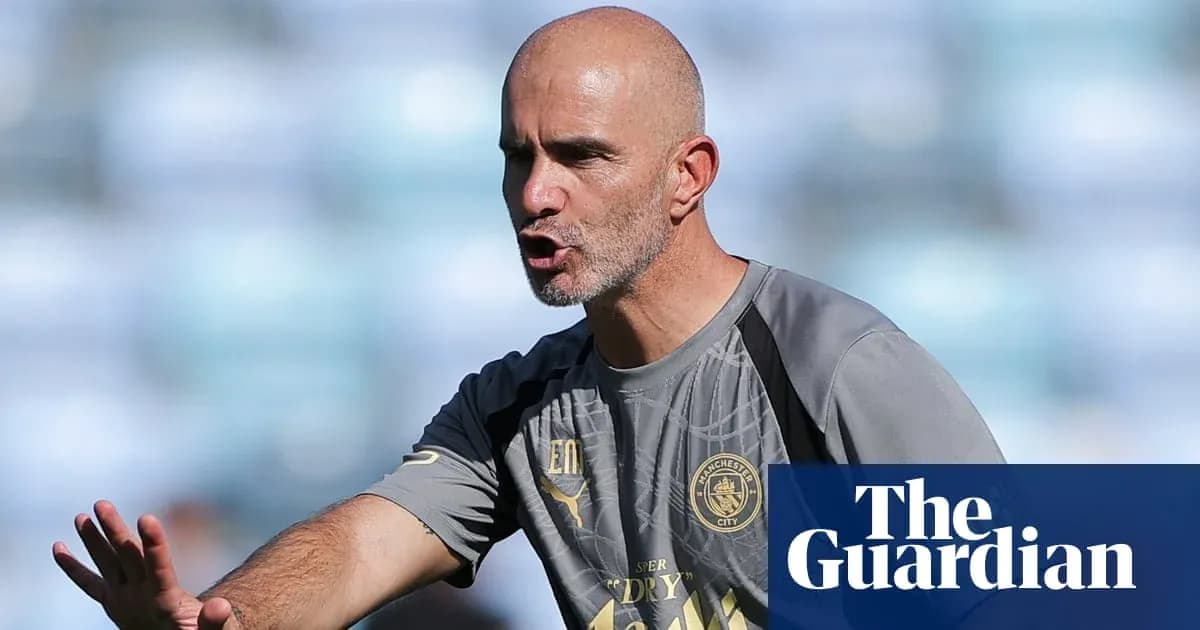
Into that space steps Álvaro Arbeloa, a very different kind of appointment. On the touchline, he is raw compared with Silva. On the CV, he brings Real Madrid, a World Cup and Champions League medals. Fulham have gambled that those experiences, and his work in Madrid’s youth set-up, can translate into something coherent in the Premier League.
His arrival has already changed the club’s address book. Gonzalo García and César Palacios have followed from Madrid, familiar faces for a coach who guided them through the ranks. All three share the same agency, a detail that only deepens the sense of Fulham becoming a satellite for the Spanish giants.
Talk of Endrick and Thiago Pitarch has fed the feeling that Craven Cottage might double as a Santiago Bernabéu finishing school. If that pipeline truly opens, Fulham change again – from Silva’s band of hardened pros to a laboratory for elite prospects.
That shift is underlined by departures. Raúl Jiménez has gone. So has Harry Wilson, who finally produced his best, most consistent football last season and then, like his manager, chose another path, this time to Leeds. Silva liked his players grizzled and battle-hardened. Arbeloa inherits a club now intent on sourcing youth and polishing it up.
Can Fulham match the hit rate of Brentford, Brighton or Bournemouth, clubs that have turned data-driven recruitment into an art form? Or will supporters spend the spring scanning the bottom of the table instead of the fringes of Europe? For a club that has always been a little hard to pin down, the mystery has only deepened.
Money, marble and a £44.5m question
Off the pitch, Fulham have rarely looked more polished. The Riverside Stand, with its plush hospitality, completed its first full season and promptly helped the club to a runners-up spot at the football business awards for stadium experience. The matchday gloss is undeniable.
The numbers behind it are less glamorous. The 2024-25 accounts showed a pre-tax loss of £44.5m, even after the summer sale of João Palhinha helped soften the blow. There has been no comparable cash injection since. The Khan family’s total investment is estimated at about £900m, yet staff costs run at 117% of turnover. That is the financial reality that framed Silva’s complaints about limited backing.
The Riverside must earn its keep. Without it, and without regular player trading at Palhinha levels, Fulham will continue to live close to the edge of Premier League economics.
Khan, Kismet and the cost of belonging
That edge is felt most sharply in the stands. The most expensive season ticket at Craven Cottage now sits at £3,084 for a seat in the Riverside, the highest in the division. For many long-term supporters, that price is not just a number; it is a statement about who the club wants inside the ground.
Shahid Khan and his son Tony, the vice-chair and director of football operations, face growing hostility from committed fans who see relentless price rises and a tilt towards tourism. The contrast is stark: Kismet, Khan’s superyacht, named yacht of the year in 2025, can be chartered for more than $3m a week, its main salon inspired by Versailles. Back on the Thames, some supporters feel like extras in someone else’s luxury project.
The balance sheets confirm Khan’s heavy outlay in keeping Fulham in the Premier League. The question from the terraces is simpler: does he understand that not everyone can live like a superyacht owner?
Arbeloa’s brief: youth, risk and attacking football
If Silva arrived as an upwardly mobile tactician, Arbeloa comes as a former elite player trying to convert playing pedigree into managerial substance. He has already had the ear of Florentino Pérez, who once asked him to replace Xabi Alonso mid-season at Real Madrid. That move never materialised. Instead, his first job away from the Bernabéu is in south-west London.
Khan Sr has made the expectation clear: Arbeloa “believes in giving young players a chance”. It fits the new strategy and the club’s need to lower the age – and cost – of the squad. Crucially, it also fits Fulham’s identity. The man from Salamanca is wedded to open, attacking football. For fans who enjoyed Silva’s front-foot approach, that offers at least some continuity amid the upheaval.
Gonzalo García: the Raúl echo
The headline arrival is Gonzalo García. His name went global at last summer’s Club World Cup, where he walked away with the Golden Boot and drew comparisons with Raúl – no small compliment at Madrid. He then scored in the Champions League against Juventus and Borussia Dortmund, proof that the goals were not a one-off burst on a distant stage.
Still, the star system at the Bernabéu is unforgiving. Vinícius Júnior and Kylian Mbappé closed off his path, and Fulham stepped in. In Spain, García is known not just for his finishing but for his work without the ball, a trait that will be vital in a league that punishes passengers.
Last season, injuries to Rodrigo Muniz left the ageing Jiménez carrying the load at centre-forward. García is younger, fresher and arrives under a weight of expectation. Fulham need his goals; he needs a platform to prove Madrid were wrong to let him go.
The numbers that demand a response
The statistics tell you why Fulham have pivoted towards youth. They fielded the oldest side in the Premier League last season. That age profile bled into their style: Silva’s team recorded the fewest high turnovers in the division, struggling to win the ball back in the final 40 metres of the pitch.
Real Madrid are hardly the standard-bearers for a ferocious press, yet even they outperformed Fulham on that metric. Arbeloa knows both worlds. How he recalibrates Fulham’s intensity – without sacrificing the attacking freedom that has become part of the club’s DNA – will shape their season.
The next cab off the rank: Jonah Kusi-Asare
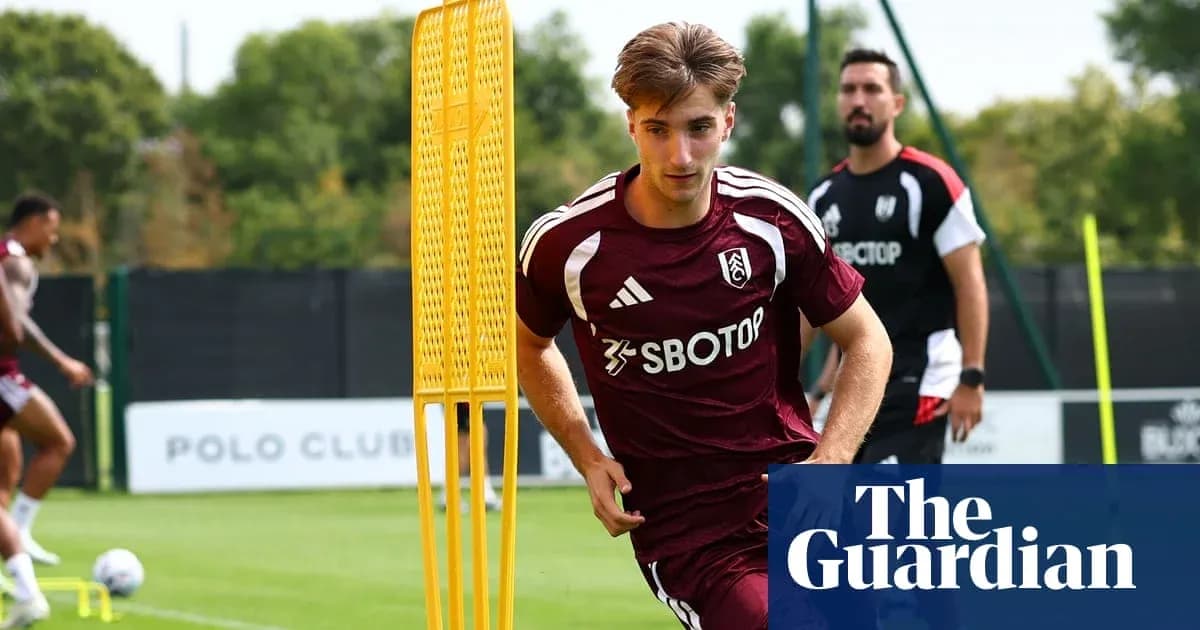
The new model is already visible in Jonah Kusi-Asare. Fulham plucked him from Bayern Munich last summer, another raid on a super-club’s academy. Bayern insisted on a buy-back clause, a sign of how much they still believe in a player they originally took from AIK.
Kusi-Asare, a Sweden Under-21 international, made seven substitute appearances in the league last season without scoring before his initial loan became permanent. The raw material is obvious. At 6ft 5in, he offers a very different profile to García, more in the mould of Alexander Isak, to whom he has been compared.
Hayden Mullins, then Fulham’s under-21 coach and now in charge at Newport, saw him at his most ruthless: five goals in six games at youth level. If Arbeloa is serious about giving young players a chance, Kusi-Asare is near the front of the queue.
World Cup momentum
The World Cup has left its mark on this squad too. García made his Spain debut in a warm-up against Iraq but did not make the final cut for the tournament, which Spain went on to win. That near miss will burn.
Elsewhere, Fulham players thrived. Antonee Robinson impressed for the USA until the co-hosts fell in the last 16 to a Belgium side featuring Timothy Castagne. Luc de Fougerolles, still waiting for a Premier League debut, showcased his composure and timing in Canada’s run to the knockouts. And then there was Sander Berge, outstanding as Norway pushed all the way to the quarter-finals.
Those experiences harden players. They also raise expectations.
Which way does this story turn?
So Fulham stand at a crossroads: Silva gone, Arbeloa in; grizzled veterans out, Madrid-bred youngsters in; losses on the balance sheet, record prices in the stands. The club that once felt like a quaint corner of the Premier League now sits at the intersection of super-club networking and superyacht economics.
The question is brutally simple. Does this Madrileño experiment keep Fulham gliding along the Premier League’s mid-table waters – or drag them back into the churn of a relegation fight they thought they had finally left behind?