.svg&w=384&q=75 "Naijagoal logo")


Frosinone vs Juventus: Tactical Insights from Serie A Opener
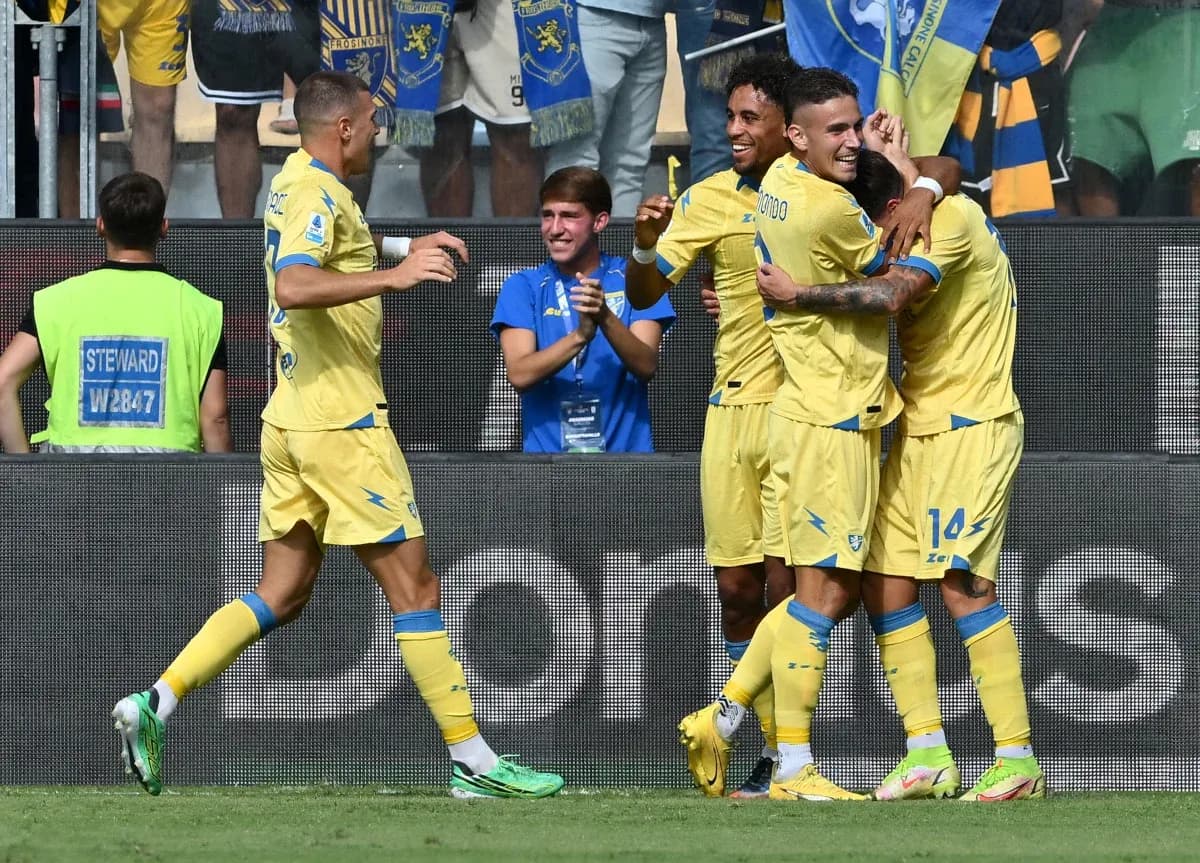
Under the late-summer light at Stadio Benito Stirpe, Frosinone opened their Serie A season with a daunting assignment: Juventus in town, Luciano Spalletti on the visiting bench, and a new-look Bianconeri side determined to impose itself early. The 1-0 away win leaves Frosinone 14th after Round 1 with 0 points and a goal difference of -1 (0 scored, 1 conceded), while Juventus sit 8th with 3 points and a goal difference of +1 (1 scored, 0 conceded).
Both sides mirrored each other structurally in a 4-2-3-1, but the shared formation only highlighted the gulf in maturity. Frosinone’s shape, under Massimiliano Alvini, was about survival and quick transitions. Juventus’ was about territorial control, pressing triggers, and using technical superiority between the lines.
For Frosinone, heading into this game the numbers were a blank slate; now, after one match, they have failed to score at home and average 0.0 goals for in total, conceding 1.0 goal on average at home and in total. Juventus, by contrast, start the campaign with an away identity already visible: 1.0 away goal scored on average, 0.0 conceded, and an immediate away clean sheet that hints at a more ruthless, pragmatic Spalletti side.
Tactical Voids and Discipline
Juventus arrived with notable absences that subtly reshaped their defensive and rotational options. M. Di Gregorio missed out due to transfer negotiations, while J. Ekhator and F. Gatti were unavailable through injury. None of the three appear in the matchday squad list, forcing Spalletti to lean fully into G. Vicario as his undisputed No.1 and to trust a back four led by Bremer without Gatti’s depth as an alternative profile.
Despite these absences, Juventus’ back line did not look makeshift. P. Kalulu, Bremer, L. Kelly and Z. Celik formed a compact, aggressive unit that defended higher than in recent Juventus iterations, allowing Douglas Luiz and M. Locatelli to compress the pitch and deny Frosinone clean build-up.
On the other side, Alvini had a full complement from the data provided, but the disciplinary pattern hints at the strain of playing at this level. Frosinone’s season-long yellow card distribution after this single game is telling: 50.00% of their yellows came between 31-45 minutes, and another 50.00% arrived in the 91-105 minute band. That late caution points to a side chasing, stretched, and forced into reactive defending as legs and concentration waned.
Juventus’ own yellow profile is more about game management. Their yellows are split evenly between 46-60 minutes (50.00%) and 76-90 minutes (50.00%), a classic pattern of tactical fouling to break rhythm and protect a lead. A. Cambiaso and Z. Celik, both among the league’s early leaders for yellow cards, embody this edge. Cambiaso, in just 21 minutes, took a booking while still posting 92% passing accuracy and 1 tackle, illustrating a defender who walks the tightrope between aggression and control. Celik’s yellow came amid 38 passes at 89% accuracy and 2 interceptions, underscoring his role as a proactive, front-foot full-back.
Key Matchups – Hunter vs Shield, Engine Room
The decisive storyline in this fixture sits at the intersection of Juventus’ individual quality and Frosinone’s inexperience.
Hunter vs Shield
For Juventus, the “hunter” emerged unexpectedly from the back: Bremer, already on the early-season top scorers list with 1 goal in total. His profile from this match is that of a complete modern centre-back: 2 shots, 1 on target, 36 passes at 88% accuracy, 3 key passes, 2 tackles, 1 successful block, and 1 interception. He not only anchored the defensive line but attacked set pieces and second phases with conviction, turning dead balls into genuine scoring threats.
Against him, Frosinone’s “shield” was collective rather than individual. G. Cittadini and G. Calvani had the unenviable task of handling R. Kolo Muani’s movement while also tracking Bremer’s surges on set plays. The home side’s season statistics are stark: in total they have 0 goals for and 1 goal against, with no clean sheets and 1 failed-to-score outing. That single conceded goal at home – the one that decided this match – is precisely the kind of moment where a young back line can be punished by a defender like Bremer arriving untracked.
Engine Room
The midfield duel was always going to decide whether Frosinone could turn this into a chaotic, transition-heavy contest or be suffocated. Alvini’s double pivot of G. Calo and M. Cichella sat in front of a young back four, trying to screen central spaces while releasing S. Fini, R. Schmid, and G. Kvernadze to support A. Raimondo.
Schmid, already prominent in the league’s disciplinary tables with 1 yellow card, played like a man trying to drag his team up the pitch: 14 passes (albeit at 50% accuracy), 7 duels with 2 won, and 2 fouls drawn. But his 4 fouls committed and booking underline the imbalance: he was often chasing Juventus’ rotations rather than dictating them.
For Juventus, the engine room belonged to Douglas Luiz and Locatelli, but the creative spark higher up was Francisco Conceição. The Portuguese winger sits near the top of the assists chart with 1 assist in total, and his statistical profile from this match is a tactical manifesto: 26 passes at 88% accuracy, 2 key passes, 3 shots (1 on target), 9 dribbles attempted with 4 successful, and 1 foul drawn. Conceição repeatedly attacked the half-spaces between Frosinone’s full-backs and centre-backs, forcing Schmid and Fini to collapse inward and opening the wide channels for overlapping runs.
This dynamic dovetailed with W. McKennie’s flexible role as a roaming No.10/No.8, drifting into pockets to overload whichever side Conceição attacked. K. Yildiz, operating from the left, added another creative outlet, pulling Frosinone’s back line horizontally and leaving Kolo Muani to pin the centre-backs.
Statistical Prognosis and Tactical Trajectories
Following this result, the early-season data sketches two divergent paths. Frosinone, with 1 match played in total, 0 wins, 0 draws, 1 loss, and 0.0 goals for on average, must quickly find a way to convert their 4-2-3-1 into more than a survival shell. Their home record – 1 game, 0 goals scored, 1 conceded, 0 clean sheets – suggests they will need sharper transitions and more incision from Kvernadze and Raimondo if they are to turn the Stirpe into a fortress rather than a learning ground.
Juventus, meanwhile, look like a side built for control. On their travels they have played 1, won 1, scored 1, and conceded 0, with 1 away clean sheet and no failures to score in total. The absence of penalties taken or missed so far (0 penalties in total, 0 scored, 0 missed) means their xG profile will be built on open-play and set-piece creation rather than spot-kicks, at least in this early phase. With Bremer already contributing in both boxes, Conceição leading the assist charts, and Vicario starting with a clean sheet, Spalletti’s Juventus carries the look of a team whose defensive solidity will underpin a steady accumulation of narrow, controlled wins.
For Frosinone, the tactical lesson from this opener is brutal but clear: in Serie A, even when you match the shape, the details – set-piece marking, midfield pressure, and disciplined aggression – decide the story. For Juventus, the message is more reassuring: with their shield (Bremer) doubling as a hunter, and a creative engine led by Conceição and Douglas Luiz, they have the structure to turn early-season numbers into a sustained push near the top of the table.