.svg&w=384&q=75 "Naijagoal logo")

France's Golden Generation at the Tournament
France do not just arrive in North America as contenders. They arrive as a benchmark.
World champions in 2018, beaten finalists in 2022, this is a team that has lived at the sharp end of international football for almost a decade. The shirt carries weight. So does the squad list.
Look at the names. Kylian Mbappe, still a force of nature, still a relentless finisher for club and country. Michael Olise, coming off a breakout campaign at Bayern Munich. Desire Doue and Ousmane Dembele, two of the central pillars in Luis Enrique’s vibrant Paris Saint-Germain side. Four attackers in peak form, all capable of deciding a tournament on their own. Together, they give France an attacking depth that even the game’s other superpowers struggle to match.
This is why France travel as one of the favourites. They can hurt you from everywhere.
Questions do linger, and they start at the back. The defence has looked exposed too often in recent months, and the fitness of William Saliba has become a genuine concern. A fully fit Saliba anchors this side; without him, the back line loses both calm and authority. For all the fireworks up front, a fragile defence can derail a campaign in a single bad night.
There is another, more familiar challenge: the dressing room. Managing the egos and expectations of a star-studded squad has never been straightforward for France. The talent is unquestioned; the chemistry has not always been. If this group stays aligned, if the internal noise stays low, it will take something special to stop them from marching all the way to the final in New Jersey.
Deschamps’ last dance
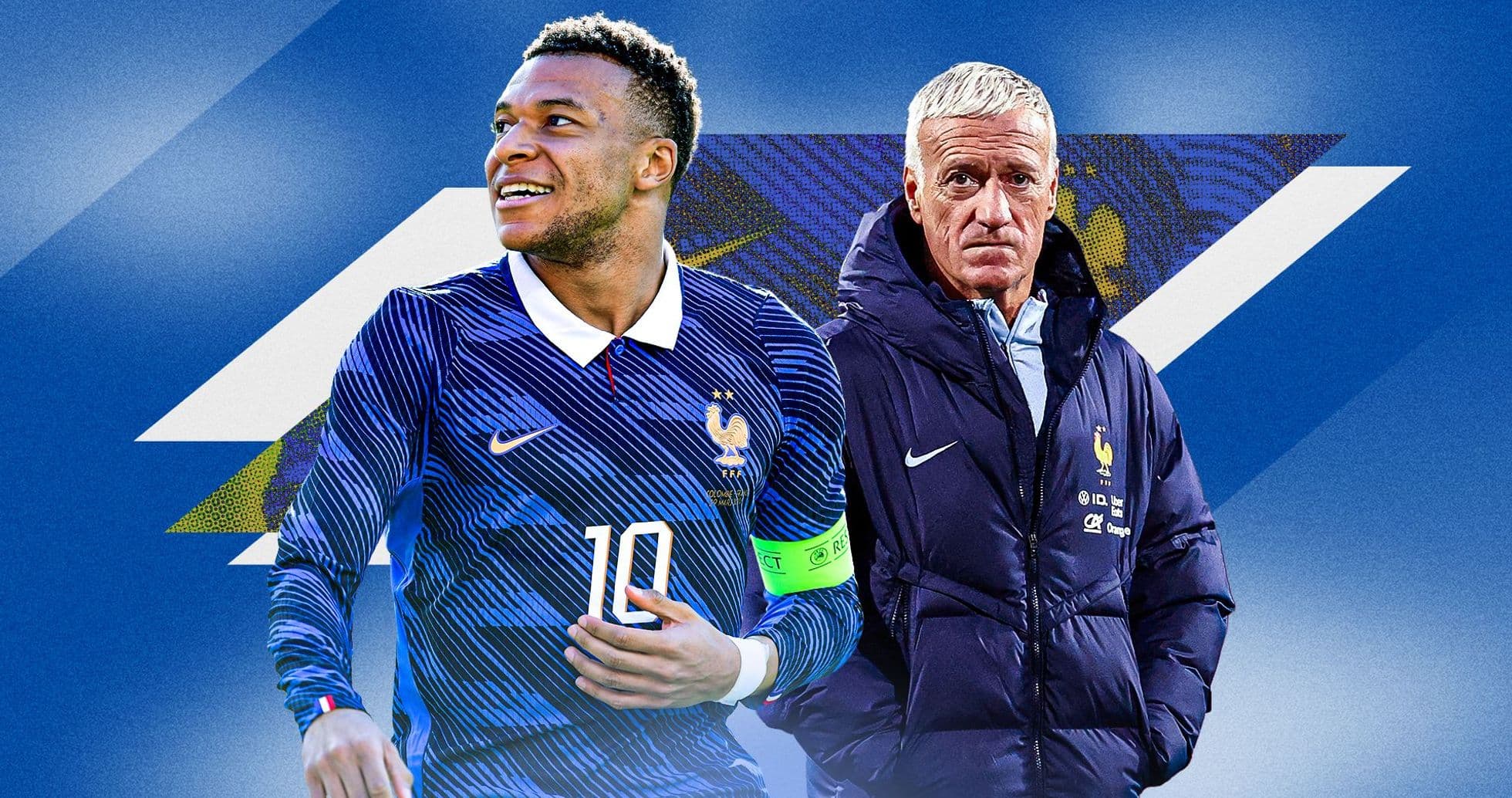
Hovering over all of it is Didier Deschamps.
Criticised at home and abroad for his pragmatic style, questioned for his in-game management, he has still rebuilt France from a fractured, exhausted side at the end of Laurent Blanc’s tenure into a relentless tournament machine. The record is unarguable.
Since taking charge in 2012, Deschamps has delivered the 2018 World Cup, beating Croatia in Moscow, and the 2021 UEFA Nations League, edging Spain in Milan. He has taken France to two more major finals: Euro 2016, lost in Paris to Eder’s extra-time strike for Portugal, and the epic 2022 World Cup final, lost on penalties to Argentina after one of the most dramatic matches the competition has ever seen.
His contract expires in July. It will not be renewed. After almost 15 years at the helm, this is the end of an era, whatever happens. Deschamps enters this tournament knowing this is his final campaign with Les Bleus, his last chance to add another trophy to a dynasty he has shaped almost single-handedly.
Mbappe leads, Olise rises
On the pitch, the narrative inevitably bends toward Mbappe. Captain, number 10, symbol of the side: he is the face of French football and the man opponents fear most.
But this summer, Mbappe may not be the only headline act.
Michael Olise arrives in North America as one of the most in-form attackers in Europe. For the second straight Bundesliga season, he hit double figures in both goals and assists for Bayern Munich, and he translated that productivity to the Champions League with elite output. His performance in Bayern’s 6-1 dismantling of Atalanta in Bergamo – two goals, one assist, a complete exhibition of modern attacking play – felt like a statement that he belongs among the game’s leading lights.
Olise blends creativity with ruthless end product. He does not just decorate games; he decides them. The hat-trick against Northern Ireland in France’s final warm-up match underlined the point. At 24, he walks into this tournament at the perfect intersection of confidence, maturity and physical peak. If his club form carries over, he could emerge as France’s true MVP and one of the defining players of the entire competition.
The wild card: Akliouche
Beyond the established stars, Deschamps has also opened the door to the next wave.
Maghnes Akliouche is the name to circle. The Monaco academy graduate earned his first senior call-up during qualifying and wasted no time leaving a mark, scoring against Azerbaijan and supplying an assist against Iceland. Those are not empty minutes; they are early signs of a player comfortable at this level.
Akliouche’s club season confirmed the trajectory. Seven goals and twelve assists across Ligue 1 and the Champions League showcased a midfielder ready for the jump. Monaco’s academy has long been one of Europe’s most prolific talent factories, and Akliouche looks like its latest high-end export.
At 24, he is a right-sided attacking midfielder by trade, thriving in a 4-2-3-1, but he can slide inside and operate as a central playmaker. Crucially, he is not the slight, purely technical winger of stereotype. He couples physical presence with sharp technique, a profile that modern coaches crave: strong enough to ride challenges, skilful enough to break lines, intelligent enough to interpret spaces.
He is unlikely to start many games, not with the competition in those attacking roles. But tournaments are often decided by the players who come on with 25 minutes left and tilt the pitch. Akliouche looks built for that role – a bench weapon who can change the rhythm of a match, unlock a deep block, or exploit tired legs when France need a spark.
France arrive with pedigree, with firepower, and with a coach determined to close his reign on his own terms. The pieces are there. The question now is whether this golden generation can write one more chapter before the Deschamps era finally closes.