.svg&w=384&q=75 "Naijagoal logo")

Germany's World Cup Collapse in Boston: A Shocking Exit
Germany’s World Cup collapse in Boston will live long in the country’s footballing nightmares. Not just because a nation that once owned the art of the penalty shootout lost one, but because one of its brightest talents, Florian Wirtz, walked off the pitch as a symbol of a team that simply did not turn up when it mattered.
A giant falls in Boston
Paraguay, ranked 41st in the world, were supposed to be a hurdle, not a trapdoor. Yet it was Julio Enciso who struck first, punishing a hesitant Germany side in the first half and silencing a support that had arrived expecting a procession.
Germany did respond. Wirtz, under the glare of the World Cup and the weight of a £116million Liverpool price tag, finally found a moment of quality. His whipped cross begged to be finished and Kai Havertz obliged, glancing in the equaliser and briefly restoring order.
From there, the four-time world champions pushed. Jonathan Tah thought he had delivered the escape act. His late strike looked set to drag Germany through, only for VAR to intervene. Officials ruled a foul on goalkeeper Orlando Gill in the build-up, and the goal vanished from the scoreboard, leaving German players stunned and Paraguay emboldened.
The game staggered into penalties. That used to be Germany’s domain. Not anymore.
Penalty chaos and a broken aura
Havertz stepped up first and saw his effort saved by Gill. Nick Woltemade followed and met the same fate. Paraguay wobbled too – Antonio Sanabria and Fabian Balbuena both missed chances to finish the job – but Germany never seized the lifeline.
Tah, already denied once by VAR, then ballooned his kick over the bar. Jose Canale did what German takers once did with their eyes closed: he buried his penalty and sealed a 4-3 shootout win. Paraguay celebrated the greatest of nights. Germany absorbed the full shock of their first ever World Cup penalty shootout defeat.
This was their first loss from 12 yards at international level since 1976. For a country built on tournament certainty, that statistic cuts deep.
Wirtz in the firing line
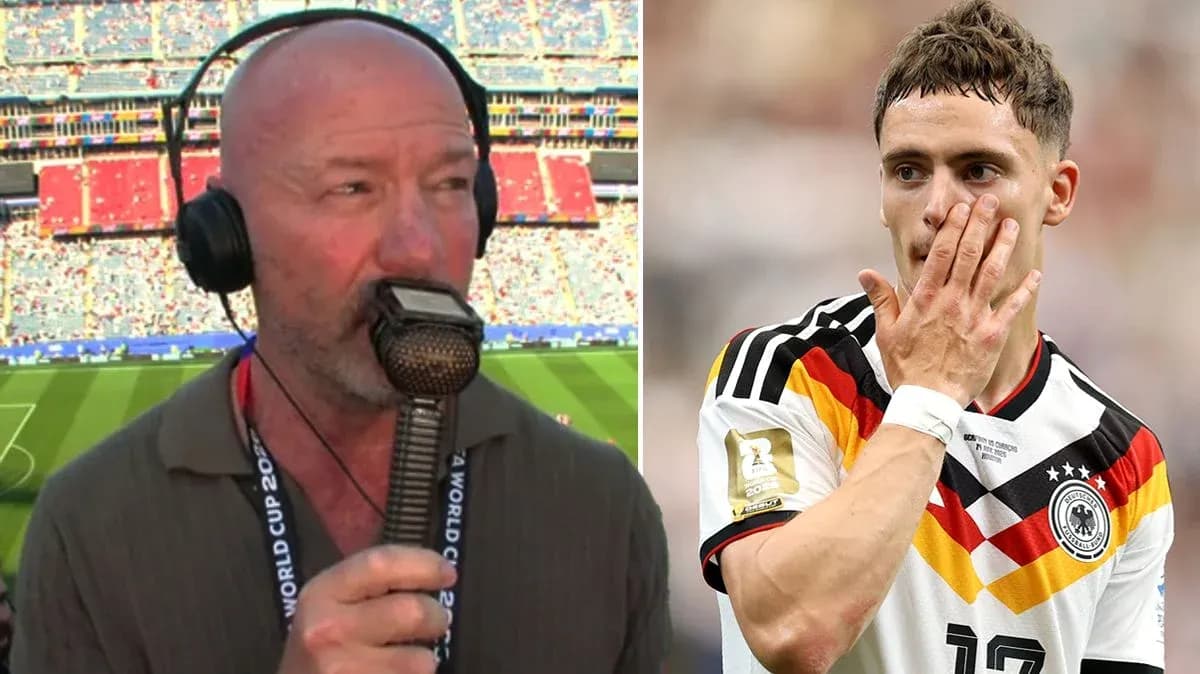
In the cold light of the post-mortem, attention snapped quickly to Wirtz. The Liverpool midfielder left with an assist to his name but little else in mitigation. On The Rest is Football, Alan Shearer did not hold back.
“They've got the quality in names and on paper, but they just didn't deliver,” he said, before running through the list. Leroy Sane? “Not a great season.” Denis Undav? Brought in to inject some life around the penalty area. Then came the sharpest line of all: “Wirtz has had a terrible season at Liverpool, he hasn't performed again at this World Cup.”
The criticism cut against the narrative that had followed Wirtz to England. A £116m fee, a move to Liverpool, and the label of future superstar should have signalled a player ready to dominate the biggest stage. Micah Richards pushed that argument, insisting “he's a superstar” and arguing that the world has not yet seen the best of him.
Shearer’s response was blunt: “What's he done this season?”
The wider debate framed the paradox of this Germany side. On one hand, Havertz, a Champions League final scorer in 2021 and 2026 and now a Premier League winner. Tah, rewarded with a move to Bayern Munich. Antonio Rudiger, a pillar at Real Madrid. Nathaniel Brown, impressing as a rising talent. As Richards pointed out, the squad is full of players with serious pedigree.
On the other, when the World Cup demanded authority and personality, they disappeared.
Nagelsmann stands his ground
For Julian Nagelsmann, the numbers are brutal. Three straight World Cup finals appearances without reaching the last 16. An expanded format this time, and still Germany crashed out in the round of 32.
They had opened with a 7-1 demolition of Curacao, then edged Ivory Coast 2-1 before slipping to a 2-1 defeat against Ecuador. The Paraguay loss turned a shaky campaign into a full-blown crisis.
“When you exit the World Cup after you play Paraguay it is very bitter. It is very hurtful,” Nagelsmann admitted. “This is the third elimination in a row, so we are not part of the first-class teams any more.”
He knows what the mood at home will be. “If we're going to do a survey today in Germany, people are not going to speak about me positively obviously,” he said. Yet he refused to offer his resignation. “I'm not going to step back only because we are eliminated. If the DFB want me to continue, I am going to continue. I know how the industry works and a lot of people now want me to leave. I want to continue if the German FA wants me to.”
He also reserved praise for the travelling support, surprised by the backing they gave even after another early exit.
Legends lose patience
That defiance has not convinced everyone. Former internationals Thomas Hitzlsperger and Arne Friedrich, watching from the BBC studios, saw a different reality.
“It's hard to explain how Germany got into this tournament with so many problems. It's unacceptable,” Hitzlsperger said. “It doesn't look good for Nagelsmann. In the last few months, he hasn't dealt with situations well. With the expanded World Cup format, to go out so early would be tough to take for any big nation.”
Friedrich went further. “If you consider the whole tournament, the way we played, it is a deserved loss. Nagelsmann has to face the consequences. It is very disappointing, but that is sport. I would definitely say the journey continues without Nagelsmann.”
Germany once walked into tournaments expecting to play the final. Now they leave before the serious business even begins, out-thought and out-fought by Paraguay, their penalty mystique shattered, their brightest talents questioned, and a manager clinging to his job.
The names still look elite on paper. The question now is whether anyone in German football can turn that paper promise back into a team that delivers when the world is watching.