.svg&w=384&q=75 "Naijagoal logo")
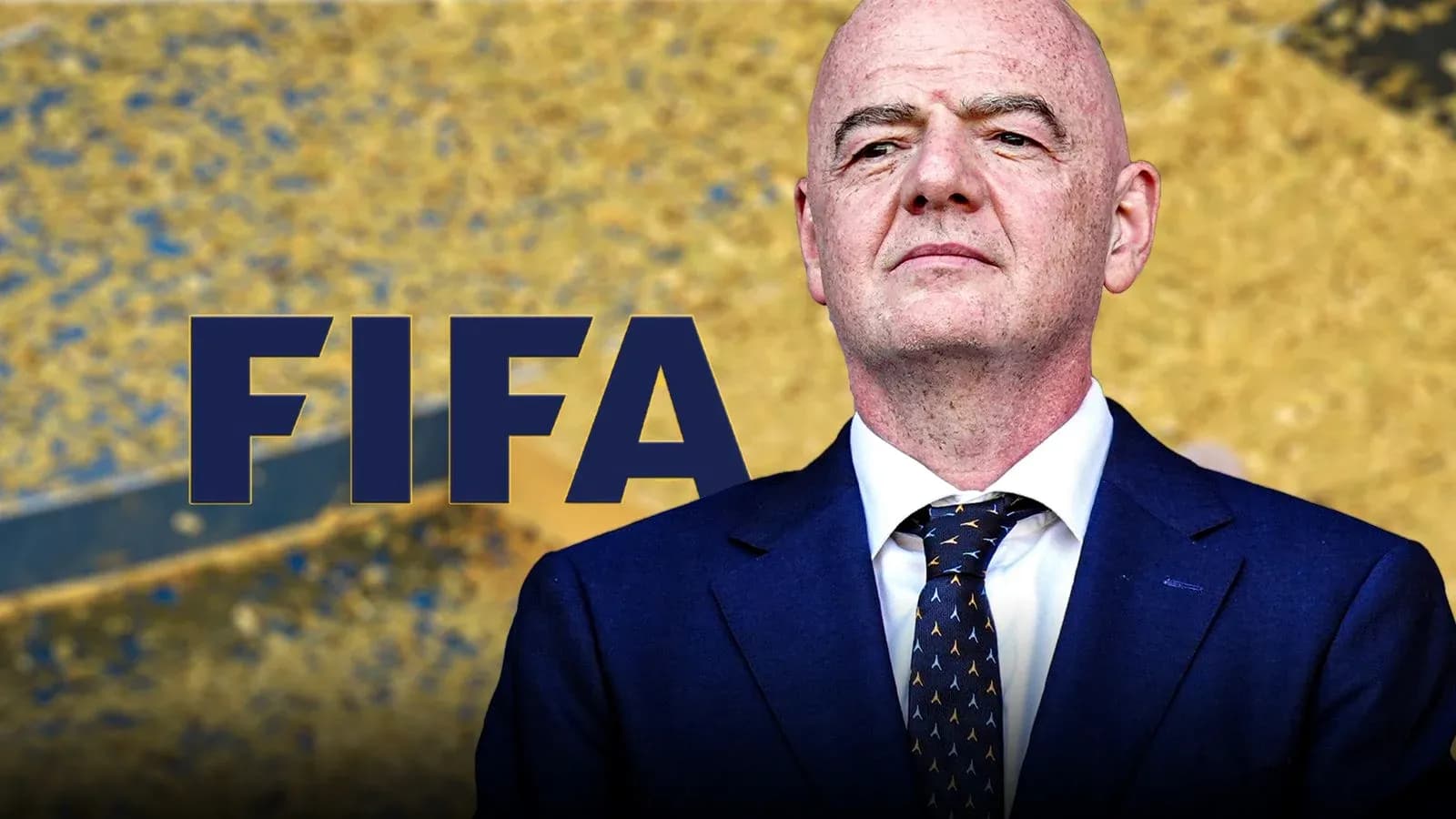

FIFA President Gianni Infantino Abandons World Cup Privatization Plan
Gianni Infantino thought he could sell a slice of the World Cup. Football’s powerbrokers have just told him otherwise.
Under siege from across the game, the FIFA president has scrapped his contentious plan to hand a stake in future World Cup profits to private equity investors, a climbdown that lands just months before he faces re-election.
A project that blew up in his hands
On Tuesday, FIFA unveiled its grand idea: FIFA Forward Enterprise (FFE). It was billed as a modernisation drive, a way to bundle FIFA’s commercial rights — broadcasting, sponsorship, ticketing, licensing — with the operational delivery of its tournaments.
Behind the jargon sat a simple, explosive proposition. FIFA wanted to raise up to $4.2bn (£3.1bn) by selling minority, non‑controlling stakes in FFE, valuing the vehicle at around $20bn (£15bn). The governing body claimed that, over the next four years, the move could generate more than $10bn in “football development funding”.
Infantino then gave member associations until September 19 to back the plan, sweetening the pitch with a £30.1m incentive for those who signed up.
It backfired almost immediately.
UEFA, CONCACAF and the Asian Football Confederation (AFC) lined up against it. The English FA voiced “deep concern”. On social media, Prime Minister Andy Burnham cut through the financial spin with four words that resonated from boardrooms to terraces: “football belongs to fans”.
By the end of the week, what had been framed as a visionary investment project looked more like a president’s overreach.
“Our purpose has always been to unite”
In the early hours of Saturday, Infantino’s tone changed.
“The FIFA Forward Enterprise project was intended to provide a basis for further strengthening our FIFA Member Associations and our sport worldwide, especially in those countries where support is most needed,” he said in a statement attributed explicitly to “the FIFA president”.
He stressed that FFE would only ever proceed with majority backing from member associations and after consultation with the FIFA Council, confederations and “wider stakeholders”.
Then came the key admission.
“Having listened carefully to all the views, it has become clear that the project has created divisions of a nature that, regardless of the level of support, are no longer in the interest of the objective set out in the first place. Our purpose has always been – and will always be – to unite and improve.
“As a result, this proposal will not proceed.”
Infantino pledged to “bring all interested parties back together in the coming days and weeks” with the aim of growing the game “everywhere, particularly in those countries that mostly need our support”.
The retreat was swift. It was also forced.
Confederations push back
On the AFC website, its president Sheikh Salman bin Ibrahim Al Khalifa welcomed FIFA’s U-turn and used the moment to restate a principle many felt had been ignored.
“Any initiative that has the potential to impact global football will be presented and discussed with the Confederations, the FIFA Council, Member Associations and other stakeholders in a timely, transparent and meaningful manner,” he wrote.
“The future of global football must always be shaped through proper consultation, collective dialogue and respect for the established governance structures of our game.”
From Asia to Europe to North and Central America, the message was consistent: this was not how you treat the World Cup.
Internal revolt
The real damage for Infantino, though, came from inside his own camp.
Carlos Cordeiro, one of his senior advisors and a former banker, resigned in protest, describing the privatisation plan as a “bad deal for football” and “for the long-term future of the game”.
“As a senior advisor to the FIFA president, a former banker, and a lifelong football fan, I cannot stand by while FIFA considers selling a stake in the World Cup,” he said in a statement to Sky News. “Let me be clear: I had no involvement in this proposal, and I oppose it unequivocally.”
He was not alone. FIFA’s chief operating officer, Kevin Lamour, told the Associated Press that staff had been “deceived” by the lack of openness around the project, saying they “deserve better than contempt and intimidation”.
Lamour branded the World Cup sell‑off “the project of one person” and urged football’s leaders to act.
Those interventions landed just hours after FIFA had tried to calm the storm with a late‑night statement insisting “nobody is selling football”. By the next night, the project was dead.
A president on the brink?
Infantino’s decision to pull the plug is as much about survival as governance.
Sky Sports News chief correspondent Kaveh Solhekol reported that the president acted “in a desperate attempt to keep his job”, with pressure mounting from every side of the organisation he is meant to lead.
The timing and wording of FIFA’s 12:30am (BST) statement told its own story. Short by FIFA standards, and clearly marked as coming from “the FIFA president”, it offered no apology. No hint of contrition.
For Infantino, “sorry” still seems to be the hardest word.
The bigger question now hangs over his future. Under normal circumstances, you would ask how much this episode has damaged his reputation. Many inside the game argue there is not much left to damage.
Removing a FIFA president is notoriously difficult. Infantino has shown throughout his tenure that he will cling to power for as long as the statutes allow. There is a presidential election in March, and until this week it looked almost certain he would stand unopposed.
He had the backing of more than 200 of FIFA’s 211 member associations, including the English FA. That support can no longer be taken for granted. Federations are reassessing. Quiet conversations have already started about alternatives.
Candidates must declare their intention to run by November 18. Between now and then, presidents and chief executives around the world will be weighing whether to stick with a wounded incumbent or throw their weight behind a challenger.
Infantino, meanwhile, has a long list of people to face: FIFA staff, Council members, confederation leaders, national federation bosses, and the bankers and investors he worked with on a project now branded “doomed”.
Even his political alliances look shakier. Infantino once promised Donald Trump a World Cup that would deliver on grand ambitions. Trump, famously, does not like losers. How long before even he decides the FIFA president is yesterday’s man?
Who steps forward?
Names are already circulating, even if no one has formally stepped into the ring.
Nasser Al‑Khelaifi, the Paris Saint‑Germain president and one of the most influential figures in modern football, has been mentioned, but he is understood not to be interested.
Sheikh Salman bin Ibrahim Al Khalifa, who finished runner‑up in the presidential vote a decade ago and now leads the AFC, is an obvious contender. His confederation opposed the sell‑off plans and his stance this week has only strengthened his standing.
Victor Montagliani, the CONCACAF president, is another possibility. The last World Cup took place in three CONCACAF nations, and historically the region has been close to Infantino. Yet on Thursday, CONCACAF also rejected the FFE proposal.
Then there is Aleksander Ceferin. The UEFA president offers a starkly different vision of how football should be run. Under him, there would be no hydration breaks for TV, no FIFA Peace Prizes, no Qatari‑owned private jets for the president, no $1m (£742,000) World Cup tickets. He would be a popular choice in many quarters.
For now, though, Ceferin has never publicly expressed any desire to move to FIFA.
Perhaps talk of successors is premature. Infantino is under intense pressure and is fighting for his job, but the race has not officially begun. No one has yet declared.
What is clear is this: the attempt to part‑privatise the World Cup has redrawn the political map inside FIFA. Confederations have flexed their muscles. Senior insiders have broken ranks. A president who once looked untouchable now faces an election campaign with his authority badly frayed.
The World Cup will not be sold. The real contest now is who gets to control it.