.svg&w=384&q=75 "Naijagoal logo")

Fifa's Growth Strategy: More Tournaments and Higher Prices
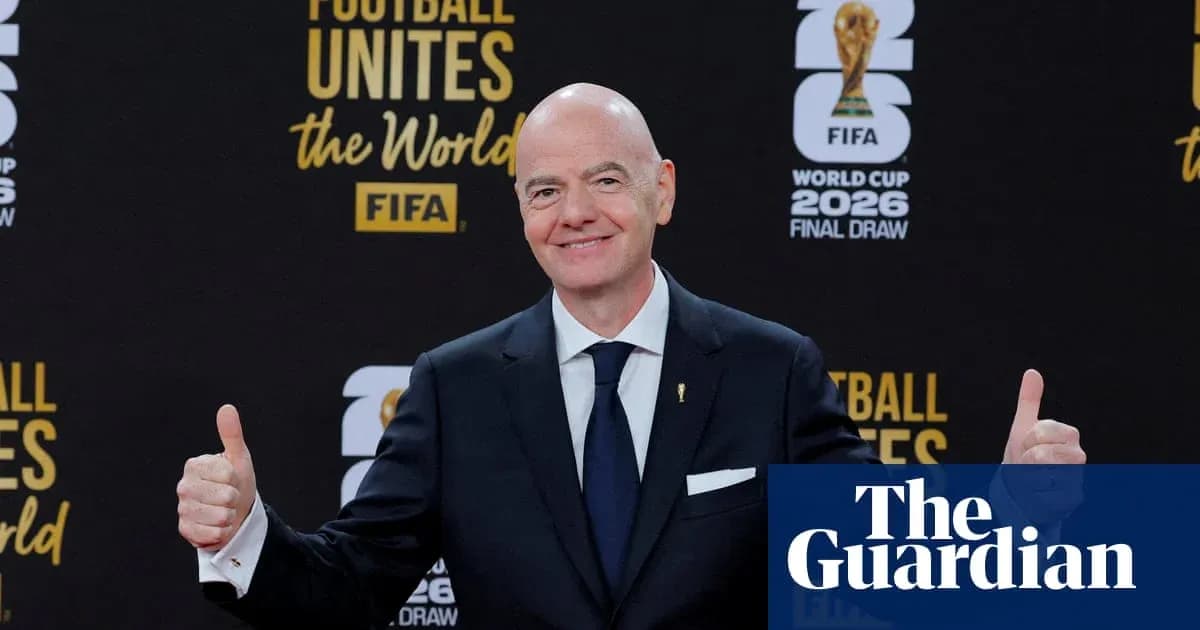
Fifa’s leadership has put its growth plan in writing – and it is as stark as it is simple: more tournaments, more expensive tickets and a heavy reliance on debt.
A 25-page sales deck titled “Fifa Forward Enterprise Member Materials”, seen by the Guardian and circulated to all 211 member associations on Wednesday night, lays out the governing body’s case for creating a new commercial company and selling a 20% stake to US investor Joshua Kushner, brother of Jared Kushner. The proposal is being driven by JP Morgan, the same bank that stood behind the failed European Super League project five years ago.
At the heart of the pitch sits a claim that Fifa is “undermonetized”. The cure, JP Morgan argues, is scale and leverage.
A new company, a powerful buyer
The document proposes carving out Fifa’s commercial operations into a separate entity, with one-fifth of that company sold to Kushner’s group. In return, every member association is being enticed with a previously reported $20m sign‑up payment, money that could start flowing as soon as January.
The projections go further. Fifa Forward distributions – the four-year development payments to each association – are forecast to rise to $24m per member in the 2035‑39 cycle. That is a significant jump, and JP Morgan is clear about where the extra cash is supposed to come from.
The sales deck lists three pillars: “a growing tournament portfolio”, “third party sources of capital and debt financing”, and a sharpened focus on “high yield” partnerships and events. In plain terms, Fifa would stage more competitions, borrow against future income and chase richer sponsors.
A world game, played even more
The most eye-catching line sits in the section on tournaments. The bank refers to a plan to more than double the number of global events each year, from 200 to 450. If realised, that schedule would dramatically increase the strain on players already operating at the limits of their workload.
The World Cup itself looms over the proposal. Staging the tournament more frequently remains the most obvious way to drive revenue. Fifa president Gianni Infantino previously floated the idea of a biennial World Cup five years ago; the new deck does not spell that out, but the logic of “a growing tournament portfolio” points in the same direction.
The media side is also under review. JP Morgan talks of a strategy to “expand and optimize media rights monetization”, language that opens the door to more World Cup and flagship event coverage moving behind paywalls on subscription channels or streaming platforms.
Chasing the US giants
To justify the claim that Fifa is leaving money on the table, JP Morgan lines up a set of comparisons – but not with other governing bodies. Instead, the deck measures Fifa against the great US money machines of domestic sport.
Fifa’s stated annual revenue of $3.6bn is set against the NFL’s $21.2bn, Major League Baseball’s $13.1bn and the NBA’s $12.5bn. The contrast is stark on paper, but several insiders have already questioned the logic of comparing a global governing body with private, member-run leagues built around franchises and local media markets.
The financial context inside Fifa also raises eyebrows. The organisation currently holds cash reserves of around $4bn and has accumulated revenues of $15bn over the current four-year cycle. Against that backdrop, one senior figure has asked why Fifa would need to take on fresh debt at all.
Questions, gaps and a notable silence
The reaction from within the game was immediate. Beyond the debt issue, officials have queried JP Morgan’s aggressive timetable. According to the document, “Investors will be given access to a term sheet and select materials” in August – before Fifa’s 211 members have even voted on whether to approve the structure.
Equally striking is how little the prospectus says about the investor group itself. Across 25 pages, there is scant detail on Kushner’s consortium, its projected returns or its exit strategy. For a deal that would hand a slice of football’s commercial future to a private investor, the opacity has not gone unnoticed.
One omission stands out above all. Women’s football does not appear once in the entire deck. Not a line. Not a figure. Not a projection. For a sport that has trumpeted its commitment to the women’s game on the global stage, the silence in a flagship financial blueprint is already being read as a statement in itself.
Fifa has been approached for comment. The numbers, and the priorities they reveal, are now in the hands of its members. The next move belongs to them.