.svg&w=384&q=75 "Naijagoal logo")

FIFA Clears VAR Official Evans After Gesture Controversy
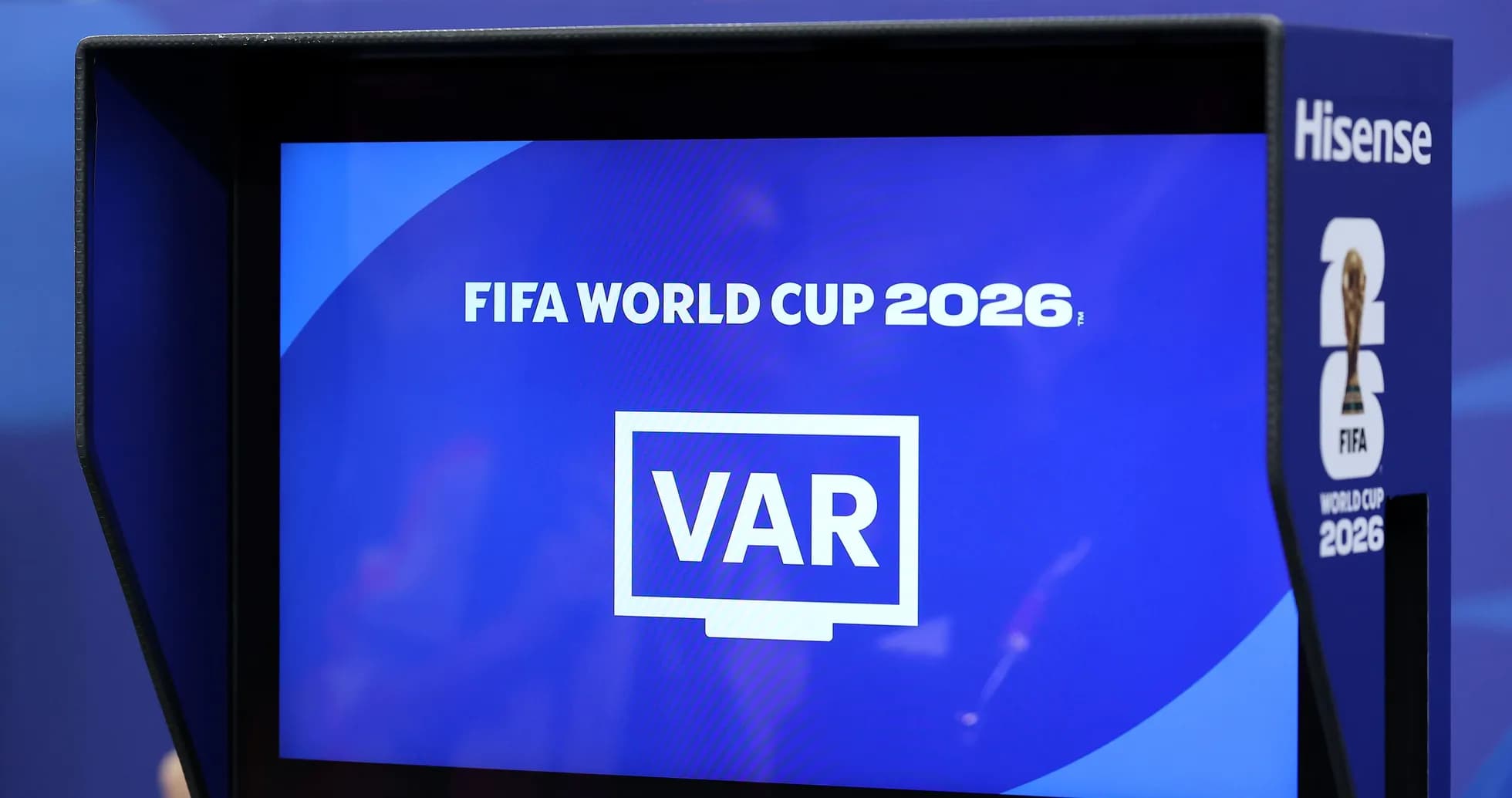
FIFA has cleared Australian VAR official Evans of any wrongdoing after a hand gesture caught on camera before Germany’s 7–1 win over Curacao at the World Cup sparked a storm far beyond the touchline.
The incident unfolded in the calm before kick-off. As the global broadcast cut to the referees’ centre in Dallas, Evans appeared on screen and briefly formed an upside-down “OK” sign with his right hand. To some viewers it looked like a throwaway movement, the sort of idle gesture that comes and goes unnoticed. To others, it resembled a symbol that has been co-opted in recent years by white supremacist groups.
Within minutes, screenshots were circulating online. The gesture was dissected, slowed down, zoomed in. What might once have been dismissed as a trivial moment suddenly sat at the intersection of football, politics, and the digital age’s hair-trigger outrage.
FIFA, under pressure to respond, moved quickly. The governing body reviewed footage from multiple angles inside the referees’ hub in Dallas, examining not only the brief clip that aired globally but Evans’ behaviour around it. After that review, FIFA concluded there was no breach of the FIFA Disciplinary Code and confirmed that the 38-year-old would remain part of the tournament’s officiating team.
Evans, who had stayed silent while the review was ongoing, then issued a strong denial that the gesture carried any intentional meaning.
“The coverage following this incident simply does not reflect who I am,” he said in a statement. “Of course, I understand how the gesture has been interpreted and I regret this, however I want to be very clear and categorically say that I did not knowingly or deliberately make the hand symbol suggested.
“Images taken later during the match showed that I repeated this movement many times while holding a pen between my fingers. Officiating at the World Cup is the biggest honour of my career and I look forward to supporting my colleagues for the rest of the tournament.”
His explanation painted the movement as an unconscious physical habit, not a coded message. FIFA’s investigation backed that view, noting the repeated, apparently absent-minded nature of the gesture throughout the game.
The controversy, though, did not appear from nowhere. Anti-discrimination groups have spent years tracking how seemingly innocuous symbols can be repurposed by extremist movements. The “OK” hand sign, turned upside down, is one of them.
Fare, an organisation that works alongside FIFA and UEFA on discrimination in football, voiced its concern before FIFA’s findings were made public. “Advice from our experts is that the gesture used clearly resembles an upside down ‘OK’ hand symbol used as a ‘white power’ symbol in global far-right circles,” it said.
That assessment echoed a wider cultural shift. In 2019, the Anti-Defamation League added the symbol to its database of hate symbols after it had been repeatedly used as a trolling tactic and then adopted in earnest by some extremist groups. What began as an online provocation hardened into something far more serious.
This is the tension football now lives with. The World Cup is beamed into millions of homes, every frame scrutinised in real time, every official and player a potential flashpoint in battles that stretch far beyond 90 minutes. A hand movement that once meant nothing now carries baggage.
In this case, FIFA’s investigation drew a clear line: no intent, no disciplinary breach, no removal from duty. Evans keeps his place in the tournament, his reputation formally intact, but with a stark reminder that in the modern game, even an unconscious twitch of the fingers can ignite a global debate.