.svg&w=384&q=75 "Naijagoal logo")

Feyenoord's Victory Overshadowed by Crowd Chaos at SC Cambuur
Feyenoord’s five-goal win at SC Cambuur should have been the story. It wasn’t.
The Eredivisie was dragged back into an all-too-familiar nightmare on Sunday as serious crowd trouble in Leeuwarden turned a 5-2 away victory into a grim warning about safety inside Dutch stadiums.
Flares, Fireworks and a 10-Minute Halt
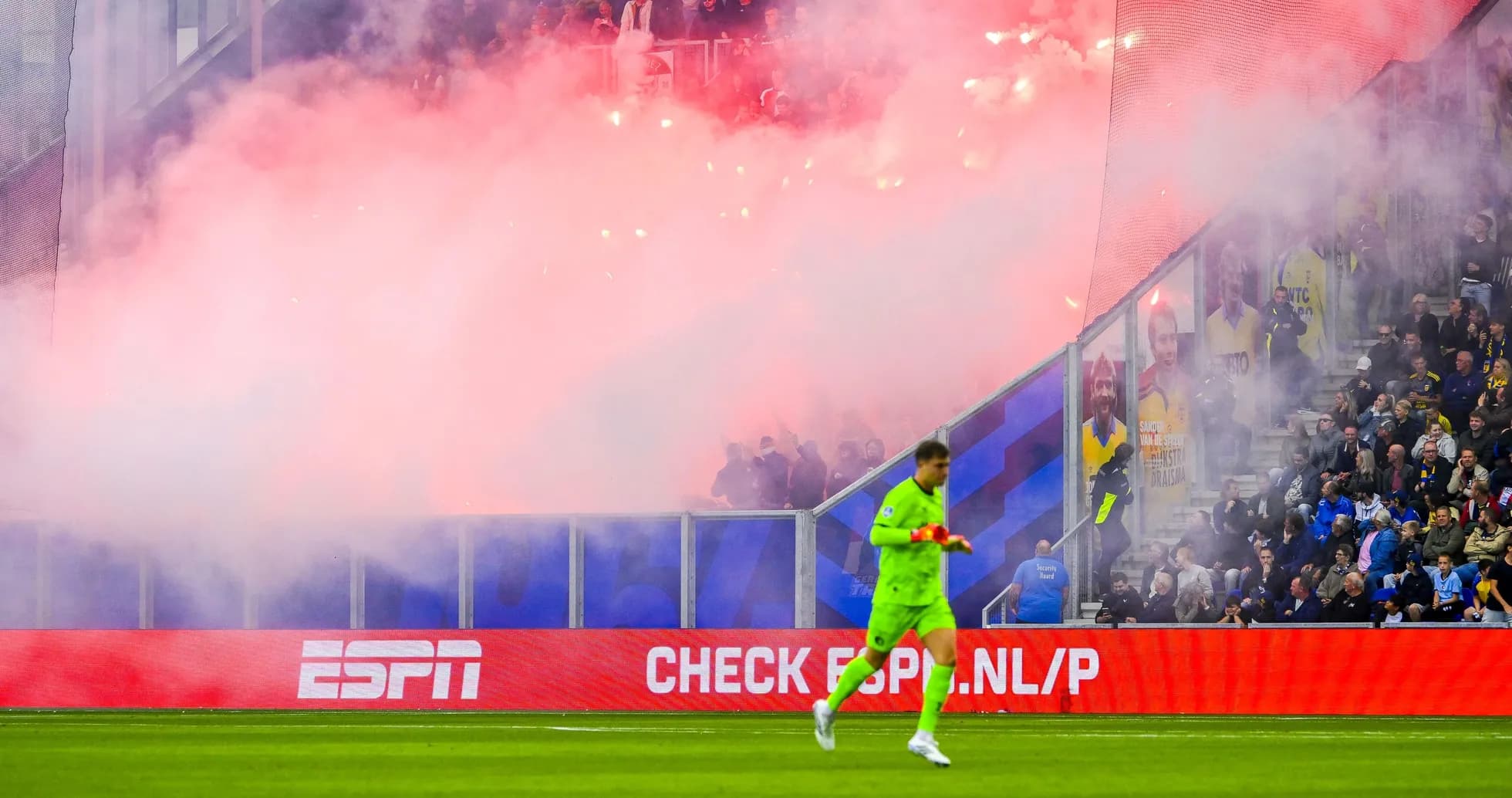
The chaos erupted early. In the 12th minute at the Kooi Stadion, the away section lit up in an intense red glare as visiting Feyenoord supporters set off a large number of flares. Then came the fireworks.
Projectiles were fired onto the pitch and into the stands holding Cambuur fans. Smoke rolled across the arena, explosions cracked near the touchline, and the referee had no choice but to pull the players off and suspend play for around 10 minutes.
One blast landed just metres from Feyenoord goalkeeper Tjark Ernst. It missed him, but only just. The images underlined how close the afternoon came to a serious – even catastrophic – injury on the field.
When the smoke cleared, the match resumed. The damage in the stands did not.
Injuries in the Home End
Cambuur later confirmed the scale of the fallout in a stark medical update. Five home supporters were injured, the club said, suffering “burns, hearing damage and eye injuries” after fireworks were fired directly into the seating areas.
For a club recently back in the Eredivisie after three seasons away, this was supposed to be a celebration of top-flight football returning to Leeuwarden. Instead, it became a case study in how vulnerable ordinary supporters remain when pyrotechnics are smuggled past security.
Feyenoord Win, but Leave With Shame
On the pitch, Feyenoord did their job. Five goals, three points, a statement win. None of it felt like a triumph.
Head coach Giovanni van Bronckhorst moved quickly after the final whistle, apologising to the Cambuur hierarchy on behalf of the Rotterdam club. Feyenoord followed up with a firm statement of their own, insisting they “firmly distance” themselves from what happened and promising internal action.
The club has already said it will request and review all available camera footage in an attempt to identify those responsible for what it called life‑threatening behaviour.
General manager Robert Eenhoorn cut a visibly shaken figure as he spoke about the scenes.
“I cannot be happy,” he admitted. “Frustration prevails too much for that. This problem obviously does not only affect Feyenoord and is unfortunately something we have been unable to put a stop to for decades. We will therefore have to sit down again with all stakeholders, clubs, the KNVB and the authorities to look for a solution together.”
The message was blunt: the result meant little compared to the safety of the people who came to watch it.
Cambuur Demand Answers
Cambuur’s response carried the anger of a club that had seen its own fans put in danger inside its own ground.
The administration promised a full investigation with local police and government officials. In its official communication, the club did not soften its language or dilute its stance.
“It should be clear that setting off and firing fireworks is completely unacceptable and has no place in a football stadium whatsoever,” Cambuur stated.
For supporters who left the Kooi Stadion with burns and damaged hearing, that line will feel less like a slogan and more like a demand for action.
Political Pressure and a Wider Pattern
The incident has also drawn a hard line from the city’s leadership. Leeuwarden mayor Foort van Oosten condemned the scenes in the strongest terms and pledged a thorough investigation into how such a large quantity of pyrotechnics ever reached the away section.
This was not an isolated flashpoint. Dutch football has been wrestling with a rising tide of fan disorder, including last season’s high-profile abandonment of Ajax vs Groningen after similar use of flares and fireworks. Sunday’s events fit a troubling pattern rather than standing out as a freak event.
That context now drags security protocols at Eredivisie grounds under the microscope. How did this happen again? And why are the same dangers still slipping through the net?
KNVB Rules Under Fire
Another uncomfortable question emerged once the final whistle went: should the game have continued at all?
Current KNVB rules are clear on one point – if a player or match official is hit, the match is permanently abandoned. When it comes to injured supporters, the regulations are far less explicit.
Five Cambuur fans were hurt. The match still went on.
Jan Bluyssen, the KNVB’s manager of professional football competition affairs, did not hide from the awkward reality when speaking to Dutch news agency ANP. “That doesn’t feel right,” he admitted.
That line may yet define the next phase of this debate. The governing body now faces mounting pressure to harden its stance and introduce tougher penalties for clubs whose fans cause bodily harm, whether the victims are on the pitch or in the stands.
The KNVB has already confirmed it will revisit its protocols for dealing with disorder, with one principle now impossible to ignore: if supporter safety is not placed above the completion of a fixture, what exactly is the game protecting?