.svg&w=384&q=75 "Naijagoal logo")

Fenerbahçe Dominates Gornik Zabrze with Tactical Mastery
Fenerbahçe’s 1-0 win over Gornik Zabrze at Chobani Stadium was a territorial siege decided by one clean attacking pattern and then managed through almost total control of the ball. In the context of a UEFA Champions League 2nd Qualifying Round tie, Ismail Kartal’s side used their 4-2-3-1 as a positional play platform, while Michal Gasparik’s 4-3-3 collapsed into a low block that rarely transitioned into genuine counter-attacks.
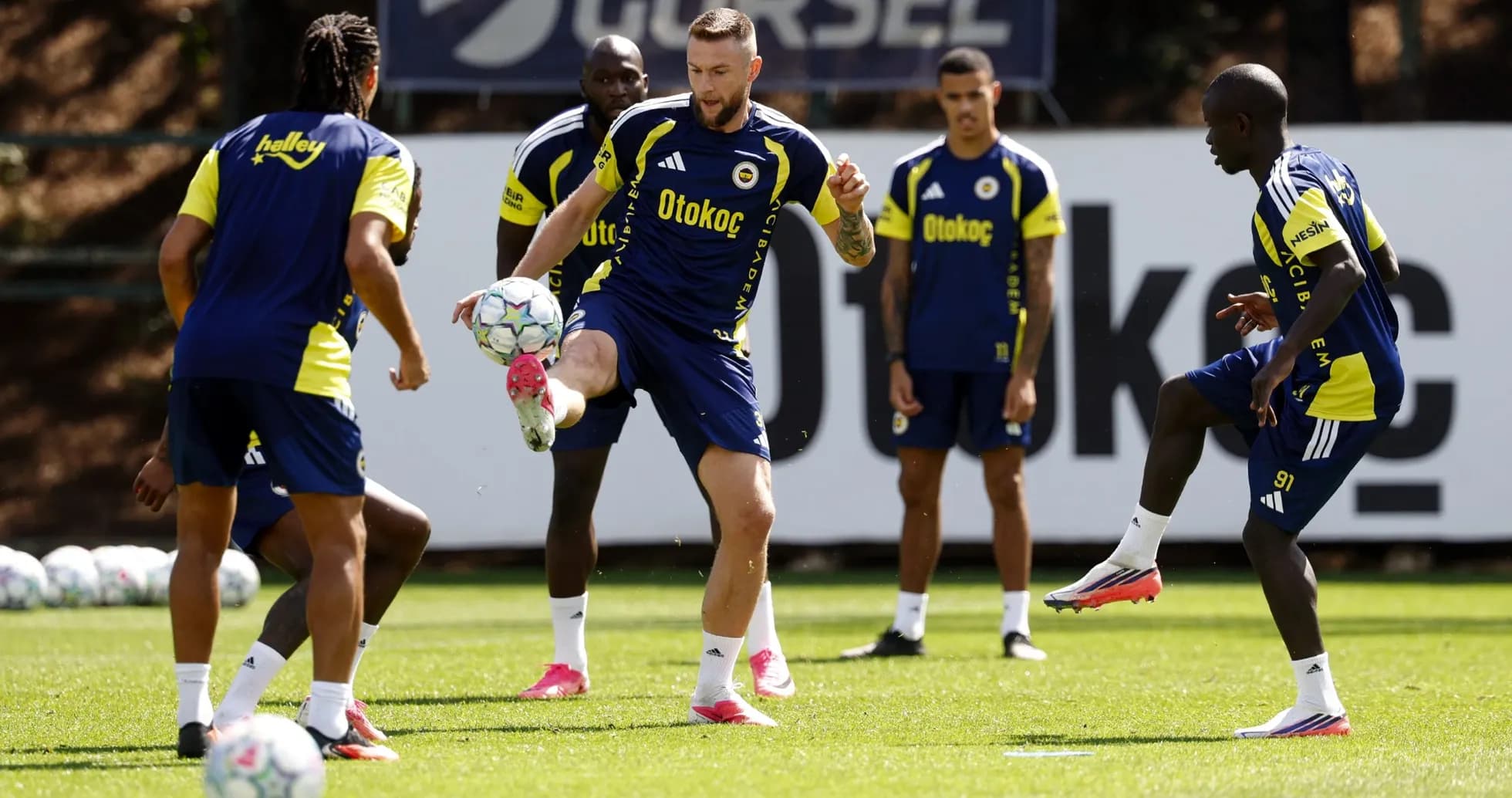
Structurally, Fenerbahçe’s 4-2-3-1 was built on extreme ball dominance: 79% possession, 765 passes with 703 accurate (92%). Matheus Günok was the base of circulation but almost never tested, with the team’s rest-defense set high and wide behind the ball. The back four of Nélson Semedo, Milan Skriniar, Nathan Aké and Jayden Oosterwolde stretched the pitch horizontally, with Semedo and Oosterwolde providing width and Skriniar–Aké stepping into midfield when unpressed. The double pivot of Mattéo Guendouzi and Barış Alper Yılmaz Elmaz acted as the main stabilizers, constantly offering short options and recycling play to drag Gornik’s 4-3-3 out of shape.
Ahead of them, İrfan Can Kahveci, Fred and Kerem Aktürkoğlu operated as a fluid three behind Talisca, often rotating zones rather than holding rigid lanes. Fred frequently dropped alongside Guendouzi to create a 2+2 build-up box, freeing the full-backs to advance and pin Gornik’s wingers deep. Aktürkoğlu’s inside movements from the left and Kahveci’s drifting between lines created the classic 4-2-3-1 overload: four or five players between Gornik’s midfield and defensive lines, forcing the visitors’ back four to compress centrally and concede the flanks.
The numbers underline how effectively this structure translated into pressure: 15 total shots, 6 on goal and 4 blocked, with 6 efforts from inside the box and 9 from outside. Fenerbahçe’s shot map profile suggests sustained occupation of the final third rather than isolated breaks. The nine corners reflect both the volume of final-third entries and Gornik’s reliance on last-ditch defending. Even without an expected goals value provided, the combination of shot volume, inside-box attempts and blocked efforts indicates that the 1-0 scoreline flattered the visitors.
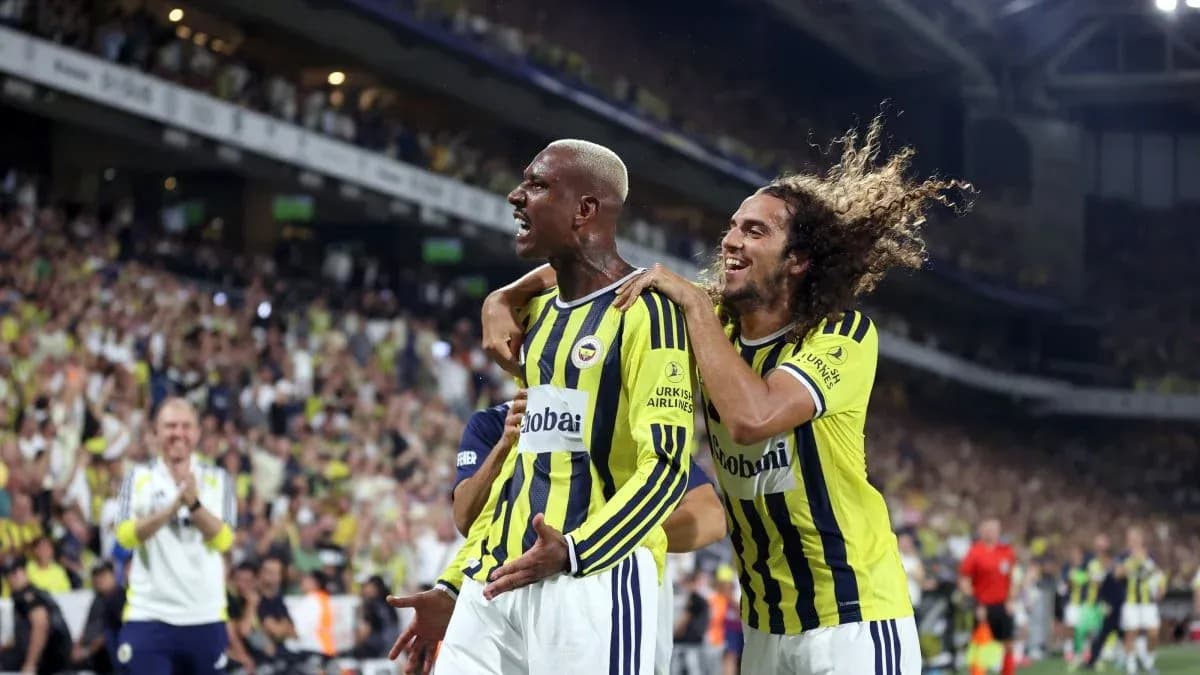
Tactically, the key attacking pattern was the vertical progression through the half-spaces, then quick circulation to find Talisca between centre-backs and pivot. His first-half goal at 37' came as the natural outcome of this dynamic: repeated stretching of Gornik’s 4-3-3 created a seam for the forward to exploit. Without a registered assist, the move still fits the broader theme—Fenerbahçe moving Gornik side to side until a central lane opened for their number 94 to finish.
Out of possession, Fenerbahçe were aggressive but controlled. The 15 fouls show they were willing to break up the few Gornik transitions early, but the absence of any cards suggests their pressing and counter-pressing were well-timed rather than reckless. With Gornik limited to just 2 total shots (1 on goal, 1 off) and a single effort inside the box, the home side’s rest-defense—Skriniar and Aké tight to the halfway line, Guendouzi and Elmaz screening—effectively smothered any attempt to turn clearances into counters.
The substitutions were clearly tactical rather than reactive. At 46', Luan Peres Mercan (IN) came on for Aké (OUT), a like-for-like change that maintained the left-sided build-up profile while preserving physical freshness for managing transitions. At 69', Marco Asensio (IN) replaced Elmaz (OUT), and Oğuz Aydın (IN) replaced Aktürkoğlu (OUT), collectively shifting the balance slightly towards added creativity and directness on the flanks while still protecting central control through Guendouzi and Fred. Late in the game, Mason Greenwood (IN) for Kahveci (OUT) at 83' and Souleymane Cherif (IN) for Talisca (OUT) at 87' were game-state substitutions: fresh legs to press Gornik’s first passes and to hold the ball in advanced zones, accepting a marginal loss of penalty-box presence in exchange for defensive security and energy.
Gornik Zabrze's Performance
For Gornik Zabrze, the 4-3-3 on paper functioned more as a 4-5-1 for long stretches. With only 21% possession and 203 total passes (148 accurate, 73%), their midfield trio of Lukas Sadilek, Marvin Dietz and Kacper Urbański were largely pinned back, forced into horizontal shuttling rather than progressive actions. The front three of Yaw Ikia Dimi, Erik Prekop and Michal Khlan rarely received the ball in advanced, stable positions; instead, they chased long clearances or pressed in short, isolated bursts.
Defensively, Gornik’s plan was deep compactness and reliance on goalkeeper and centre-backs. P. Schulze (Gornik Zabrze) made 5 saves, a significant figure given Fenerbahçe’s 6 shots on goal, highlighting his importance in keeping the tie alive. The visitors registered only 1 blocked shot, which, combined with the high save count, shows Fenerbahçe were often able to progress into clean shooting positions rather than being forced into speculative efforts against a packed block.
Gasparik’s substitutions around 72' and 76'—Sivert Gussiås Liseth (IN) for Urbański (OUT), Oskar Zmrzly (IN) for Ikia Dimi (OUT), and Bismark Donio (IN) for Dietz (OUT)—were attempts to inject more running power and vertical threat, but the underlying structural problem remained: they could not sustain possession long enough to connect midfield to attack. The final change, P. Warczak (IN) for Khlan (OUT) at 90+2', was too late to alter the tactical landscape.
In the goalkeeping duels, M. Günok (Fenerbahçe) was largely protected by the collective, facing only 1 shot on target and making 1 save. That, combined with Gornik’s meagre attacking output, confirms how territorial and controlled the performance was. Schulze, by contrast, was Gornik’s standout defensive figure, his 5 saves the main reason the match ended 1-0 rather than a multi-goal margin.
Overall, Fenerbahçe’s tactical identity—positional 4-2-3-1, heavy ball circulation, full-backs high, double pivot controlling rest-defense—translated almost perfectly into the statistical profile: dominant possession, huge passing volume and accuracy, sustained shot creation, and minimal concession of chances. Gornik’s low-possession, low-shot model kept them in the tie but offered little offensive threat. From a two-legged perspective, the 1-0 scoreline leaves the door open, but on the evidence of this match, the structural and statistical balance is heavily tilted towards Fenerbahçe.