.svg&w=384&q=75 "Naijagoal logo")

Federico Valverde's Journey from Right-Back to Midfield Pillar
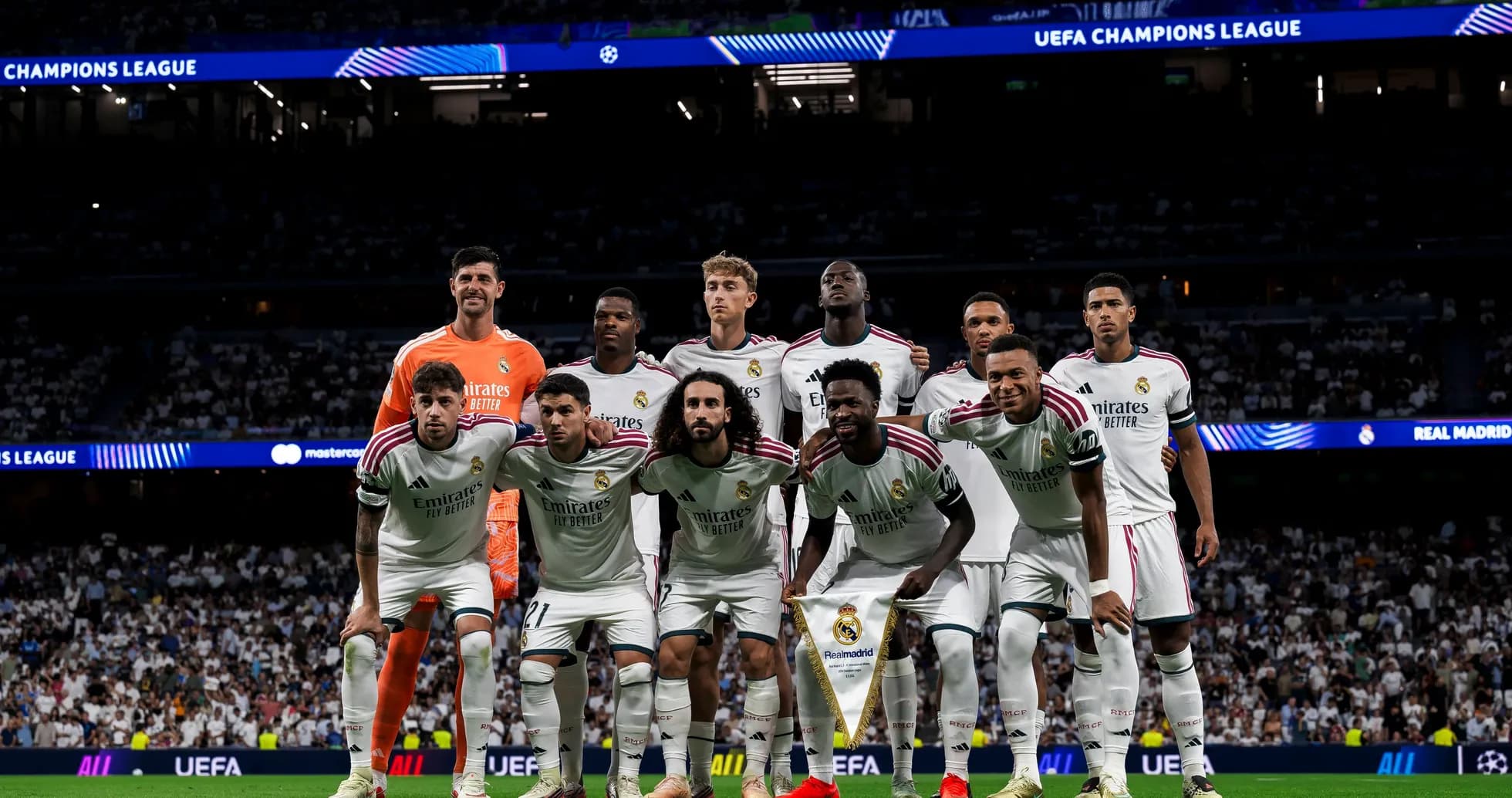
Federico Valverde walks back into Vallecas this weekend carrying more than just his current status as a Real Madrid mainstay. He returns to the ground where his turbulent spell as an emergency right-back effectively came to an end – and where a personal crisis finally gave way to clarity.
For the Uruguayan, Rayo Vallecano is not just another league fixture. It is a reminder of a version of himself he never wanted to be, and the one he has now firmly left behind.
From discomfort to cornerstone
As reported by Marca, Valverde’s journey from reluctant full-back to undisputed midfield pillar tracks neatly with Madrid’s own transition from the unstable Xabi Alonso era to the more defined project now under José Mourinho.
The story began in the middle of an injury storm. Dani Carvajal was out. Trent Alexander-Arnold was unavailable. Alonso, short of options and short on time, pushed Valverde to right-back.
Valverde accepted. He did it for the team, for the shirt, for the situation. But he never embraced it.
The tension finally snapped before a Champions League tie against Kairat Almaty. Sitting in front of the cameras, Valverde dropped the polite fiction and spoke plainly about his struggle in that role.
“I was not born to play as a full-back, and I did not grow up learning to play in this position. Because of an emergency, I found myself playing there,” he said.
The honesty was brutal. So was the reaction.
Alonso responded by leaving him on the bench for the next game and handing the full-back role to Marco Asensio. A makeshift solution replacing another, but the message was clear: the coach would decide the positions, not the players.
The cold night in Kazakhstan
By the time Madrid landed in Kazakhstan to face Kairat Almaty, the issue had become a talking point inside the club. All eyes were on Valverde in the warm-up.
He cut a distant figure. Hands behind his back, expression frozen, he moved on the fringes of the group. He did not play a single minute. He did not even come on as a substitute.
It was the only Champions League match all season in which he failed to appear.
That absence stood out precisely because it was an exception. Across the rest of the campaign, Valverde featured in every other game, including the night he exploded with a hat-trick against Manchester City. The contrast was stark: a player capable of dominating Europe from midfield reduced to a reluctant auxiliary defender, then to a spectator.
The last night at right-back
The turning point came with Álvaro Arbeloa’s arrival in the dugout in January. Gradually, the experiment at right-back was wound down. The reliance on Valverde in that role eased, until it stopped altogether.
His final outing as a full-back came against Rayo Vallecano. Sixteen matches in that position, and then the book closed on that chapter of his career.
The impact, though, did not vanish overnight. The experience had left its mark. Valverde had done the job out of loyalty to the club and respect for the shirt, but he never pretended it was his home on the pitch. He knew where he truly belonged. So did anyone who had watched him at his best.
Mourinho restores the real Valverde
Then came Mourinho, and with him, a clean reset.
The Portuguese coach put Valverde straight back in his natural habitat: the heart of midfield. No half-measures, no rotation experiment. He has started every match this season, installed as one of the non-negotiables in Mourinho’s plan.
The difference has been obvious. Freed from the defensive straightjacket, Valverde has looked like a player reborn. He has driven play, covered ground, and imposed his rhythm on games. He has even made his presence felt in the final third, scoring against Inter and underlining his importance in Madrid’s new structure.
Mourinho did more than just move him back inside. He made it clear that Valverde is one of the pillars of this Madrid, a cornerstone rather than a stopgap. The trust has been mutual – and visible.
Peace with Tchouaméni
There was one more loose end to tie up: his relationship with Aurélien Tchouaméni. The pair had clashed last season, and questions lingered over whether any tension might carry into the new regime.
Mourinho used his latest press conference to shut that storyline down.
“They are the ones who did everything, and I did nothing. If I had arrived in the dressing room without knowing anything, I would have thought they were close friends,” he said.
He explained that when he took over and Tchouaméni returned from the World Cup, he watched closely to see if he needed to step in and play mediator. “I was paying attention to find out whether I needed to intervene and play the role of peace minister, but I did nothing. The credit all goes to the players.”
The message was simple: the dressing room had solved it. Valverde and Tchouaméni had moved on, and so had Madrid.
Now Valverde goes back to Vallecas not as a makeshift right-back, not as a symbol of a crisis, but as one of the central figures of Mourinho’s Madrid. The stadium that once framed the end of an uncomfortable assignment now hosts a player finally where he always said he belonged.
The question is no longer whether he can fill in at full-back. It is how far he can drive this team from the middle of the pitch.