.svg&w=384&q=75 "Naijagoal logo")

Everton's Season Review: From Hope to Stagnation
For much of last season, Everton’s gaze was fixed upwards.
Jack Grealish, borrowed and brilliant, lit up the early months. Kiernan Dewsbury-Hall kept deciding tight games. Thierno Barry and Beto, who had stumbled through the autumn, finally found their range in front of goal.
When Chelsea were brushed aside 3-0 on 21 March, Everton sat eighth. Three points off the Champions League places. Seven games to go. The Hill Dickinson Stadium felt like a launchpad.
Then the season fell apart.
They did not win again. Not once. It was the longest winless run since David Moyes walked back through the doors at Finch Farm in 2025. A 2-2 draw at Brentford on 11 April, a result that seemed harmless enough at the time, turned into the hinge on which the campaign swung. From that point on, only Burnley and Wolves matched Everton’s inability to win a single match. Both of those sides went down. Everton simply drifted.
Yet hope clung on. When Sunderland arrived for the final home game of 2025-26, European football was still a live possibility. In his programme notes, CEO Angus Kinnear called himself “happily dissatisfied” with the season. It sounded awkward, a strange mix of ambition and self-justification. Ninety minutes later, after a 3-1 defeat to a newly-promoted Sunderland side who would go on to finish seventh and reach Europe for the first time in 53 years, it sounded worse.
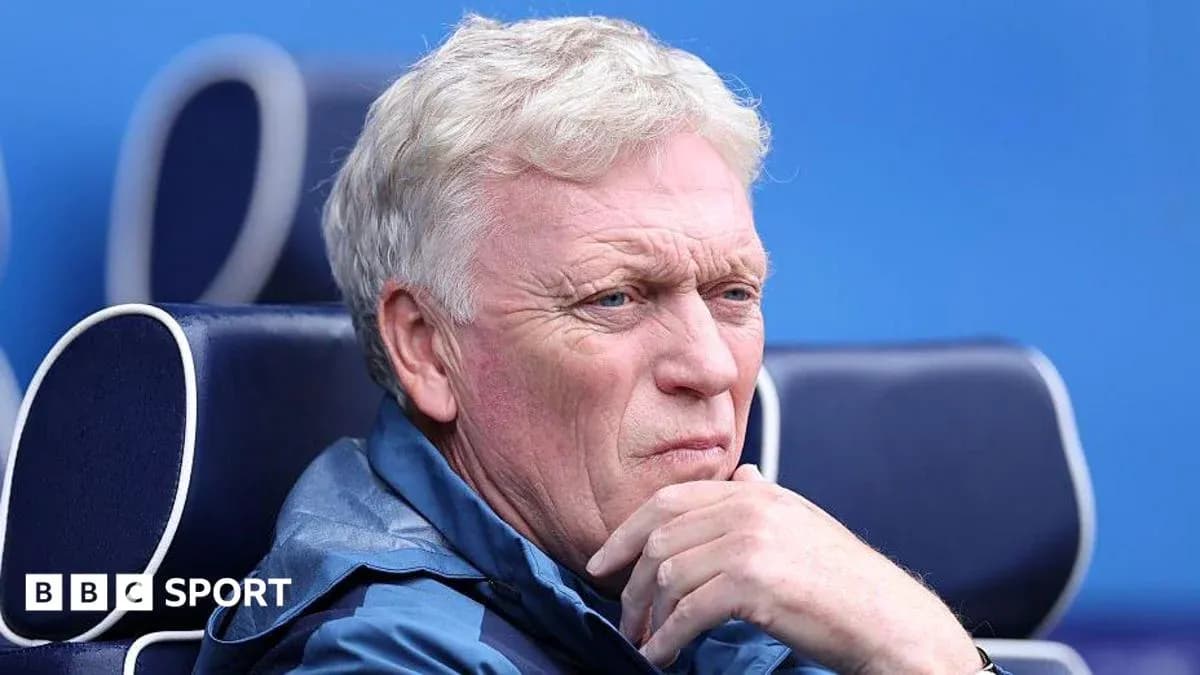
The irony for Moyes is brutal. Two full seasons back in charge. Two 13th-place finishes. On paper, stasis. In reality, two very different journeys.
When he returned 18 months ago, Everton were a point above the relegation zone and drowning in off-field chaos: financial breaches, points deductions, and a fanbase conditioned to look down, not up. He hauled them 23 points clear of the bottom three. That bought him time, and trust.
Last summer, the club went again. A record net spend of £97m under the Friedkin Group, nine new faces, a sense of a project finally being built with a plan. The reward? Thirteenth again, one point better off.
To some, that sounds like failure. To others, it looks like a platform. Former midfielder Leon Osman falls firmly into the latter camp. He sees stability where Everton once only knew turbulence, and a squad that, for all its flaws, is no longer glancing nervously at the trapdoor.
“When David Moyes first came in, we flew out the blocks and had a great start,” he said. “That continued for well over a year before the first sort of low period, which was the end of last season. I still feel that we made progress last season, which is what we wanted, along with stability.”
Moyes, 63, has not hidden his frustration at trying to keep pace with the Premier League’s big spenders. Over the past five years, Everton rank 15th for net spend among current top-flight clubs. That stat offers one kind of context. Another arrives from the south coast.
Bournemouth spent less than anyone last summer, actually banking a profit of £81m, and still finished sixth. Brighton made £41m and came eighth. Both clubs have built smart, repeatable recruitment models. Both finished miles ahead of Everton.
The new stadium was supposed to change the mood. The Hill Dickinson, gleaming on the docks, promised a reset in every sense. Instead, it delivered the worst home points-per-game record of any side starting life in a new Premier League ground: 1.2. Away from home, Everton’s form ranked in the top seven. At home, the place never quite felt like a fortress, more like a work in progress.
Osman argues that Bournemouth and Brighton are “further along in their development”, settled in their identities, while Everton are still learning how to live in their new surroundings after years of upheaval. He also points to the moment the season’s narrative truly turned: Grealish’s injury in January.
The numbers back him up. With Grealish on the pitch, Everton won 45% of their games and averaged 1.6 points per match. Without him, the win rate slumped to 22% and the points return dropped to one per game. One player, one stress fracture in his foot, and the whole system shuddered.
“David Moyes is an intense manager and by the end of the season, a small squad couldn't quite last,” Osman said. The legs went. The ideas didn’t, but the energy to execute them did.
“Changes take time. No one is thinking about relegation which shows you what Moyes has done. He's got 12 months remaining and I'd expect him to see that out.”
That next year will be shaped, again, by recruitment. Under Farhad Moshiri, Everton became a byword for waste. Eight players signed for at least £20m walked away for nothing. It was a pattern that shredded balance sheets and squad cohesion alike.
The Friedkin Group have tried to reset that approach, leaning younger, looking for value that might appreciate. The results so far are mixed. Grealish and Dewsbury-Hall have been clear successes. Others remain question marks.
Tyler Dibling, a £35m winger from Southampton, started only six league games. Adam Aznou, the young left-back signed from Bayern Munich, is still waiting for his Premier League debut. Barry, 23, dominated in the air more than any other player in his first top-flight season but lacked a ruthless edge in front of goal. Merlin Rohl, 24, barely featured until May, then impressed across four late starts, hinting at a bigger role to come.
The next few weeks could define Moyes’ final year. BBC Radio Merseyside’s Giulia Bould reports that Grealish is expected to return on loan later in the window as he continues his recovery, his wages remaining around £200,000 per week. That is a huge financial commitment for a club still trying to repair old damage.
Iliman Ndiaye, meanwhile, has attracted interest from Saudi Arabia. The calculation is stark: keep a key attacker or cash in and try to spread the money across two or three positions.
“I'd welcome Grealish back but only at a price that suits Everton,” Osman said. “Ndiaye, I'd hate to lose him. There may come a point that the price is right and Everton can reinvest in two or three players but I think they should do everything they can to keep him.”
Experience is draining away. Seamus Coleman and Idrissa Gueye have gone, taking more than 600 Premier League appearances with them. That helps explain the club’s interest in a profile like Christian Norgaard. James Garner, a cornerstone of Moyes’ midfield, will miss the start of the season after groin surgery.
The result is a familiar Premier League paradox. A manager who leans on trusted lieutenants may now have to rely on younger players he has so far been reluctant to expose. Dibling. Aznou. The next wave, including the likes of Lewis Dobbin and Ishe Samuels-Smith, hovering on the fringes, waiting for belief as much as minutes.
“They need to show they're capable and deserve to play,” Osman added. The demand is simple. The leap is not.
“I’m hoping that a year in, understanding the demands that are required, players like Dibling and George will make that progression and then suddenly our squad looks more trustworthy.”
Everton have escaped the panic of relegation battles. The question now is whether this version of Moyes’ team can do more than just stand still in mid-table – or whether another season of “happily dissatisfied” will be as much as anyone at the Hill Dickinson Stadium can reasonably expect.