.svg&w=384&q=75 "Naijagoal logo")

England vs DR Congo: Tactical Choices for Knockout Football
The argument has rumbled on all week: can England really afford to start both Declan Rice and Elliot Anderson?
Those calling for change want something bolder. Two number tens, more risk, more incision. Less control, more chaos. They look at knockout football and demand an extra body closer to the opposition box, not two deep-lying conductors recycling the ball.
But strip away the noise and you’re left with a simple truth: Rice and Anderson are two of the best central midfielders in the Premier League. They dominate games in different ways. Anderson’s passing range can unpick tight shapes. Rice’s engine drags teams up the pitch and lets others play higher. The balance is there – if one of them is allowed to step on.
Too often, for their clubs and country, both sit. Both build. Both start the play rather than finish it. The plan is clear: keep them as the safety net, free the full-backs to bomb on, and trust the width to break teams down. On paper, it works. On the pitch, if the tempo drops and the chances dry up, it can look painfully cautious.
That’s where the 60-minute mark becomes critical. If the pattern hasn’t shifted by then, the game is asking for a change, not another sideways pass. Positive substitutions aren’t a luxury in these moments, they’re a responsibility. Managers live and die by those decisions. Get them right and you’re hailed for bravery. Get them wrong and a controlled performance can unravel into a defeat because too many bodies flood forward and the structure snaps.
England cannot ignore the counter-attack threat either. DR Congo bring far more to the table than Panama and have earned their place on this stage. They will sit, they will suffer without the ball, and then they will spring. One loose pass, one overcommitted attack, and the whole night can tilt.
What England cannot do is play with the handbrake on, terrified of the killer pass. The risk of losing the ball cannot outweigh the reward of breaking a line. Some passes won’t land. Some shots will fly over. The point is to keep asking questions, keep knocking on the door until something gives.
Expect another low block. Expect England to see more of the ball. That means they must vary the threat. Not every attack can end with a cut-back from the byline. They need shots from distance, midfielders stepping onto second balls, someone willing to take it on from 20, 25 yards. A goal from range changes everything against a team content to sit in.
The approach has to be different to those spells against Ghana and Panama, where control sometimes replaced conviction. This is knockout football. There is no second leg, no safety net. Lose, and you’re gone.
The shirt weighs heavier on nights like this. An England jersey in a World Cup knockout game brings its own pressure, doubly so when it’s a tie “on paper” you’re expected to win. That phrase has haunted England before. Think of France 2016 and Iceland. A game they were meant to win. A game they didn’t. The lesson is brutal but clear: concentration from the first whistle to the last, no assumptions, no shortcuts.
DR Congo arrive with pedigree and familiar faces. Their AFCON run showed a side that can compete and adapt, and there is genuine Premier League quality dotted through the squad. Yoane Wissa stands out at the top end of the pitch. He never lets defenders rest, always on the move, always making them think. His club form at Newcastle hasn’t exploded in the way he would have wanted, but on this World Cup stage he has sparked into life. DR Congo lean on him heavily, and he has embraced that responsibility.
Behind him, Axel Tuanzebe anchors the back line with a presence England know well. His pace rescues tight moments and lets his team hold a braver line, knowing he can recover ground that others can’t. He doesn’t always look electric over the first yard, but over distances he eats up space and brings real strength to duels. With England’s runners attacking the gaps as they did in their last outing, Tuanzebe’s reading of the game and recovery speed will be central to Congo’s resistance.
His journey has not been straightforward. Injuries have interrupted his rhythm, but his professionalism has never dipped. The gym work, the preparation, the way he trains – that’s what has kept him at this level. On the pitch, he organises, he talks, he drags the line up and back with him. Those are the habits of a player shaped by Manchester United’s standards. You don’t come through that system and reach the first team without serious talent and character.
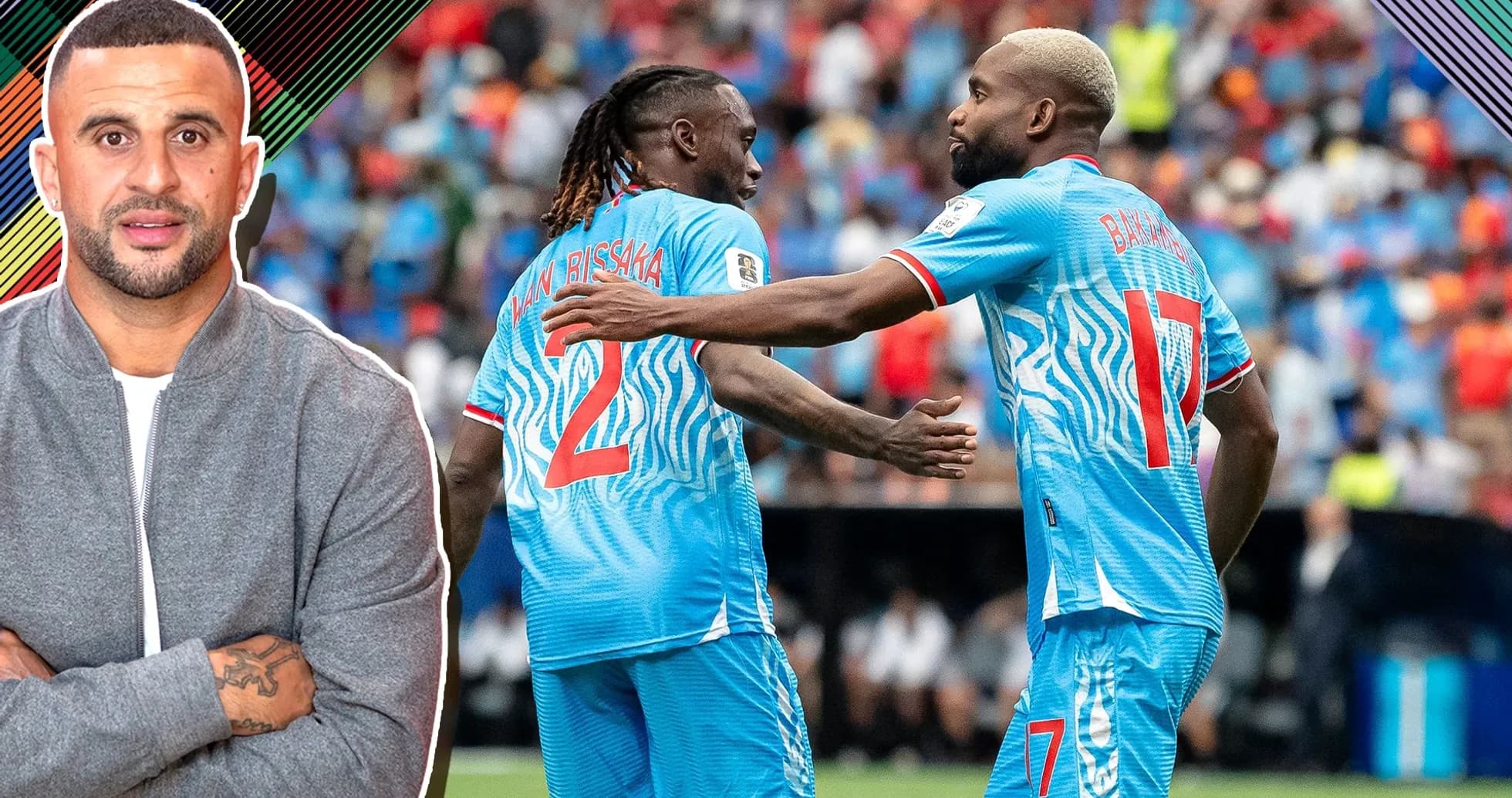
He can slot in at centre-back or right-back without fuss, which gives Congo options. But out on that right flank stands another formidable figure: Aaron Wan-Bissaka. Beating him one-on-one remains one of the toughest tasks in the game. Wingers think they’ve skipped past him, only for those telescopic legs to wrap around and hook the ball away. At Manchester City they called him “Go-Go Gadget” for a reason. His timing in the tackle is uncanny, and he relishes the duel.
He defends the way the best attackers attack – with pride, with edge, with a desire to face the very best. If Marcus Rashford starts off that side, he’ll know exactly what’s coming from their days at Manchester United. That battle alone is worth watching: one of England’s sharpest forwards against a defender who has built a reputation on shutting down nights like this.
So England walk into a tie they should win, but cannot stroll. They have the tools to dominate, to create, to break Congo down. They have midfielders who can control the game and, if unleashed, hurt from distance. They have runners who can stretch any back line.
What they don’t have is room for complacency.