.svg&w=384&q=75 "Naijagoal logo")

Fury and Heartbreak: Egypt Falls to Argentina in World Cup Classic
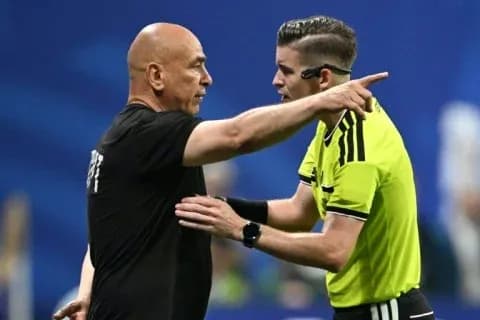
In the bowels of a Los Angeles stadium, Hossam Hassan did not bother with diplomacy. His Egypt side had just lost a World Cup classic, 3-2 to Argentina after leading 2-0, and the legendary former striker chose the most loaded word he could find.
“Cheated.”
No talk of hard luck. No nod to the romance of the underdog. Just raw anger after a night when Egypt stood on the brink of a first-ever World Cup quarter-final, only to be dragged back by the defending champions and a string of decisions that left their coach incandescent.
“We have been cheated unfairly today, we have suffered injustice,” Hassan fired in a blistering press conference that crackled with resentment. “We haven't seen respect or fair play. There has not been respect or fair play.”
Egypt’s dream, VAR’s intervention
The game had been tilting Egypt’s way from the moment Yasser Ibrahim rose to head them into a deserved lead. The Pharaohs were sharper, hungrier, and for long stretches, braver than a strangely rattled Argentina.
Their advantage looked set to double when Mostafa Zico found the net, sending Egyptian fans into delirium. But the roar barely had time to die down before VAR dragged everyone back.
Officials rolled the tape all the way back to a foul on Lisandro Martinez earlier in the move. Goal wiped out. Momentum punctured.
For Hassan, that was the first deep cut.
“A second goal was remarkably disallowed,” he raged. “There has not even been a VAR check when we have all seen the image of the (shirt) being pulled back.”
Zico would not be denied for long. Egypt regrouped, surged again, and the forward struck to make it 2-0, putting them within touching distance of the last eight. Argentina looked stunned. The world champions were being outplayed, out-thought, and out-fought.
Messi’s miss, Argentina’s response
Argentina were handed a lifeline when the referee pointed to the spot for a trip on Nicolas Tagliafico. Up stepped Lionel Messi, the eight-time Ballon d’Or winner, the man who has made these moments feel routine.
Not this time.
Mostafa Shobeir guessed right and beat away the penalty, another chapter in Messi’s curious World Cup record from the spot. He has now failed to convert four of his eight non-shootout penalties at the tournament, with two misses coming at this edition alone.
It should have been the moment that broke Argentina. Instead, it woke them up.
Cristian Romero struck to halve the deficit, and suddenly the champions began to play with the desperation of a side staring at the edge of the cliff. Egypt, who had defended with discipline and courage, started to feel the weight of the occasion and the pressure of history.
Messi, denied once from 12 yards, found his redemption from open play. He smashed in the equaliser, his eighth goal of the tournament, and the stadium shifted. The noise, the belief, the inevitability that seems to follow him at this level – all of it crashed down on Egypt.
From 2-0 up and cruising toward immortality, they were now clinging on.
The flashpoint before Argentina’s winner
The decisive moment came with the game stretched and nerves shredded. Argentina poured forward, Egypt tried to hold their line, and chaos reigned in the box.
Enzo Fernandez finished off what would become the winner, sparking wild celebrations in sky blue and white. On the Egyptian bench, there was no joy, only fury.
They were convinced the move should never have reached Fernandez. In the build-up, they claimed, Alexis Mac Allister had pulled back Hamdy Fathy in the area – a foul they believed should have brought a penalty to Egypt, not a goal for Argentina.
“A penalty was ruled out, was not even checked by VAR,” Hassan insisted. “There has not even been a VAR check when we have all seen the image of the (shirt) being pulled back.”
To him, it was not just a missed call. It was the symbol of something larger, something darker.
“Perhaps they wanted to keep the world champions in the competition. Perhaps they wanted Messi to stay in the running,” he told BeIn Sports. “In football, there are sometimes external factors that go beyond the technical aspects. The world champions received support at every level.”
Strong words, delivered with the conviction of a man who believes the deck was stacked.
Anger that goes beyond 90 minutes
Hassan’s rage did not stop at refereeing. He turned his fire on the organisers as well, tearing into the decision to schedule such a high-stakes match for a noon local kick-off (1600 GMT), just four days after both sides had played their round of 32 ties.
“Whoever schedules those matches has never played football,” he snapped. “You never schedule a game for 12pm. At noon you go for a walk or to eat brunch, you do not go to play football.
“When are the players supposed to eat? At 7.30am?
“There have been a lot of things to be questioned on and off the pitch.”
For a coach who had just watched his team go toe-to-toe with the world champions, only to be undone by a whirlwind comeback and a pile of contentious calls, it was too much to swallow.
So he made a promise.
“I am not going to continue following the matches of this World Cup, watching the matches of this World Cup,” he said. “This is my own way of speaking up.”
A personal boycott as protest. A statement that will resonate back home, where this defeat will sting for years.
Egypt leave with no place in the quarter-finals, no historic breakthrough, and no consolation in the idea that they simply fell to a great side. They leave feeling wronged, convinced that on a different day, with different decisions, they would still be here.
Argentina march on. Egypt go home with anger, with pride, and with one burning question: what more could they possibly have done?