.svg&w=384&q=75 "Naijagoal logo")
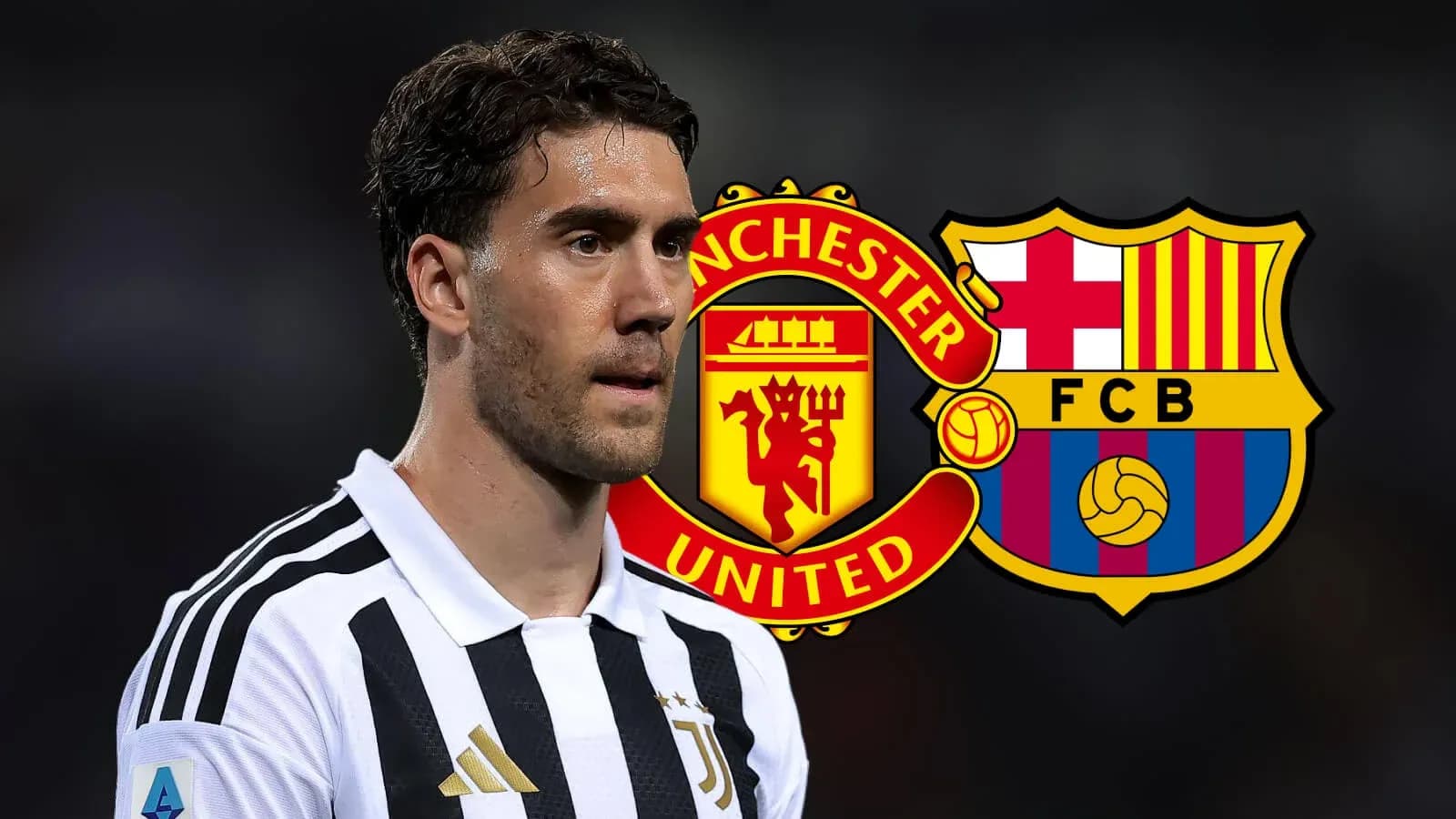

Dusan Vlahovic: The £30m Free Agent Still Without a Club
Every summer has its surprise. A late swoop, a sudden sale, a name you never expected to see on a free.
This year’s shock is that the most valuable free agent on the market is still standing on the sidelines as August looms.
Dusan Vlahovic, 26 years old, eight full seasons of Serie A in his legs, no club.
A £30m free agent with no takers
Vlahovic has just closed the book on four-and-a-half years at Juventus, after three-and-a-half at Fiorentina. He has hit double figures in the league in each of the last six campaigns. On paper, that profile doesn’t stay unemployed for long.
Transfermarkt’s valuation has him at around £30m. In reality, he costs nothing in transfer fees. Yet the phones are not exactly ringing off the hook.
Manchester United have been mentioned. Barcelona too. His name is circulating, his agents are working, but there are no agreements, no medicals, no “here we go” moments. Just noise.
So what’s the problem?
A striker built for the spotlight – almost
There is a lot in Vlahovic’s game that should appeal. He is a big, imposing No 9 who can finish with either foot, attack crosses, and threaten from free kicks. He can carry the ball, pin defenders, run the channels. In the right system, he looks like the sort of centre-forward who can bully a league.
But he is not the finished article. His link-up play can be loose. His pressing isn’t relentless. His form drifts. The consistency that defines the truly elite strikers has never quite settled into his game.
That gap between what he is and what he was supposed to become hangs over every conversation about him.
The prospect who stalled
At Fiorentina, Vlahovic looked like a coming force. Raw, aggressive, ruthless in the box. Arsenal courted him. Juventus pushed harder, committing up to €80m to bring him in just as he turned 22. They were buying the idea of a future 25-goal-a-season monster.
It never fully materialised.
His best full-season return in Turin was 18 goals in 2023–24. Last season, that number dropped to 10. Across his Juventus stay, he averaged around 15 goals per season. Good numbers. Not the transformational output the fee and the hype demanded. Juventus wanted a guaranteed 20-plus every year. They got a streaky scorer who threatened to explode, but never quite did.
That’s the crux: Vlahovic has operated just below the top tier. Dangerous, but not devastating. Productive, but not prolific enough to justify the billing.
Time is still on his side, but it’s no longer an endless resource. And he can’t fix much from his living room.
Wages that scream “elite” – numbers that don’t
The biggest obstacle isn’t his left foot or his movement. It’s his pay packet.
Last season, Vlahovic was not only Juventus’ highest earner; he was the top-paid player in Serie A. Yet 22 players on lower salaries outscored him. The numbers on his contract reflect the star he was expected to be. His actual output doesn’t back that up.
That mismatch makes the very top clubs nervous. When he was offered to Barcelona – a team clearly in need of a striker – hesitation followed. They saw the talent, but they also saw the risk: huge wages, uncertain return.
Clubs just below that level, the ambitious but imperfect giants like Manchester United, face a different dilemma. They need goals, they need presence up front, but they also need value. Committing heavily to a striker who hasn’t proved he can carry a team season after season is a gamble that can define a project.
Even Juventus, who knew him inside out, baulked. According to Tuttosport, Vlahovic was holding out for around €8m a year, roughly £132,000 per week. For a player they already had, that figure proved too steep.
Giorgio Chiellini, now a Juventus director and once Vlahovic’s teammate, put it bluntly: “With these figures, he won’t remain in Italy, so it is only fair and legitimate that he is seeking a different type of salary.” The message was clear. The Italian market has moved on. If he wants those numbers, he has to find them elsewhere.
Pride, compromise and a shrinking market
There is, of course, a simple way out. Vlahovic can lower his demands.
Reports suggest he is prepared to do that – but only for the right badge. The idea is straightforward: he would accept less from a Barcelona than from a Besiktas. Prestige over pay. That makes sense from the player’s side, but it feeds a different anxiety from the clubs’ perspective: are they compromising on quality just because the deal looks cheaper?
The reality is brutal. There are only a handful of truly elite strikers in world football, and even fewer that their clubs would willingly sell. That scarcity should push someone like Vlahovic up the list. Good, but not great. Available. In his prime. Free.
As the window ticks down and panic starts to seep into recruitment meetings, his profile ought to become more attractive. A late move, a recalibrated wage structure, a coach who believes he can iron out the flaws – it’s all there for him.
He doesn’t even have the deadline-day clock ticking as loudly as everyone else. As a free agent, Vlahovic can sign after the window shuts. But that’s a technical advantage, not a sporting one. The longer he waits, the longer he goes without rhythm, without a dressing room, without matches.
Right now, though, the calendar is winning. Pre-season is almost done. Tactical plans are being finalised. Squads are settling. And Vlahovic, once the €80m centrepiece of Juventus’ future, is staring at the real possibility of starting the new campaign without a club.
For a striker entering what should be the sharpest years of his career, that’s not just unfortunate. It’s a crossroads.