.svg&w=384&q=75 "Naijagoal logo")
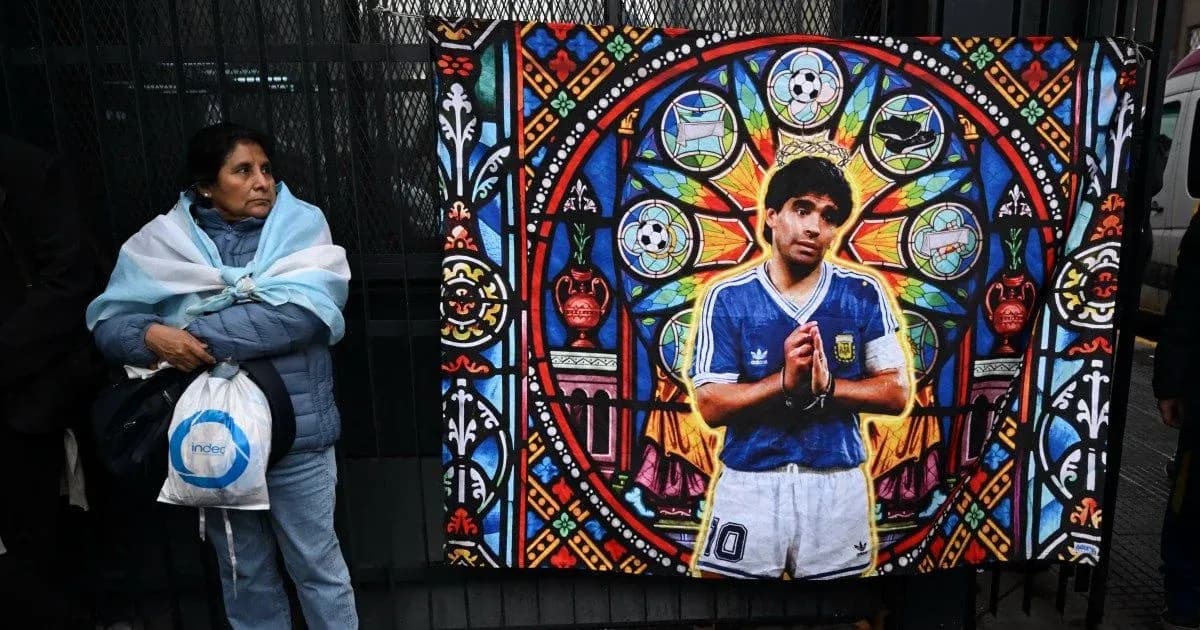

Diego Maradona's Final Days: A Tragic Courtroom Revelation
Diego Maradona lay in his bed, swollen, silent and seemingly surrendered to the inevitable.
That was the stark picture painted in an Argentine courtroom by Nicolas Taffarel, the personal masseur who saw the 1986 World Cup winner in his final days and says he sounded the alarm, only to watch nothing change.
“He wouldn’t get out of bed, he didn’t want to eat, he didn’t want to wash, he didn’t want to look after his personal hygiene,” Taffarel told the court on Thursday, his voice cracking as he relived those last visits.
A Legend Fading From View
By then, Maradona was no longer the roaring, defiant figure who dragged Argentina to glory in Mexico. According to Taffarel, he was bedridden and bloated, his legs visibly swollen, his energy gone.
The masseur described how he urged the medical team to be more present, to see their famous patient “every day”. An audio message played in court captured his plea, a professional close enough to sense danger but without the authority to change the course of treatment.
“I reported the issues I observed with him, but I saw no concrete action or swift resolution,” he said. The frustration lingered in every word.
Doctors, he recalled, tried to ease his fears. They told him to calm down, that the symptoms would pass. So he did what many do in those moments: he trusted the experts, convinced himself that things would “sort themselves out”.
“But it didn’t pass,” he said simply.
The Final Conversation
On November 24, the day before Maradona died, Taffarel made one more attempt to rouse him. He tried to tempt him with mate, the herbal drink that is a ritual as much as a refreshment in Argentina.
The response has now become a chilling fragment of football history.
“He said to me: ‘I don’t want anything, Taffita, that’s it.’ I asked him: ‘What do you mean, that’s it?’ and he replied: ‘Nothing, that’s it’,” Taffarel recounted.
In Spanish, “ya está” can carry a shrug of reassurance – “it’s all right” – or the finality of a curtain falling – “it’s over”. Sitting in court years later, that ambiguity hung heavy in the air.
The next day, November 25, 2020, Diego Armando Maradona was found dead, alone in his bed, aged 60. The official cause: heart failure and acute pulmonary oedema, fluid filling his lungs, just two weeks after he had undergone surgery.
A Trial With Heavy Stakes
Seven healthcare professionals now stand accused of potential negligence that may have contributed to the death of one of football’s greatest icons. The trial, which began in mid-April in Argentina, has become a forensic examination not only of medical decisions, but of duty, presence and responsibility around a man whose body had taken a lifetime of punishment.
The defendants face up to 25 years in prison if found guilty. All deny any responsibility.
Most point to their specific roles and narrow specialisms, arguing that their involvement had no direct link to the clinical causes of Maradona’s death. Each is trying to draw a line around their own part in a chaotic final chapter.
While lawyers argue and experts dissect medical charts, it is the human details that continue to cut through: the swollen legs, the closed bedroom door, the unanswered warnings, the last, resigned “that’s it”.
The court will decide whether those final days were the unavoidable end for a battered genius or a preventable tragedy shaped by negligence. The trial is expected to stretch beyond this month, and with it, the painful question lingers: did Diego Maradona die because his body finally gave out, or because too many people assumed someone else was in control?