.svg&w=384&q=75 "Naijagoal logo")
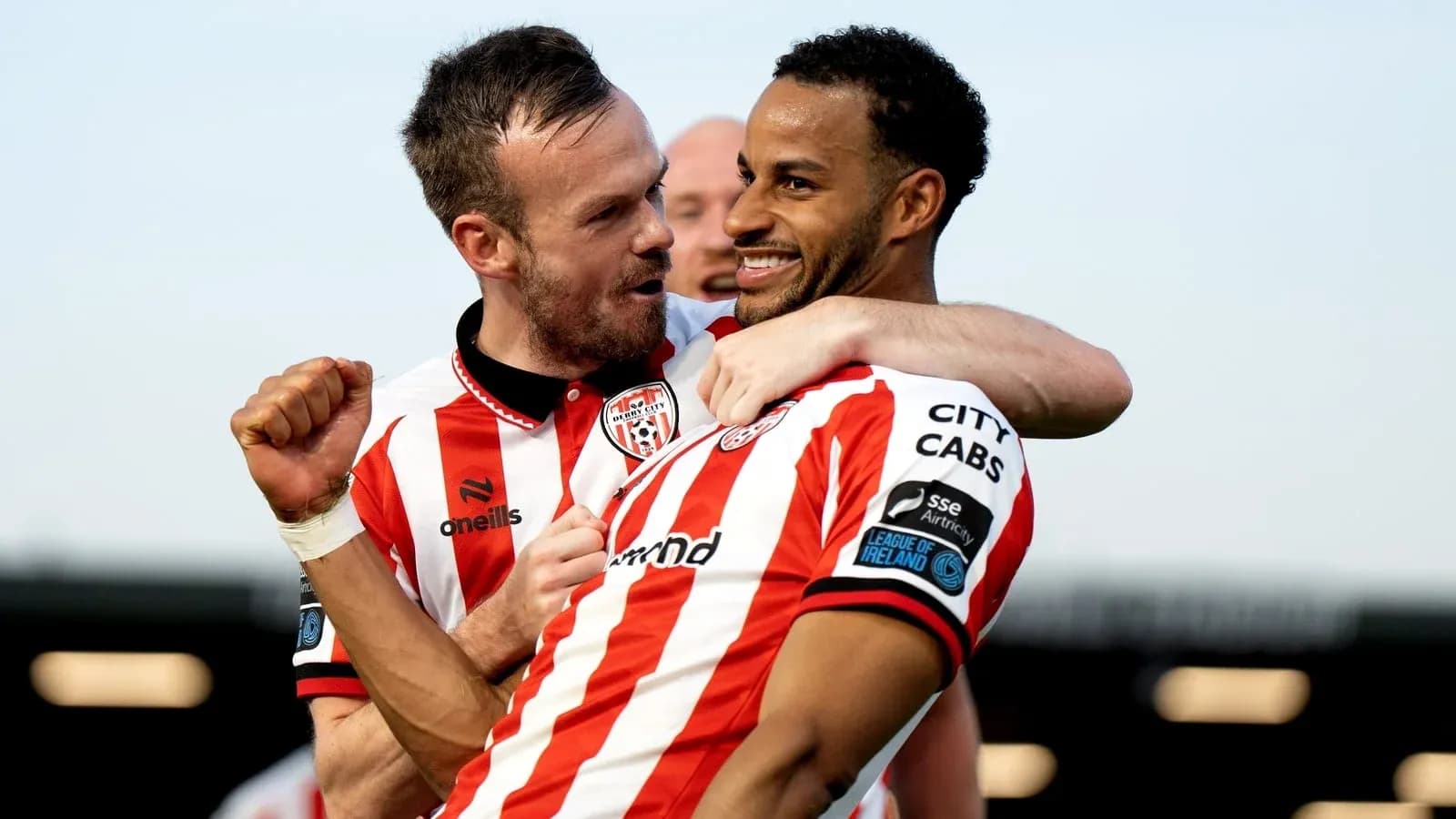

Derry City Secures 2-0 Victory Over Sligo Rovers
Derry City walked into the Brandywell under a cloud and walked out with clarity. A chaotic week off the pitch ended with a calm, controlled 2-0 win over bottom side Sligo Rovers, the kind of routine home victory that has felt anything but guaranteed lately.
Tiernan Lynch and his assistant – and brother – Seamus departed by mutual consent in midweek. In their place, director of football Mark Connolly stepped down from the stand and onto the touchline, at least for now. If this was an audition, his players delivered the right kind of answer.
They dominated, they created, they hit the woodwork twice, and when the pressure finally told, they killed the game with two sharp second-half finishes from Barry Cotter and Adam O’Reilly.
All of it played out against a sub-plot that will not go away. James McClean, the club’s most high-profile son and most outspoken critic during Lynch’s reign, was nowhere near the pitch. Before kick-off, he posted a picture on social media that suggested he was at home watching his former club Wrexham face Middlesbrough in the Carabao Cup. His absence, on a night when the mood around Derry was already raw, will only deepen questions about his long-term future at his hometown club.
On the grass, though, Derry’s intent was immediate. Five minutes in, Liam Boyce should have settled the nerves. The striker climbed well to meet a cross but could only steer his header over when he really ought to have tested Sam Sargeant.
The chances kept coming. On 15 minutes, Brooklyn Lyons-Foster, operating out of position at left-back, produced a moment of real quality, wrapping the outside of his right boot around a cross to the back post. James Clarke threw himself at it, beat the goalkeeper, and watched his diving header smash back off the upright. The Brandywell groaned; Sligo survived.
Derry’s wide players were running the game. Darragh Burns slipped a clever pass in behind for Michael Duffy, who lost Jeannot Esua with ease but dragged his left-footed effort just past the far post, Clarke again inches away from turning it in. Then, six minutes before the break, the move went the other way: Duffy fed Burns, only for the winger to fire straight at Sargeant, who dealt with it comfortably.
Sligo, pinned back and hanging on, offered little more than resistance. They needed half-time; Derry needed a breakthrough.
It arrived nine minutes after the restart. Burns swung in an inswinging corner from the right, deep towards the back post. Cotter attacked it with conviction, bullying his way through the crowd and thumping a header beyond Sargeant, whose touch, if there was one, never looked like keeping it out. The pressure finally had its reward.
Derry smelled blood. Within moments, Duffy stepped inside and unleashed a fierce 25-yard drive that had Sargeant beaten all ends up. The crossbar came to Sligo’s rescue this time, rattling under the impact as the home fans roared their frustration.
The second goal, when it came on 63 minutes, had a different feel – less force, more finesse. A neat passing move ended with Boyce dropping off the front line and cushioning a perfectly weighted lay-off into the path of the onrushing O’Reilly. From 12 yards, the midfielder stayed composed, opening his body and side-footing clinically into the corner. Simple, assured, exactly what an interim manager wants to see.
From there, Derry managed the game with a maturity that has not always been evident this season. Sligo pushed sporadically but never truly threatened to drag themselves back into it. When they did finally test Brian Maher’s goal, it was from distance and without conviction.
Sargeant, by contrast, remained busy. On 78 minutes, he flung himself full stretch to his right to beat away a powerful strike from substitute Conor Barr, refusing to let the scoreline get out of hand. Deep into stoppage time, Duffy drove from 20 yards and again the Sligo goalkeeper had to spring across his goal to parry.
Connolly used his bench to see it out. Barry Cotter and Nick Twisk made way for James Olayinka and Tyler Smith on 74 minutes, Burns had earlier been replaced by Barr, and Ellis Chapman came on for Boyce late on. The changes did nothing to break Derry’s rhythm; if anything, they underlined the control the home side now enjoyed.
For Sligo, the pattern was more worrying. Sam Sargeant stood out, and that tells its own story. Trey George and Ryan O’Kane departed early in the second half, Jamie McGonigle and James McManus sent on in an attempt to inject life into a flat performance, but the visitors never found a foothold.
Derry, in contrast, ended a turbulent few days with something tangible: three points, a clean sheet, and a performance that suggested the dressing room remains very much engaged. The managerial situation will take time to resolve. The McClean question will not disappear quietly.
But on a cool night at the Ryan McBride Brandywell Stadium, the noise around the club briefly faded. The football did the talking – and for the first time in a while, the conversation sounded positive.