.svg&w=384&q=75 "Naijagoal logo")

De Zerbi Defends Tonali Amid Spurs' Struggles
Roberto De Zerbi is not looking for a scapegoat. Not even a £100m one.
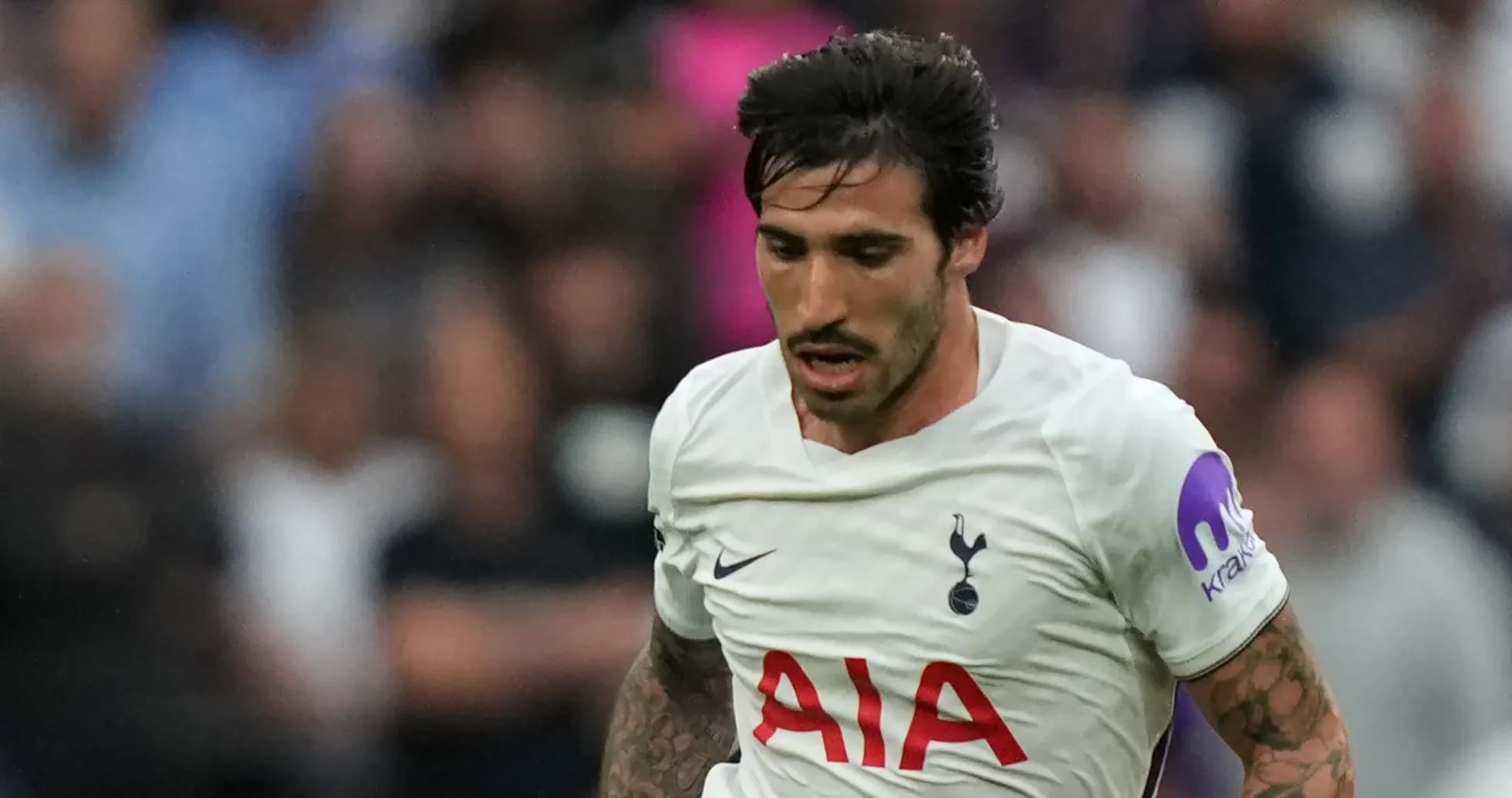
Sandro Tonali, Tottenham’s record signing and the summer’s great statement of intent, endured a bruising afternoon in the 2-0 defeat to Newcastle. Rested in midweek against Charlton to sharpen his fitness, the Italian was supposed to arrive at the Emirates with fresh legs and a clear head. Instead, he looked short of rhythm, was involved in the build-up to Anthony Elanga’s opener, and left the pitch on 75 minutes to the sound of ironic cheers from the away end.
The narrative was ready-made: big fee, big expectations, big target.
De Zerbi wanted no part of it.
“I love Sandro Tonali,” he said afterwards, the emotion still raw. This was not a manager distancing himself from an underperforming star. This was a manager drawing a line in the sand. “Today is the day where my emotion for my players is bigger than the other days because we are building together the club, Vinai (Venkatesham), Johan Lange, the owners, me and they (the players) are like our children. So, this day is so sad. We are all of us very disappointed for the result, but I love my players more today than the next win we will make. I believe more than the Brentford game of our project, I believe in our players.”
The words were striking. The performance, less so.
Tonali at the centre of the storm
The mystery around Tonali’s condition refuses to go away. He played in pre-season against Chelsea, Getafe and Hoffenheim, looked integrated, looked ready. Yet when the real thing started, the sharpness hasn’t followed.
De Zerbi did not hide from that reality. Tonali, he admitted, is not yet at his best. Physically, he is still short. Tactically, he remains central to what Spurs are trying to become.
“Sandro Tonali is another crucial player. He is not in the right condition, in the best condition yet, maybe physically,” De Zerbi said, after highlighting the wider context: a squad stitched together late, key names only just back in the fold.
“I think (Omar) Marmoush for the first game played very well. It was the first game for Micky van de Ven and Pedro Porro, they came late and they are crucial for this team, after the World Cup, after two injuries.”
This is not a settled side. It is a work in progress being judged at full speed, under floodlights, with a nine-figure midfielder learning a new league and a new role while carrying the weight of a price tag that will follow him into every stadium.
A fragile pattern Spurs cannot shake
Tonali’s struggles, though, are only one piece of a larger, more uncomfortable picture.
Under De Zerbi, Tottenham have lost every game in which they concede first. That habit, damning as it sounds, stretches back beyond his arrival. You have to rewind almost two years, to November 2024, to find the last time Spurs went behind in a Premier League match and still found a way to win.
That is not tactics. That is mentality.
The moment Elanga struck for Newcastle, the familiar sinking feeling returned. The crowd sensed it. The players seemed to feel it too.
De Zerbi did not sugar-coat what happened next. “After the goal we conceded, I think we lost the confidence. The reaction was not good enough,” he said. “Not the reaction I want to see on the pitch and I said immediately after the end of the game, to the players, because when you are building something new, it’s tough, there are problems.”
This is where the job gets ugly. Systems can be coached. Pressing triggers can be drilled. But the ability to absorb a punch and hit back? That comes from somewhere deeper.
Money spent, mentality unpaid
Two defeats from two to start the Premier League season is not what anyone at Tottenham had in mind after a summer of heavy spending and bold restructuring. Tonali’s arrival, the recruitment of Marmoush, the importance of Van de Ven and Porro — all of it screamed ambition.
The table, right now, says something else.
Pressure has already begun to circle around De Zerbi, not because the project lacks clarity, but because football rarely waits for projects. Supporters see the outlay. They want results. The manager, though, is adamant: culture cannot be fast-tracked with cheques.
He keeps returning to that point, to the idea of a club being “built” with owners, executives and players pulling in the same direction, to the image of footballers as “children” who need protection as much as instruction. It is not the language of a man ready to abandon his blueprint after two bad afternoons.
“You can’t buy winning mentality in the transfer market,” De Zerbi said, laying bare the intangible gap he feels in his dressing room.
Tottenham have paid for talent, for potential, for profile. The question now is whether this group, with Tonali at its heart, can grow the one thing De Zerbi insists cannot be purchased.