.svg&w=384&q=75 "Naijagoal logo")

Cristiano Ronaldo's World Cup Farewell: A Legacy Without the Trophy
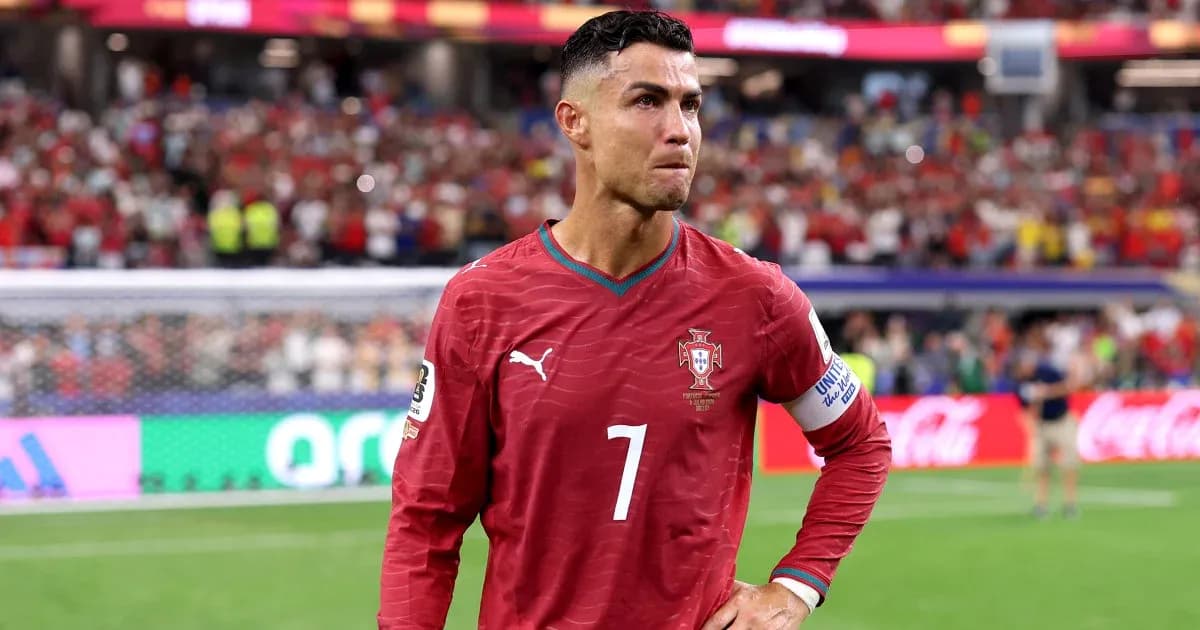
Cristiano Ronaldo walked off the World Cup stage for the final time with tears in his eyes and his head held high.
Portugal’s captain could not drag his country any further in this tournament, beaten 1-0 by Spain in the round of 16 on Monday, undone by Mikel Merino’s stoppage-time winner. One kick, one lapse, and the curtain finally came down on a World Cup career that has stretched across two decades.
On the pitch, the pain was raw. In the mixed zone later, the tone was different. Controlled. Resolute.
“It’s normal, sad, to leave the World Cup like this,” Ronaldo said through an interpreter. “But, as I said yesterday at the press conference, I gave it my all, I gave my best. And I leave with a clear conscience.”
He lingered on that point. Clear conscience. No regrets. No rewrites.
“That’s football, that’s the life of a footballer. Sometimes you win, sometimes you lose. And it has to move on. It was my last World Cup, yes, but the rest ... I have time to think, be with my family, not make decisions in the heat of the moment and move on with life.”
A giant without the one trophy
Ronaldo’s World Cup story ends without the trophy he chased for so long and without even a final appearance. The closest he came was in 2006, his first tournament, when a young, electric Portugal side reached the semifinals and finished fourth. That early surge never quite returned on the biggest stage.
Yet the numbers tell a story of enduring excellence. Across six World Cups, he played 27 matches and scored 11 goals, a body of work that places him among the competition’s great performers. Only one other man has matched his six appearances on this stage: Argentina’s 39-year-old Lionel Messi, who will play again on Tuesday.
The symmetry of their careers has defined an era. Their World Cup paths, though, have never fully aligned.
Ronaldo’s influence often felt heavier in the European Championships, where he turned Portugal from hopefuls into champions. Fourteen goals in 30 matches, and the defining moment: Euro 2016. The night Portugal finally climbed onto the major-trophy podium.
“Before Cristiano, Portugal hadn’t won any titles,” he said. It was a reminder, not a boast.
“The truth is that the biggest title I won with the national team was in 2016, which for me has the same significance as the World Cup, honestly.”
That sentence hung in the air. For him, the missing World Cup does not erase the transformation he led. A country that used to dream now expects.
Legacy over longing
Ronaldo has always lived in extremes — adored, criticised, analysed to the last detail — but as he walked away from his sixth and final World Cup, he sounded like a man choosing perspective over bitterness.
“Therefore, I repeat, I leave with a clear conscience, having done my best, and that’s it. Tomorrow will be a new day, and life goes on.”
Life, for now, still includes club football. He remains under contract for one more season with Al-Nassr in the Saudi Pro League, the club he has represented for the past four years. Whether this coming campaign becomes his last has not been confirmed, but the clock is ticking there, too.
The World Cup chapter is closed. No golden trophy, no storybook farewell, but a career that shifted the axis of Portuguese football and left a standard that may take generations to match.
The question now is not what he failed to win, but who will dare to follow the trail he has burned across the game.