.svg&w=384&q=75 "Naijagoal logo")

Cordeiro Resigns from FIFA Amid Controversy Over World Cup Plans
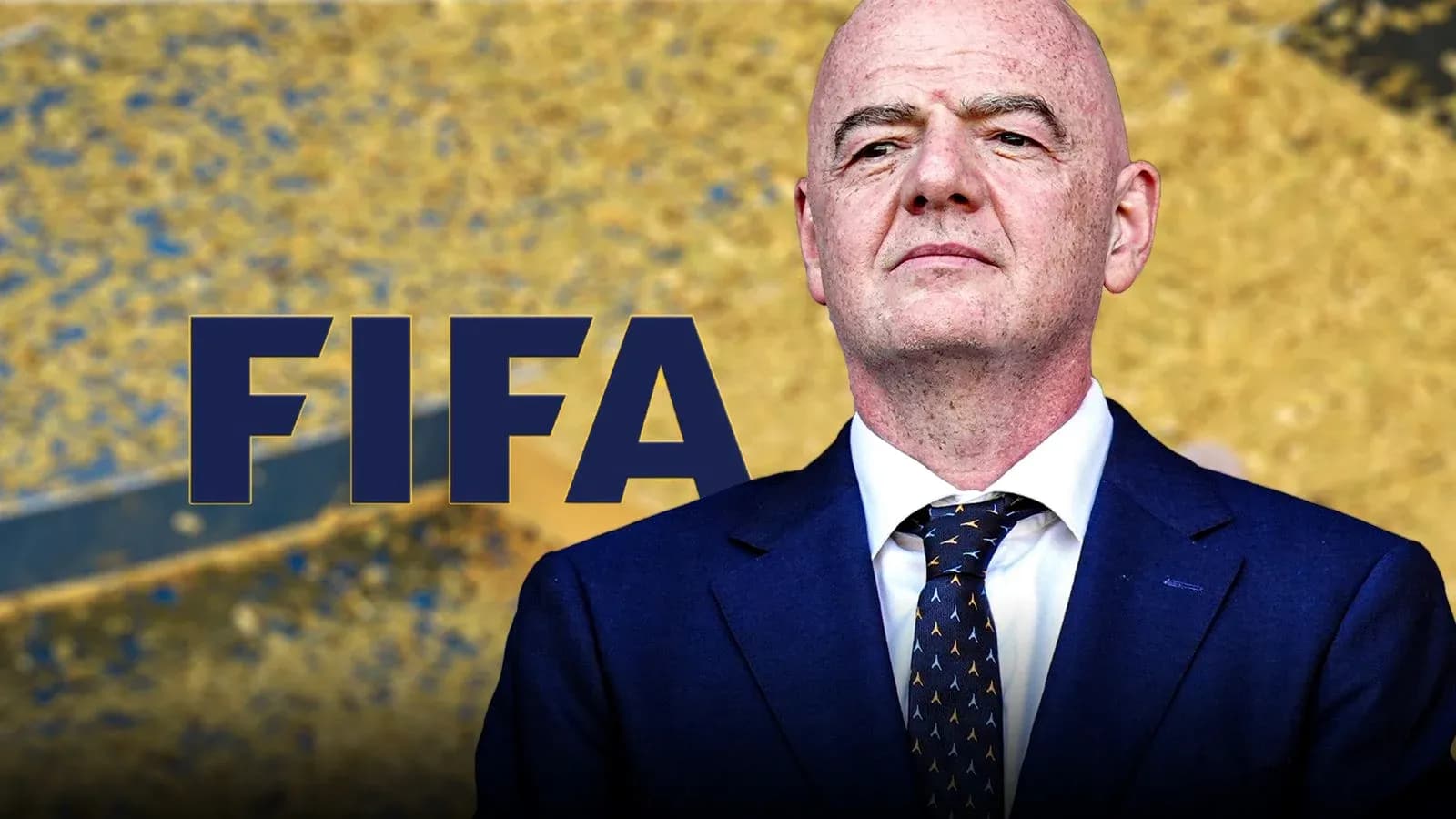
Carlos Cordeiro has walked away from FIFA’s inner circle, detonating a protest that cuts straight to the heart of Gianni Infantino’s presidency and his most explosive project yet.
The former US Soccer president, now a senior advisor to Infantino, resigned over plans to consult on selling stakes in a new World Cup commercial vehicle to private investors. For a man steeped in finance and football politics, this was not a quiet exit.
“As a senior advisor to the FIFA president, a former banker, and a lifelong football fan, I cannot stand by while FIFA considers selling a stake in the World Cup,” Cordeiro said in a statement to Sky News. He stressed he had “no involvement” in the proposal and “opposes it unequivocally”, branding it “a bad deal for FIFA's Member Associations, a bad deal for football, and a bad deal for the long-term future of the game.”
That language is not the sound of a routine disagreement. It is a political rupture.
Infantino’s project under siege
The timing of Cordeiro’s resignation was telling. It landed just hours after FIFA tried to calm a global backlash with a late-night statement from Zurich insisting “nobody is selling football” and that the proposed FIFA Forward Enterprise (FFE) would not compromise the “spirit or the governance of FIFA or football itself”.
The governing body doubled down on the process, not the plan. It vowed to “proceed with this consultation process” so each member association could “express its vote based on facts”, while blaming “incorrect media reports” for disrupting its rollout.
The football world did not soften.
UEFA’s 55 member associations had already drawn a brutal red line: they will not send any national team to a FIFA competition while the proposals remain on the table. Their stance, they said, is “unanimous and unequivocal”.
“No UEFA national teams will participate in any FIFA competition for so long as these proposals remain alive,” European football’s governing body declared, unless the idea is “abandoned in its entirety” and FIFA gives binding guarantees that it will “never again open its governance or competitions to private ownership”.
CONCACAF followed with its own rejection. The confederation for North and Central America and the Caribbean said it “rejected the proposal”. The Asian Football Confederation then joined the revolt, calling for an “urgent review” of FIFA’s governance and decision-making.
Add up the numbers and the scale becomes stark: confederations representing 143 of FIFA’s 211 member associations now oppose the plan.
The money, the model, and the risk
At the centre of the storm sits FIFA Forward Enterprise, a proposed commercial entity designed, in FIFA’s words, to give every member association “meaningful ownership of the commercial opportunity of football in their respective countries”.
Behind it lies a powerful investor group. Infantino has publicly backed the project, with a consortium led by Thrive Eternal — founded by Joshua Kushner, brother of Jared Kushner, son-in-law of former US President Donald Trump — standing by to take a minority stake.
The pitch to national associations is simple: huge future revenues, shared more widely. But the threat is just as clear. If UEFA holds its line and European teams boycott FIFA competitions, the men’s and women’s World Cups would be stripped of their biggest sporting and commercial engines. Any promises of vast returns quickly look fragile.
Domestic and international leagues have their own fears. They see a model where private money and commercial pressure push FIFA toward more tournaments, bigger formats, and heavier schedules, further squeezing already overloaded domestic calendars.
This is not just about who owns the rights. It is about who sets the rhythm of the global game.
AFC turns on an ally
The Asian Football Confederation’s intervention may be the most politically significant. The AFC has been one of Infantino’s key pillars of support since he beat its president, Sheikh Salman, to the FIFA presidency in 2016.
This time, Asia’s message carried a different tone.
“The AFC believes this moment must become a catalyst for strengthening institutional reform,” its statement read. It argued that “meaningful democracy is not measured solely by the opportunity to vote,” but begins with “transparent governance, timely consultation, informed deliberation and genuine participation throughout the decision-making process”.
The AFC called on FIFA to “undertake an urgent review of its governance and decision-making framework” to ensure that proposals “of global significance” are built through “proper consultation, meaningful engagement and appropriate oversight” by FIFA’s statutory bodies.
For a confederation that has helped keep Infantino firmly in office, that sounds close to a warning.
‘He’s in a hole and he needs to stop digging’
Inside FIFA, the official statement made no mention of Infantino by name. Outside, the focus is squarely on him.
Sky Sports News’ Kaveh Solhekol described the overnight communication as “a desperate, tone-deaf statement” from FIFA’s “Zurich bunker”, and interpreted it as Infantino’s own message rather than a broad institutional position.
“How many people inside FIFA actually agree with what he is doing?” Solhekol asked, arguing that Infantino’s power is “starting to ebb away” and that he “needs to start by apologising to football, to football fans all around the world” and to the confederations and presidents of the 211 member associations.
Solhekol also took aim at Infantino’s hostility towards the media, likening it to the approach of Donald Trump and insisting that reporting by The Times and the Financial Times on the FFE plan had been “completely and utterly accurate”.
His conclusion was blunt: Infantino “needs to change course” and “fully understand the mess he has created for himself”.
Can Infantino survive this?
Infantino has survived crises before. He has faced ethics questions, governance disputes, and rows over expanded tournaments. Each time, he has emerged with his authority intact and his re-election prospects strong.
This feels different.
Solhekol called it “the biggest crisis he’s faced – and it’s all of his own making”. The FIFA president, he suggested, is trying to frame the situation as a straightforward democratic exercise: 211 football associations weigh the FFE proposal, and if they vote it down, the storm passes.
Others believe that route is closing fast. The calls, instead, are for a public apology, a retreat from the project, and a period of silence while he tries to ride out the damage ahead of a presidential election scheduled for next March.
For now, Infantino is pressing on with the consultation. He is still blaming the media. He is still backing a plan that has driven UEFA, CONCACAF and the AFC into open opposition.
Cordeiro has chosen his side and left the building. The confederations have drawn their lines. The World Cup, the sport’s crown jewel, sits in the middle of a battle over who controls it and who profits from it.
If “nobody is selling football”, as FIFA insists, the next few months will show whether anyone in Zurich still truly owns the game’s trust.