.svg&w=384&q=75 "Naijagoal logo")

Colorado Springs Defeats El Paso Locomotive 2–1 in USL Cup Clash
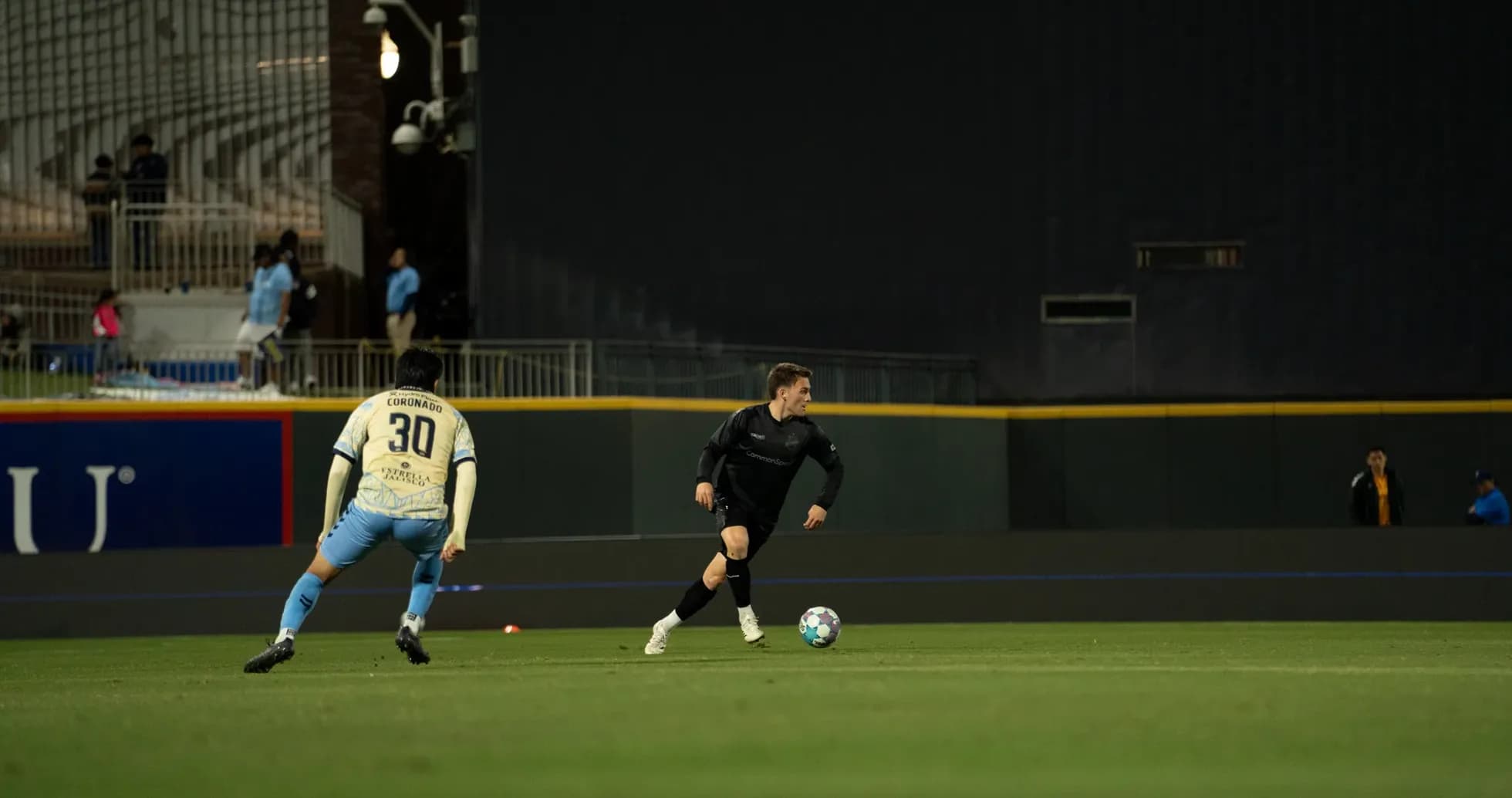
Under the thin Colorado night air at Weidner Field, Colorado Springs and El Paso Locomotive met in a Group Stage clash that felt far more like a knockout rehearsal than a routine cup date. The USL League One Cup has only just begun to sketch its hierarchy, but following this result the outlines are already sharp: Colorado Springs sit as group leaders, El Paso as the primary pursuers, and this 2–1 home win crystallized the gap in efficiency between them.
Heading into this game, the table painted Colorado Springs as the division’s most ruthless side. They were top of USL Cup 2026, Group 2 with 9 points from 3 matches, a perfect record of 3 wins from 3. Their overall goal difference was +6, built from 7 goals for and just 1 against. At home they had been even more emphatic: 2 home matches, 2 wins, 6 goals scored and only 1 conceded, an attacking average at home of 3.0 goals per game and a defensive average of 0.5. El Paso arrived as the nearest challengers, second in the group with 6 points from 3 fixtures. Their overall goal difference of +2 came from 5 goals for and 3 against, with a more balanced profile: 2.0 goals per game at home, 1.5 on their travels, but also 1.5 goals conceded away.
The match itself – 1–1 at half-time, 2–1 at full-time – followed the script of those numbers. Colorado Springs, under Alan McCann, leaned into their identity as front-foot aggressors, while Junior Gonzalez’s El Paso tried to turn their compact, possession-conscious template into a counterpunching weapon on the road.
Without official formations listed, the shapes had to be read from the personnel. For Colorado Springs, C. Shutler anchored the back, shielded by a defensive line built around P. Burner, T. Maples, G. Metusala and A. Rocha. In front of them, S. Williams and F. Daroma looked the natural double pivot, tasked with both screening and initiating transitions. Higher up, the energy and movement of S. Masereka, T. Magee and Y. Hanya circled around the spearhead of J. Tejada.
El Paso’s structure mirrored that balance. A. Romero started in goal, with a back line likely led by the experience of Tony Alfaro, flanked by A. Quezada, K. Twumasi and R. Ruiz. In midfield, E. Calvillo and D. Gomez offered ballast, while Gabriel Torres and A. Mendez provided the connective tissue between lines. A. Moreno and R. Rubin formed the attacking axis, the former drifting into pockets, the latter working the last shoulder.
The “tactical voids” in this contest were less about absentees – there was no data on missing players – and more about discipline and fatigue. Season-long card patterns offered a subtle warning. Colorado Springs’ yellow cards cluster late: 22.22% of their cautions come between 61–75 minutes, another 22.22% between 76–90, and a striking 33.33% between 91–105. El Paso, meanwhile, show a combustible profile: 50.00% of their yellows arrive between 31–45 minutes, 16.67% between 61–75, and 33.33% between 91–105, with a red card already recorded in the 16–30 range. This is a team that can lose control in emotional pockets of the game.
That disciplinary backdrop mattered in a match that was level at the break. At 1–1, El Paso’s tendency to pick up cards just before half-time hinted at strain under Colorado’s pressure. For the hosts, the danger zone was always going to be the closing quarter-hour, when their own bookings spike and legs tire at altitude. Yet Colorado’s season-long defensive record – only 1 goal conceded in total across 3 matches, with 2 clean sheets overall – suggested they could manage the line between aggression and recklessness.
The key matchups were clear. The “Hunter vs Shield” dynamic pitted Colorado Springs’ prolific home attack against El Paso’s away defence. On their travels, El Paso had conceded 3 goals in 2 matches, an average of 1.5 per game. Colorado, at home, were scoring 3.0 per match. In pure statistical terms, the home side were projected to find at least one breakthrough, likely two. The 2–1 final scoreline aligned almost exactly with that offensive edge.
Individually, the “Engine Room” battle revolved around Colorado’s central pair of S. Williams and F. Daroma against El Paso’s E. Calvillo and D. Gomez. Williams and Daroma, tasked with feeding the mobility of Hanya and Masereka, needed to disrupt Calvillo’s rhythm. Calvillo, in turn, was the hinge through which El Paso hoped to connect the deeper block to the creative impulses of Moreno and the running of Rubin. The 1–1 half-time score suggested El Paso had some joy in transition; the eventual 2–1 swing underlined Colorado’s superior control of the middle third as the match wore on.
On the flanks, Y. Hanya’s directness and ability to attack space asked constant questions of El Paso’s wide defenders, particularly A. Quezada and R. Ruiz. Without minute-by-minute shot data, the pattern still feels familiar: Colorado’s wingers pinning back full-backs, forcing the visitors’ midfield to slide wide and opening central lanes for late runners like T. Magee or second-phase efforts from the edge of the box.
From a statistical prognosis standpoint, this result was a logical extension of the pre-match numbers. Heading into this game, Colorado Springs were averaging 2.3 goals per match overall and conceding just 0.3. El Paso’s overall profile – 1.7 scored, 1.0 conceded – was strong but not elite. With no penalties taken or missed by either side across the competition so far, there was never likely to be a set-piece bailout; this was always going to be decided in open play and in the grind of repeated attacking waves.
Following this result, Colorado Springs’ perfect record and commanding goal difference confirm them as the group’s benchmark. El Paso remain credible challengers, but this 2–1 defeat underlines a simple truth: against the Cup’s most efficient attack and stingiest defence, their away back line – conceding 1.5 goals per game heading in – was always walking a tightrope. At Weidner Field, under pressure and under altitude, that rope finally snapped.