.svg&w=384&q=75 "Naijagoal logo")

Chelsea's Transfer Strategy: Balancing Quality and Squad Size
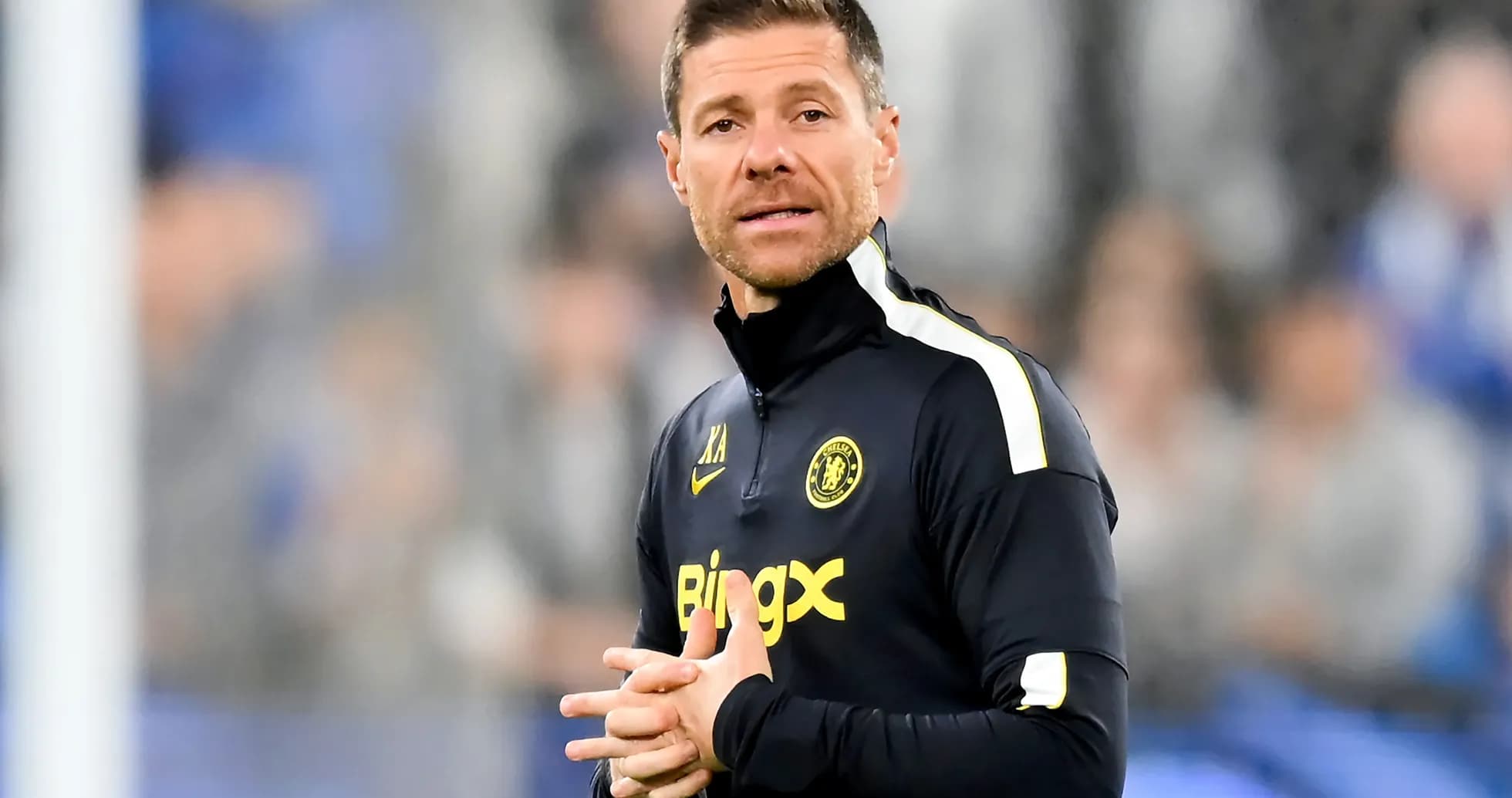
Chelsea are braced for a frantic finish to the transfer window, and Enzo Alonso is not pretending otherwise.
The head coach has made it clear he expects the club to be “extremely busy” right up until the deadline, with a squad already nudging 40 players and a hierarchy still intent on adding what they see as decisive quality.
At the heart of it all is a simple idea: talent is not enough. Not at this level, not with this pressure.
“We want a squad with the right balance between quality and mentality,” Alonso said. “Those things need to match in terms of maturity, but I think we are starting the new season with good energy. That’s important.”
Lacroix deal signals shift in Chelsea strategy
The clearest sign of a subtle shift in Chelsea’s approach is the move for Crystal Palace defender Maxence Lacroix. The Blues are understood to be close to finalising a £52m deal for the 26‑year‑old, who would become the oldest signing the club have made since 2022.
For a recruitment model built around youth and resale value, Lacroix represents something different: experience, readiness, a player expected to step straight into the intensity of Premier League and European football without a long bedding-in period.
Alonso wants technical quality. He also wants players who can cope when the temperature rises. Lacroix, at 26, fits that brief more than the teenagers and early‑twenty‑somethings who have dominated Chelsea’s recent windows.
The pursuit of Valentin Barco from Strasbourg points to the same theme. Depth. Competition. A squad thick with options, but not bloated to the point of paralysis.
Trimming a swollen squad
That is the tightrope Alonso now has to walk. With close to 40 players on the books, Chelsea’s final weeks of the window will be shaped as much by departures as by arrivals.
The coach knows it. The dressing room will know it too.
He has been blunt about the need to cut numbers, to keep harmony and clarity of roles. There is little use in assembling a galaxy of talent if half of it sits frustrated in the stands.
The coaching staff and recruitment team are working side by side to carve that list down into something lean, coherent and ruthless enough to compete on multiple fronts.
“We need to know that there will probably still be some movement,” Alonso said. “We need to be flexible and quick to act. The main thing is that we have a clear idea, a clear plan that we have built. It will probably change before the transfer window closes.”
The plan is there. The execution, in these last days, will define the early months of Chelsea’s season.
Fitting Rogers and Palmer into the same canvas
If the squad numbers are one headache, the tactical jigsaw is another. Central to that puzzle is how Alonso intends to accommodate Morgan Rogers and Cole Palmer in the same starting XI.
Rogers, signed last week for a staggering £117m, now carries the label of the most expensive British player of all time. He arrives with a profile that overlaps heavily with Palmer’s: creative, technically sharp, able to drift into pockets between the lines and dictate attacks.
On paper, it looks like a clash of zones. On the pitch, Alonso sees something else.
“I have a plan. I have an idea. I can see them linking really well,” he insisted. “We need to have a good mix. If we get that balance right and those special players in the right positions, with good control, then we will be more competitive with and without the ball.”
The message is clear: this is not an either‑or. Palmer remains the talisman, the player Chelsea built around last season. Rogers has not been brought in to stand in his shadow. Alonso’s challenge is to turn that overlap into overload.
Why Chelsea went all in on Morgan Rogers
Paying £117m for a 24‑year‑old midfielder is a statement. It is also a gamble. Alonso, though, has been firm in his belief that Rogers is exactly the kind of player Chelsea needed in that area of the pitch.
“In that position we needed an important player and I’m sure there were not many better options than Morgan Rogers,” he said. “You need players who can have that almost instant impact and I’m sure Morgan won’t need much time to adapt to the club, the system and his team-mates. That was the idea, to get a top player, and Morgan is one of them.”
Instant impact. No time to adapt. Those are heavy demands, but they align with the club’s broader shift this summer. Lacroix, potentially Barco, and now Rogers: players signed not for what they might be in three years, but for what they can deliver now.
The pressure that comes with the fee is obvious, yet Alonso talks about Rogers as if he is already woven into the fabric of the side. The expectation is that he will slot in quickly, understand the patterns, and raise the level of those around him.
Chelsea’s window, then, is being defined by two parallel forces: a drive to refine and shrink a vast squad, and a willingness to spend big on players they believe can change games from day one.
Whether that blend of ruthless trimming and high‑end investment produces a team worthy of the club’s ambitions will be judged not in the boardroom, but in the unforgiving rhythm of the season to come.