.svg&w=384&q=75 "Naijagoal logo")

Chelsea Signs Valentín Barco: A Strategic Move
Chelsea finally announced it on Sunday. Valentín Barco is in the door.
A transfer four months in the making, nudged along in the background while the club changed managers, changed direction and tried to change its reputation in the market, has now landed a versatile 22-year-old in Xabi Alonso’s dressing room. The twist? This one isn’t really Alonso’s doing.
A Signing From the Old Playbook
Chelsea’s new manager has been open about what he wants. He pushed for Sunderland’s Granit Xhaka. He secured Brentford veteran Jordan Henderson. He has asked for a left-back, with Rayo Vallecano’s Pep Chavarría close to arriving on his say-so.
Barco sits outside that pattern.
His move traces back to early April, when Liam Rosenior was still in charge and Alonso was nowhere near Stamford Bridge. Reports then suggested Chelsea and Barco had already shaken hands on a summer switch from Strasbourg. Two days after Alonso’s appointment in May, Barco posted a public farewell to Strasbourg, even though Chelsea had yet to make anything official.
The fingerprints on this deal belong to the club’s recruitment structure: co-sporting directors Paul Winstanley and Laurence Stewart, alongside Joe Shields and Sam Jewell. This is their project, not the manager’s. After a scattergun, high-spend era that has frayed patience in the stands, their influence has been deliberately trimmed and shared with Alonso.
Barco, in that context, feels like a leftover from the previous way of doing business. One last roll of the dice from a department under scrutiny.
Why Barco? Because He Can Play
Strip away the politics and the timing, and the logic is simple: Barco is a good footballer.
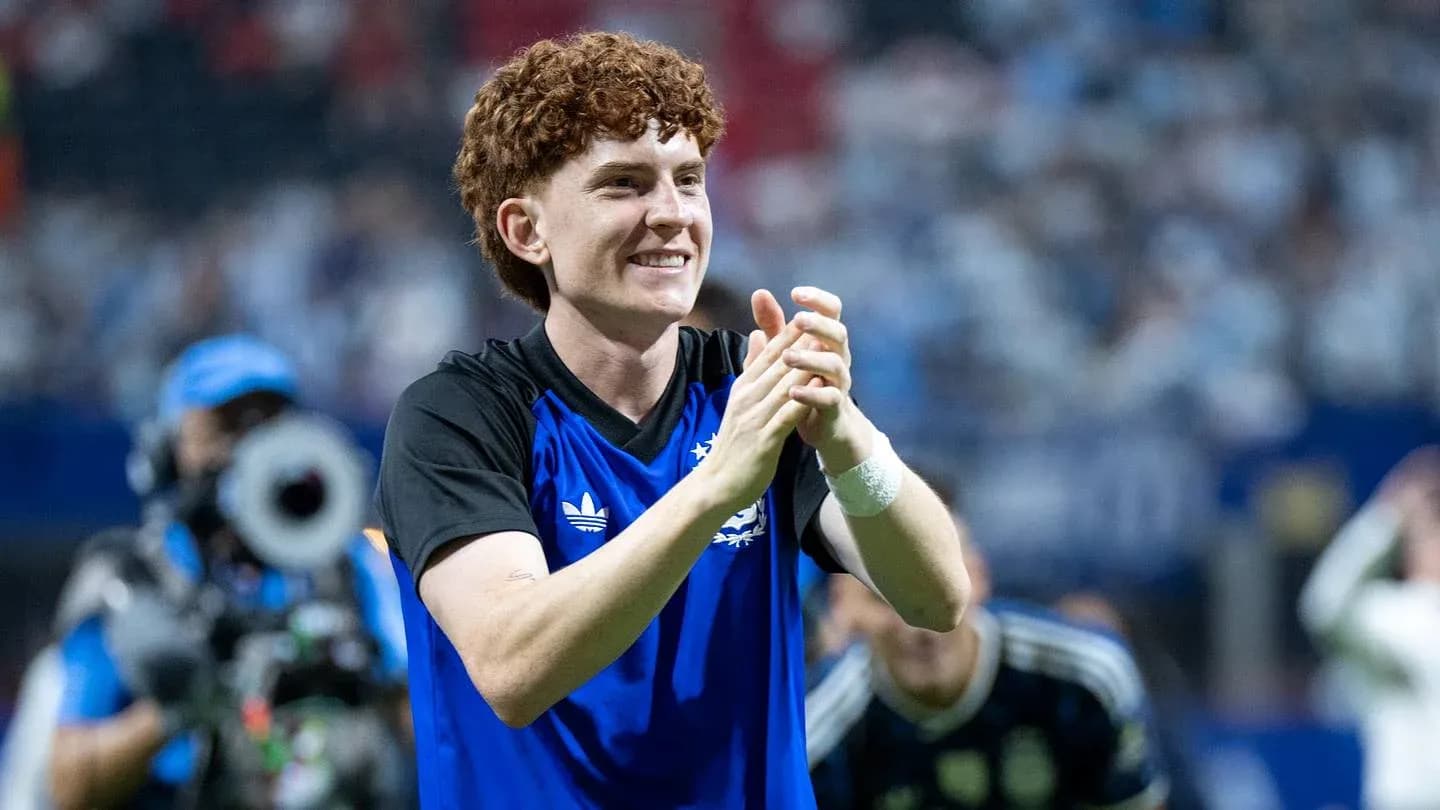
Premier League fans will remember the red-haired teenager who arrived at Brighton & Hove Albion, struggled at left-back and drifted out of view after just seven league appearances in 2023–24. That version of Barco was raw, miscast and learning a new league.
The Strasbourg version has been very different.
Since moving there in early 2025, he has grown into a do-it-all midfielder, trusted to link play, drive forward, and still shield his defense. He has carried responsibility rather than been protected from it. Performances over that spell always pointed towards a bigger move coming sooner rather than later.
Cynics will say Chelsea’s ownership group simply wanted to keep him under the BlueCo umbrella, protect an asset and bump his value. That argument will not disappear. But it sits alongside another truth: Barco has earned another crack at the elite level.
What makes him especially attractive is his flexibility. As a teenager, he was framed as the modern full-back: a left-sided defender who could step into midfield, invert, and overload central areas. At Strasbourg, the picture flipped. Now he looks like a midfielder first, one who can slide out to the left if needed.
For a squad that needs options across a long season, that matters. Barco can realistically cover at least two roles and several shapes. Chelsea will not have European football to contend with this year, so depth is not yet a crisis, but the club’s stated ambition is clear: be back playing twice a week in 2027–28. If that happens, a player who can plug multiple gaps becomes far more valuable.
The real intrigue lies in how Alonso chooses to use him. The Spaniard has already targeted reinforcements in the exact zones where Barco looks strongest. Henderson arrives to add experience and control in midfield. Chavarría, if completed, answers the manager’s specific request at left-back. Somewhere between those two profiles, Barco must carve out a place.
The Strasbourg Pipeline Under the Microscope
Barco is not just another Chelsea signing. He is the third player to walk the new corridor from Strasbourg to west London, a pathway that has yet to convince anyone that it works.
Mamadou Sarr was the first. Chelsea signed the center-back in the summer of 2025, gave him a taste of the Club World Cup, then sent him straight back to Strasbourg on loan. There, he thrived. He became a key figure, often wore the captain’s armband and looked every inch a long-term defensive solution.
Then came the swerve.
When Rosenior arrived at Stamford Bridge in January, he requested a new center-back. Chelsea responded by terminating Sarr’s loan and hauling him back immediately. On paper, it made sense. In practice, it never did. Sarr played fewer than 300 minutes across the next five months and drifted out of matchday squads entirely by the end of the campaign. The logic behind disrupting his development for that return still hangs in the air.
Emmanuel Emegha followed. His move from Strasbourg to Chelsea was confirmed in September 2025, and he finally joined up with Alonso’s squad this summer. The ink was barely dry before reports surfaced that Chelsea were already open to offers.
Emegha finds himself in a crowded room: João Pedro, Nicolas Jackson and Liam Delap are all competing for the same central role, with 17-year-old Dastan Satpayev impressing in preseason and waiting to join permanently once he turns 18 later this month. For a striker who has just arrived, being immediately linked with the exit says plenty about how clearly his pathway has been mapped out.
Barco now steps into that same spotlight. Another Strasbourg product. Another Chelsea signing with questions hanging over his role before he has even pulled on the shirt.
A Test of Vision
This transfer is more than a simple squad addition. It is a test of alignment.
Can a player identified and pursued by the recruitment hierarchy before Alonso’s arrival become integral to the plans of a manager who has his own clear ideas and his own targets? Can Chelsea turn the Strasbourg pipeline from a curiosity into a genuine competitive advantage?
Barco has the tools to help answer those questions. Where he ends up on the pitch, and how often, will show whether this club has finally found a joined-up way of working, or whether he is just the latest name to be caught between two competing visions of what Chelsea should be.