.svg&w=384&q=75 "Naijagoal logo")
Chelsea's Identity Crisis: Ruud Gullit Weighs In
Ruud Gullit has seen this movie before. The Dutchman who once turned Chelsea into trendsetters from the Stamford Bridge dugout now looks on from a distance as his old club wrestles with an identity crisis that money alone cannot fix.
Twelve months ago, Chelsea were parading the UEFA Europa Conference League, lifting the FIFA Club World Cup and punching their ticket back into the Champions League. Today, they sit ninth in the Premier League, staring at the possibility of a season stripped of European football altogether.
It has been a brutal comedown.
The ownership has not been shy with the chequebook. Far from it. Fees have flowed, contracts have lengthened, and potential has been stockpiled. Yet the question hangs over every signing: where is the balance? Where is the proven core around which all that raw talent can grow?
Gullit, who knows exactly what it takes to win in west London, does not sugar-coat it. Asked whether Chelsea are becoming a less attractive destination for elite managers, he goes straight to the heart of the squad’s construction.
“Yes,” he says, because any top coach would look at the current group and demand something different in the middle of the pitch. Experience. Authority. Players like Casemiro or Aurelien Tchouameni, the kind of midfield anchors who steady a young team and drag standards up with them. Without that spine, he warns, the project is always one bad week away from crisis.
That sense of fragility has seeped into the dugout as well. Enzo Maresca came and went. Liam Rosenior followed him out. Now Calum McFarlane holds the reins on a caretaker basis, trying to stitch together a season that has frayed at every seam.
And yet, in the chaos, he has found a route to Wembley.
McFarlane has guided Chelsea to the FA Cup final, a competition that still carries particular resonance at this club. Win it, and the narrative shifts overnight. Beat Manchester City under the arch on May 16, and Chelsea not only lift a major trophy, they also punch a Europa League ticket for 2026-27. In a season this uneven, that would feel like finding a lifeboat in rough seas.
It would not solve everything. But it would buy time.
Because once the confetti is cleared, the big decisions return. Who takes this team on permanently? Chelsea have been linked with Cesc Fabregas, Xabi Alonso, Andoni Iraola and Marco Silva. Four very different profiles, one shared theme: upward trajectories, growing reputations, modern football ideas.
The problem? The job itself.
“The only thing that is certain for a Chelsea manager is that he gets fired,” Gullit says, laying bare the reputation the club has built over two decades of churn. Any coach walking through that door knows he must bend to the club’s overarching philosophy, not the other way round. He has to ask himself two brutal questions: does that philosophy match his own, and will he get the players he needs to execute it?
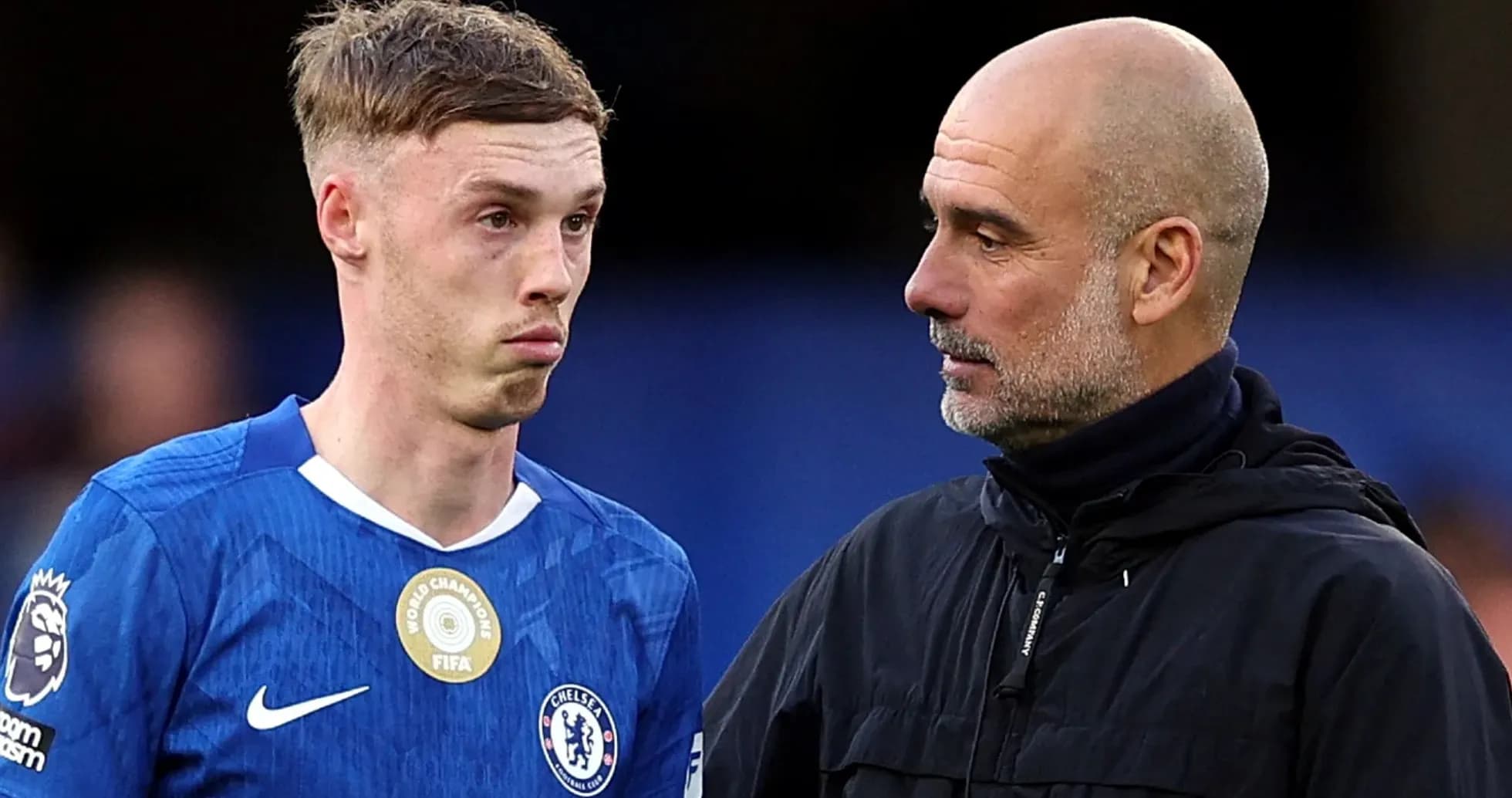
At the very top of the game, that is non-negotiable. Gullit points to Pep Guardiola as the benchmark. Manchester City gave him what he wanted, structurally and in the transfer market, and he repaid them with an era of dominance. Tell Guardiola to “deal with what we give you” and he simply doesn’t turn up. The same applies, Gullit insists, to Jose Mourinho, Jürgen Klopp, Carlo Ancelotti. These are managers who arrive with a formula, not a wish list.
Right now, Chelsea cannot offer that certainty. They can offer potential, resources, a grand stage. They cannot yet guarantee stability, or a squad that looks ready-made for a heavyweight coach to mould.
On the pitch, there have been flickers of resistance. A six-game Premier League losing streak finally snapped with a 1-1 draw against Liverpool, a result that at least halted the slide and restored a sliver of belief. The run-in, though, is unforgiving in its own way.
After the FA Cup final, Tottenham – fighting to save themselves from relegation – come to Stamford Bridge. Then Chelsea close the campaign away to Sunderland. On paper, those fixtures look manageable. In reality, they are laced with jeopardy: desperate opponents, tense atmospheres, a Chelsea side still trying to work out what it is.
Mathematically, a late charge into the top seven remains possible. In truth, the odds have moved firmly against them. And that matters. European football is no longer just a prestige marker; it is a recruitment tool. Without it, persuading the right manager and the right players to buy into the project becomes a much harder sell.
Whoever accepts the permanent role will do so with eyes wide open. The margin for error will be tiny. The expectation, even after a season like this, will be enormous. The seat in the Chelsea dugout has always been hot.
Right now, it is close to burning.