.svg&w=384&q=75 "Naijagoal logo")

Chelsea and Hull City Draw: Tactical Insights and Match Analysis
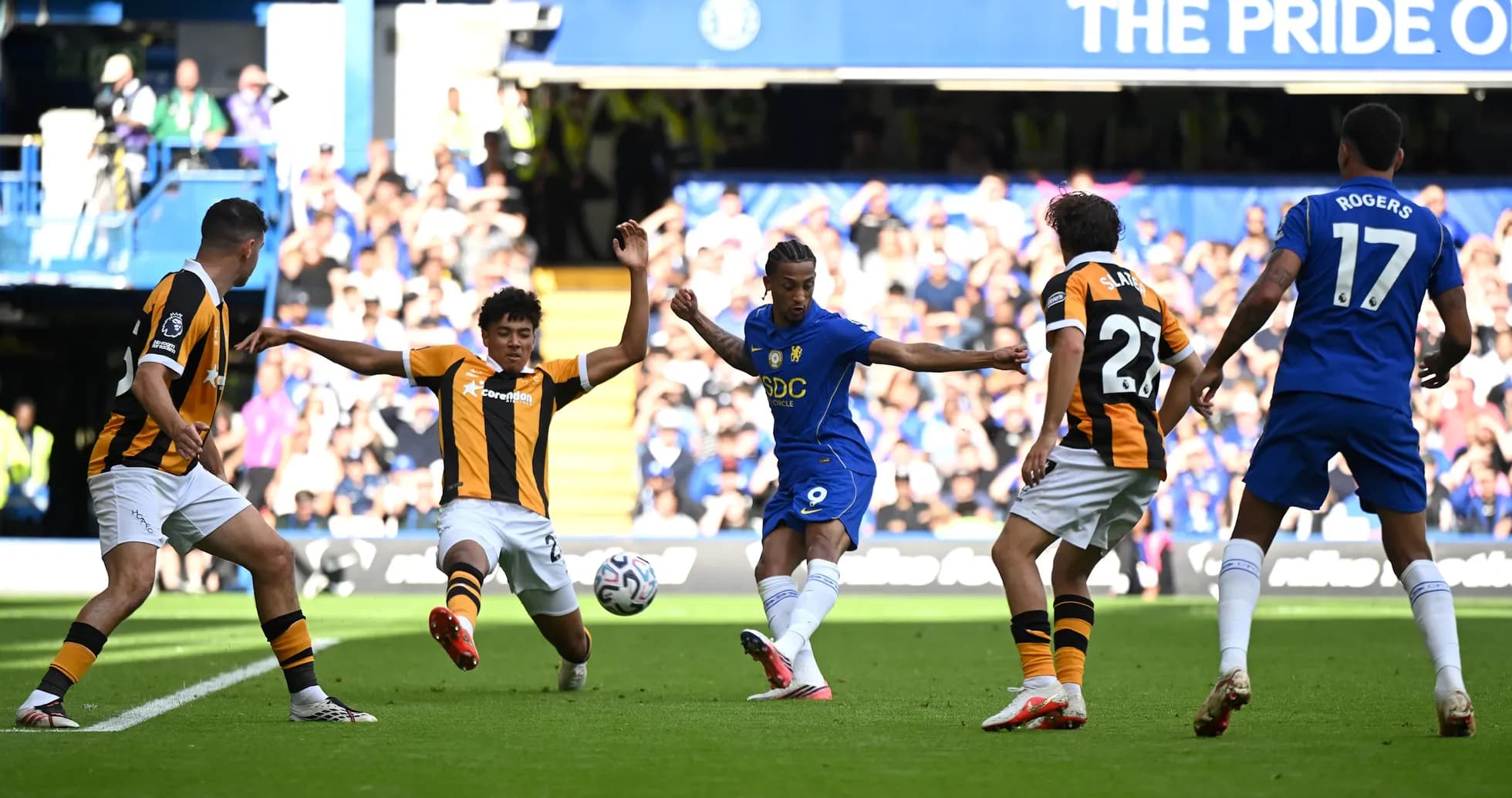
Stamford Bridge felt restless at full time. Chelsea, chasing momentum under Xabi Alonso, had poured themselves into a 4-2-3-1 that promised incision and control, yet a 2-2 draw with Hull City left them with only a point and a lingering sense of vulnerability. The Premier League’s “Regular Season - 4” round ended with both sides preserving unbeaten home and away records respectively: Chelsea still without a defeat at Stamford Bridge, Hull still unbeaten overall.
Heading into this game, Chelsea’s season had been defined by volatility. Overall they had scored 10 and conceded 9 in 4 matches, a goal difference of +1, and their football reflected that knife-edge. At home they were prolific and porous: 6 goals for and 5 against in just 2 matches, averaging 3.0 goals scored and 2.5 conceded. Hull arrived as the antithesis: compact, disciplined, and efficient. On their travels they had 3 goals for and only 2 against in 2 away games, with a measured average of 1.5 scored and 1.0 conceded. Overall they had 5 scored and 2 conceded, a goal difference of +3, and three clean sheets in four outings spoke to a side comfortable suffering without the ball.
I. The Big Picture – Styles in Collision
Alonso’s Chelsea lined up in a 4-2-3-1 that was really an aggressive 2-3-5 in possession. E. Martínez in goal sat behind a back four of W. Fofana, L. Colwill, J. Hato, and Pedro Neto. Ahead of them, R. James and R. Lavia formed the double pivot, with M. Gusto, C. Palmer, and M. Rogers supporting João Pedro as the lone forward.
Hull City, under S. Jakirović, came in exactly as their season statistics suggested: a 5-4-1 that had already been used in all four league matches. K. Tzolakis was protected by a line of five – L. Coyle, S. Ajayi, J. Egan, N. Mendy, and R. Giles – with a hard-working midfield four of M. Belloumi, M. Crooks, R. Slater, and E. Stroud behind the battling O. McBurnie up front.
The league table framed the narrative. Hull, in 3rd on 8 points, were punching above their perceived weight, their description marked for Champions League contention. Chelsea, 5th with 7 points and tagged for Europa League qualification, were trying to prove that their attacking fireworks could coexist with defensive stability. This draw kept both within touching distance of the summit but underlined their contrasting identities.
II. Tactical Voids – Absences and Discipline
Both squads were notably incomplete. Chelsea’s midfield depth took a hit with M. Caicedo, E. Emegha, J. Henderson, and M. Palestra all missing through injury. The absence of Caicedo and Henderson in particular removed a layer of defensive security and tempo control in the middle, forcing Lavia and James to shoulder both build-up and protection duties.
Hull’s list was longer, if more distributed: I. Ansah, J. Butland, D. Gyabi, C. Hughes, E. Matazo, and H. Morita were all unavailable. The spine remained intact, but Jakirović’s options to rotate his double pivot and wing-backs were clearly reduced. With Matazo and Morita out, Hull leaned even more heavily on Crooks and Slater to screen the back five.
Disciplinary trends added another layer. Chelsea’s yellow cards this season had been front-loaded and frantic: 33.33% of their cautions arrived between 0–15 minutes, with further spikes at 46–60 (22.22%) and 76–90 (22.22%). This is a side that tackles on emotion, particularly straight after kick-off and around momentum swings after half-time. Hull, conversely, showed their greatest yellow-card spike between 46–60 minutes at 30.77%, reflecting a team that tightens the screws just as opponents look to raise the tempo.
III. Key Matchups – Hunter vs Shield, Engine Room Battles
The headline duel was always going to be João Pedro and his supporting cast against Hull’s defensive shell. João Pedro entered this match as one of the league’s standout forwards: in 4 appearances he had 3 goals and 3 assists, with 8 shots (4 on target) and 7 successful dribbles from 10 attempts. His 61 duels contested, with 34 won, spoke of a forward comfortable receiving under pressure and rolling defenders.
Alongside him, M. Rogers had mirrored that end product with 3 goals and 1 assist in 4 games, taking 7 shots (4 on target) and producing 10 key passes. C. Palmer added 2 goals and 2 assists, with 12 shots and 9 key passes, knitting play between the lines. This trio is the heart of Chelsea’s attacking identity: fluid, technically sharp, and relentlessly vertical.
Against them stood Hull’s collective shield. J. Egan, S. Ajayi, and N. Mendy formed the central trio in the back five, with Belloumi the unexpected two-way star. The Algerian had 2 goals and 1 assist in 4 games, but his defensive work was just as striking: 10 tackles, 3 blocks, and 9 interceptions. He is the embodiment of Jakirović’s model – a midfielder who can spring forward yet still drop into the line to create a situational back six.
Up top, O. McBurnie led the line as Hull’s battering ram. With 6 shots (3 on target), 1 assist, and a massive 74 duels contested (36 won), he functioned as an outlet and a foul magnet. His disciplinary record – 2 yellow cards – underlined the edge he plays with, an edge Chelsea’s centre-backs had to manage without stepping into the early-card traps that have plagued them this season.
In midfield, the “engine room” confrontation pitted Chelsea’s James and Lavia against Crooks and Slater. Crooks, with 6 tackles and 2 blocks in just 159 minutes, is Hull’s enforcer, breaking up play and contesting second balls. James, operating as a central midfielder, had to balance his natural attacking instincts with the need to prevent transitions, especially with Chelsea’s full-backs – Neto and Gusto – pushing high.
IV. Statistical Prognosis – What This Draw Tells Us
Following this result, the numbers still paint a clear stylistic contrast. Chelsea remain an attacking juggernaut: overall they average 2.5 goals scored and 2.3 conceded per game, with no clean sheets and no matches where they have failed to score. Their ceiling is high, but so is the chaos.
Hull, by contrast, continue to live on control and structure. Overall they average 1.3 goals scored and just 0.5 conceded per game, with 3 clean sheets in 4 and only 1 match where they failed to score. Their away record – unbeaten, with 3 goals for and 2 against – reinforces the idea of a side that can absorb pressure and still carry a threat.
In xG terms, this would read as Chelsea’s attack consistently generating high-quality chances, but their defensive metrics lagging behind. Hull’s defensive solidity, reflected in only 2 goals conceded overall, suggests that even when they bend, they rarely break. A 2-2 at Stamford Bridge, against a side averaging 3.0 home goals, therefore feels less like dropped points for Hull and more like a validation of their structure.
For Chelsea, the draw underlines a recurring theme: their front four can hurt anyone, but until the spaces around Lavia and James are better protected – especially with Caicedo and Henderson absent – they will continue to live on the edge. For Hull, this was another step in a quietly impressive campaign, their five-man back line and industrious midfield once again proving that, even under siege, they can emerge with something tangible.