.svg&w=384&q=75 "Naijagoal logo")
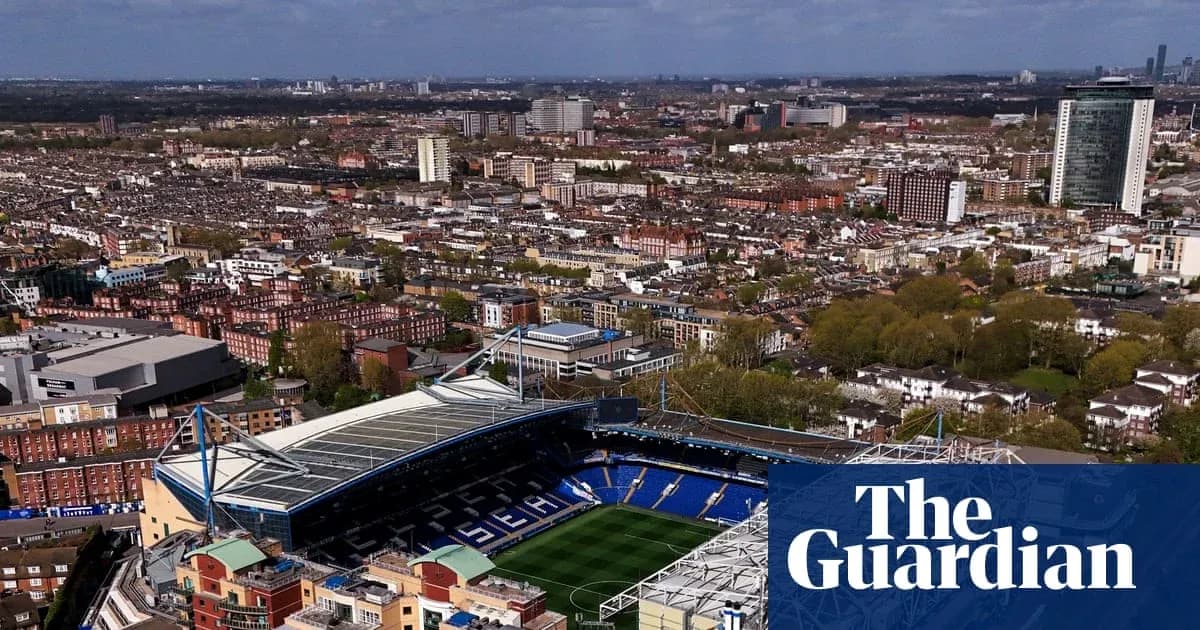

Chelsea Fined £10m and Given Suspended Transfer Ban
Chelsea’s Roman Abramovich years have come back to bite – but not as hard as they might have.
The club have been fined £10m by the Football Association and handed a suspended two‑window transfer ban after an independent commission found multiple breaches of transfer and agent regulations between 2009 and 2022. The punishment mirrors the Premier League sanction issued earlier this year, and once again drags some of the defining deals of the Abramovich era back into the spotlight.
Samuel Eto’o. Eden Hazard. Willian. Some of the most celebrated signings of Chelsea’s modern history are now formally tied to a network of unlicensed agents, secret payments and attempts to disguise the true nature of transfer dealings.
A harsher hit avoided
The commission initially went much further. Its original ruling included a suspended six‑point deduction, working down from a notional starting point of 15 points. That would have hung over the club like a storm cloud. Chelsea appealed – and won.
The appeal board removed the points element and replaced it with a suspended ban on registering new players for two transfer windows. That ban will only be triggered if Chelsea commit fresh breaches of similar rules.
Crucially, the appeal board concluded there was not enough evidence to prove Chelsea had actually gained a sporting advantage from the misconduct, even if the commission had previously argued they had “sought and gained” one. Without that proof, a points deduction became harder to justify.
The financial penalty, by contrast, stayed. The FA confirmed the full £10m will be ploughed into grassroots football.
Self-reporting and a new regime
The case only landed on the FA’s desk because the new ownership group, BlueCo, reported historic irregularities after taking control in 2022. The commission acknowledged that, praising Chelsea’s cooperation and the decision to come forward.
Chelsea, already operating under a settlement agreement with Uefa, struck a confident tone. The club said it had “worked openly and transparently with all regulators” and welcomed confirmation that “this brings all regulatory proceedings against the club to a close”.
Behind that calm statement sits a brutal assessment of the previous regime.
Written reasons published by the FA show the commission’s contempt for the way business was conducted under Abramovich. It described the rule‑breaking as “a shameful and arrogant disregard for the rules of the game … which has done so much to bring the game of football in general, and the name of CFC into disrepute”.
The language is stark. So is the picture it paints of a club that, for more than a decade, operated with a parallel financial reality running alongside the official one.
Offshore money and off‑book deals
The FA and Premier League investigations focused on tens of millions of pounds in secret payments routed through offshore companies owned by Abramovich. Many of those transactions were first exposed by Cyprus Confidential, an investigation based on leaked data from Cypriot financial services firms that helped manage the Russian oligarch’s wealth.
Among the deals highlighted: apparent off‑book payments to Hazard’s agent and to an associate of Antonio Conte, the manager who delivered the 2016‑17 Premier League title.
Documents released with the FA’s findings offer a rare glimpse into how transfers were really run at Stamford Bridge. One internal exchange centres on the 2013 signing of Willian – the Brazilian winger who famously veered away from Tottenham at the last moment to join Chelsea instead.
An unnamed senior figure at the club, confronted with the prospect of losing Willian, is quoted as saying that missing out on the player would be “not good” – and that losing him to Spurs would be “adding insult to injury”. It was the kind of ruthless, last‑minute swoop that came to define Abramovich’s Chelsea. The FA, though, saw something else in the mindset.
In its submissions, the governing body argued that this individual may have “loved the power associated with having a bottomless pocket when it came to acquiring players of great quality and/or with great potential”, and said that to suggest there was no intent to gain a sporting advantage “is stretching our credulity beyond reasonable limits”.
FA under fire, lawyers praised
The commission did not reserve its criticism solely for Chelsea’s old hierarchy. It also took aim at the FA itself.
While acknowledging the FA’s cooperation, the panel expressed “particular concern” that no individuals had been charged in relation to the misconduct and that the governing body had argued against a sporting sanction. The Premier League had also advised against a points penalty.
That stance opened the door for Chelsea’s legal team to go to work. Stefan Borson, a football finance expert and head of sport at McCarthy Denning, was blunt in his assessment.
“Chelsea’s lawyers performed a masterclass in non-adversarial diplomacy with both the FA and the Premier League,” he said. He noted that even when the independent panel disagreed with the position put forward by the FA and the club, it still found a way to move from a 15‑point starting position to a six‑point suspended penalty – and that this, too, was ultimately “appealed away, leaving Chelsea to pay a final meagre fine out of its retained escrow from Abramovich’s proceeds”.
The sense lingers that Chelsea have escaped the most severe sporting consequences of more than a decade of rule‑breaking, while the governing bodies must explain why they shied away from targeting individuals and hard sanctions.
Tax settlement and a line in the sand
The FA’s written rulings also revealed, for the first time, that BlueCo reached a multi‑million pound settlement with HM Revenue & Customs over historic transactions dating back to 2011. The exact figure is redacted, but the appeal board indicated Chelsea repaid at least £1.35m.
It is another reminder of the scale and complexity of the financial web that underpinned the Abramovich era – and of the clean‑up job the new ownership has taken on.
The FA insists the £10m fine will filter down to the base of the game, into pitches, facilities and programmes far removed from the elite world where these payments were once devised. Chelsea, for their part, can finally say every regulatory case linked to their old regime has been resolved.
The question now is whether this really closes the book on one of English football’s most lavish, controversial experiments – or simply marks the moment the sport starts to reckon, properly, with what it was willing to overlook.