.svg&w=384&q=75 "Naijagoal logo")
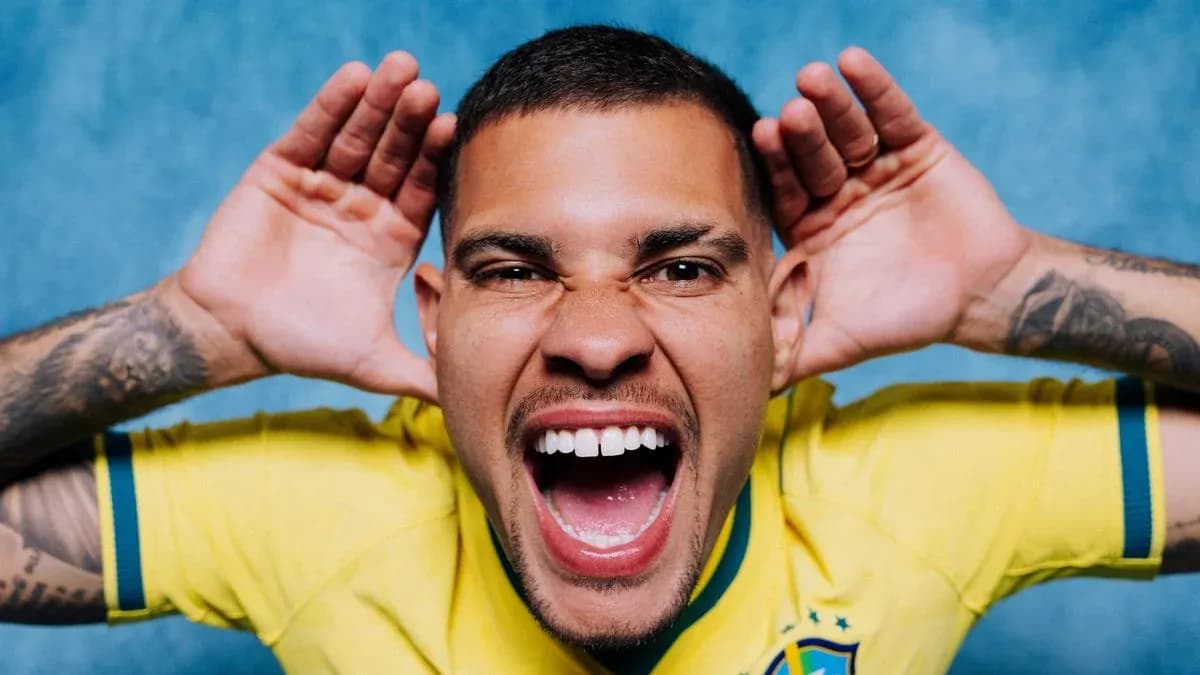

Bruno Guimarães: From Rejection to Arsenal Star
Bruno Guimarães knows all about waiting.
Six and a half years ago, in Curitiba, he barely slept. The phone sat beside him like a loaded gun. He had just run Athletico Paranaense’s midfield again, just waved a tearful goodbye to the Furacão crowd after a 1-0 win over Santos, convinced his life was about to change.
Atletico Madrid had a £26 million agreement in the works. Europe was calling, La Liga was the dream, and Guimarães had already started to picture himself in red and white. Christmas came and went. The January window opened. Still no call. Still no confirmation. Just silence and doubt.
While Atletico hesitated, others moved. Benfica put an offer on the table. Athletico president Mario Celso Petraglia revealed a new name in the race: Arsenal.
Edu, then still shaping his project in north London, had been tracking Guimarães closely. The Brazilian had powered Athletico to four trophies, including the Copa do Brasil and Copa Sudamericana, and looked built for the Premier League: aggressive, technical, relentless. Arsenal made a direct approach to his camp, but the numbers didn’t stretch far enough. Money talked, and a different voice cut through the noise.
Juninho Pernambucano called.
The Lyon legend, one of Guimarães’ childhood heroes from his days lifting titles with Vasco da Gama, didn’t bother with half-promises. He gave the 22-year-old a simple, bold line: sign for Lyon and you can become one of the best midfielders in world football. Coming from Juninho, it carried a weight that no spreadsheet at Arsenal could match.
Guimarães, a devoted Vasco supporter who even attended a 1-1 draw with Mirassol as recently as July 26, listened. Lyon pushed ahead with a £17.1m deal. When he finally put pen to paper on a long-term contract in France, he didn’t hide his frustration with Atletico Madrid. “Nobody called me,” he said. The club that once led the race had simply drifted away. They would soon regret it.
Arsenal, too, would learn what it meant to let Guimarães slip.
Two years later, his next move again underlined just how far he’d come. Newcastle United flew him in for a medical while he was on international duty with Brazil, the kind of logistical contortion reserved for players whose stock has exploded. Once more, Arsenal lurked in the background. Once more, they failed to land him.
This time, they couldn’t compete with Newcastle’s newfound financial muscle. The Gunners had already invested in Martin Ødegaard and Albert Sambi Lokonga the previous summer. The budget, and perhaps the belief, wasn’t there to go all in on Guimarães.
The punishment arrived quickly and brutally.
In May, under the lights and pressure of a top-four run-in, Guimarães scored and dominated as Newcastle beat Arsenal 2-0 at St James’ Park. Arsenal’s Champions League hopes crumbled with one game left. Guimarães didn’t just play well; he imposed himself, snapping into duels, driving his side forward, tormenting a club that had twice passed on him.
Since then, he has repeatedly gone toe-to-toe with Arsenal and relished every second of it. No Premier League opponent has felt his presence more often in individual battles: he has won 71 duels against the Gunners, more than against any other side. Every challenge seemed to carry a message: this is what you could have had.
The ferocity comes from somewhere deeper than transfer frustration. It goes back to Rio de Janeiro, to a boy who kept hearing “no.”
Guimarães grew up loving futsal, but Fluminense and Botafogo didn’t see enough in him. He wasn’t the chosen one. He was the rejected kid who had to leave home to be noticed. His father, Dick, refused to let those rejections define him.
Every weekend, Dick would drive 269 miles from Rio to Osasco to watch his son play for Audax in São Paulo. Same car, same route, week after week. It was a sacrifice, but not a soft one. There were rules. If Bruno lost, dinner was a ham and cheese sandwich with juice. If he won, he could eat whatever he wanted.
Those car journeys, that tough love, stayed with him. They’re literally on his back now, in the form of tattoos that mark those memories. Even his shirt number is a tribute. No.39, the number he is set to wear for Arsenal, was the number of his dad’s taxi in Rio – the same cab that carried him to those youth games and long-shot dreams.
At Arsenal’s training ground, that number has already started to move aside for him. Young academy midfielder Louie Copley, who suffered a serious knee injury in midweek against Real Betis, had been wearing 39 in recent weeks. On the club’s website, he now appears as No.38. The path is clear. The shirt that means everything to Guimarães is waiting.
For Arsenal, this is not just another signing. This is a course correction years in the making.
They missed him when Atletico stalled and Lyon pounced. They missed him again when Newcastle outmuscled them. Each time, the consequences were laid bare on the pitch. Mikel Arteta, now operating in a different financial and sporting landscape, was not about to let it happen a third time.
The negotiations dragged. The saga grew tiresome from the outside. But inside Arsenal, the outcome felt inevitable. They had tracked him for too long, suffered against him too often, and understood too clearly what he could bring to the heart of their midfield.
Now, finally, the waiting is over. The sleepless nights belong to someone else. Bruno Guimarães is an Arsenal player – at the third attempt, wearing his father’s number, at a club that at last has shown him he is wanted.