.svg&w=384&q=75 "Naijagoal logo")

Brooklyn Dominates Portland in USL League One Cup Clash
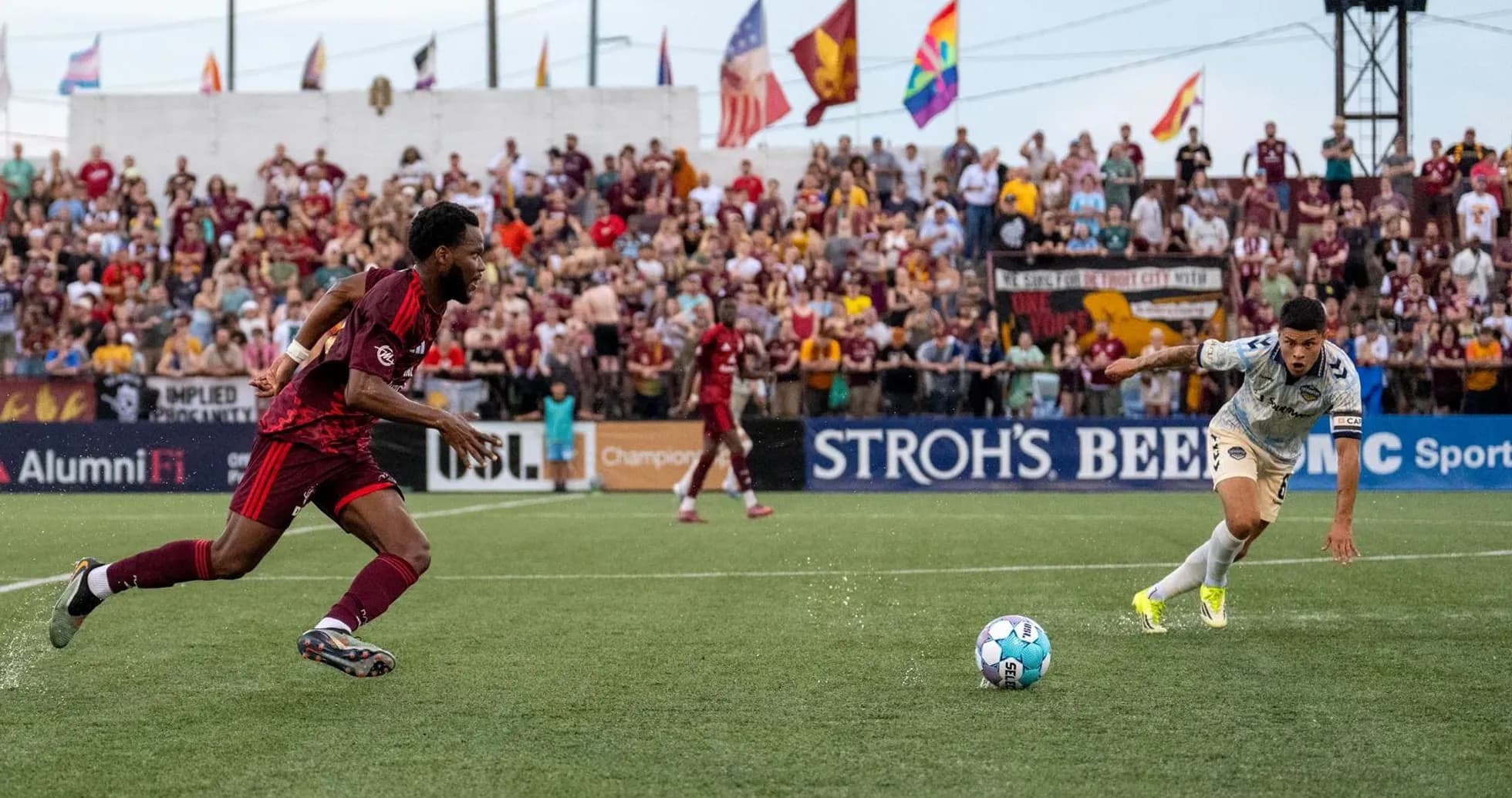
Under the Brooklyn lights at Maimonides Park, this USL League One Cup Group 5 tie unfolded less like a cautious group-stage sparring session and more like a statement of intent. Brooklyn, already shaping a clear seasonal identity as a front-foot, high-scoring side, dismantled Portland Hearts of Pine 5–1, turning a potentially tense group encounter into a showcase of attacking depth and collective control.
Heading into this game, the numbers already hinted at contrasting footballing DNA. Brooklyn’s campaign had been defined by sharp efficiency: 8 goals for and only 3 against in total, from 3 fixtures, with an overall scoring average of 2.7 goals per match and just 1.0 conceded. Portland, by contrast, were volatility incarnate: 5 goals for but 9 against overall, conceding at a total rate of 3.0 per match. The group table framed the stakes: Brooklyn in 2nd on 6 points with a goal difference of +5 (8 scored, 3 conceded), Portland 4th on 4 points with a goal difference of -4 (9 scored, 13 conceded). This was a clash between a measured, efficient contender and a side whose open, chaotic games were just as likely to spiral out of control as to catch fire.
I. The Big Picture: Brooklyn’s control, Portland’s collapse
The scoreline told the story early. Brooklyn surged into a 3–1 half-time lead and never loosened their grip, adding two more after the break to close out a 5–1 win in regular time. At home, this result aligned perfectly with their emerging profile: before this, Brooklyn had already scored 5 and conceded 3 at home in total, averaging 2.5 goals for and 1.5 against on their own turf. The 5–1 here did more than match that pattern; it amplified it, underlining Maimonides Park as a venue where they can overwhelm opponents rather than simply edge them.
Portland’s away fragility, meanwhile, was brutally exposed. On their travels heading into this fixture, they had already lost both away games, scoring 3 and conceding 8 in total, with an away concession rate of 4.0 goals per match. To ship 5 more in Brooklyn only confirmed that this is not an aberration but a structural issue: a back line that cannot withstand sustained pressure, especially once the game becomes stretched.
II. Tactical Voids: Discipline and the invisible absences
With no explicit injury list available, the “voids” in this contest were more tactical and emotional than personnel-based. Portland coach Bobby Murphy named an attacking-leaning XI: A. Camara leading the line, supported by O. Wright and W. Varela, with L. Kunga and M. Kidd offering width and running. It was a side built to play, not to absorb.
The problem is that Portland’s statistical discipline profile foreshadowed a meltdown. Their yellow-card distribution across the campaign shows a clear pattern of escalation: 25.00% of their cautions arriving between 46–60 minutes and a peak 50.00% between 61–75 minutes, with a further 12.50% from 76–90. Add to that a red card concentration of 100.00% in the 46–60 window, and you have a team that tends to unravel just when matches become most tactical and physical. Even without the individual card details for this specific match, the broader pattern is unmistakable: Portland struggle to maintain composure in the second half, and against a side as structured as Brooklyn, that fragility became a tactical absence in itself.
Brooklyn’s own yellow-card profile is calmer but still telling: 20.00% of their bookings from 31–45, another 20.00% from 46–60, and a late spike of 40.00% between 61–75, with 20.00% in the final 76–90 stretch. They push the line in the middle and late phases but, crucially, have not seen red in any time range. It suggests a team willing to foul to control transitions without tipping into self-destruction.
III. Key Matchups: Hunter vs Shield, Engine Room vs Chaos
Without official top-scorer and assist tables, the “Hunter vs Shield” narrative in this tie was collective rather than individual. Brooklyn’s attacking unit, spearheaded by M. Anderson and C. Olney JR, flanked by the craft of P. Mangione and the experience of T. McNamara, faced a Portland defensive record that had already conceded 9 overall and 8 away. The 5–1 home win that stands as Brooklyn’s biggest home victory in this competition was no coincidence; it reflects a clear structural mismatch between Brooklyn’s layered attacking patterns and Portland’s porous block.
Behind them, the “Engine Room” duel was quietly decisive. Brooklyn’s midfield axis of M. Pinto and S. Stojanovic, supported by the positional intelligence of T. Vancaeyezeele and the assured presence of Gabriel Alves and V. Latinovich, gave the home side a platform to suffocate transitions. Portland’s central figures – M. Mohamed, K. Green, B. Evans, and D. Barbosa – were asked to both protect and progress, but the numbers suggest they were overrun. Brooklyn had already failed to score just once in total this campaign; Portland had never kept a clean sheet at home or away. Once Brooklyn established rhythm, Portland’s midfield could not shield their back line from wave after wave of pressure.
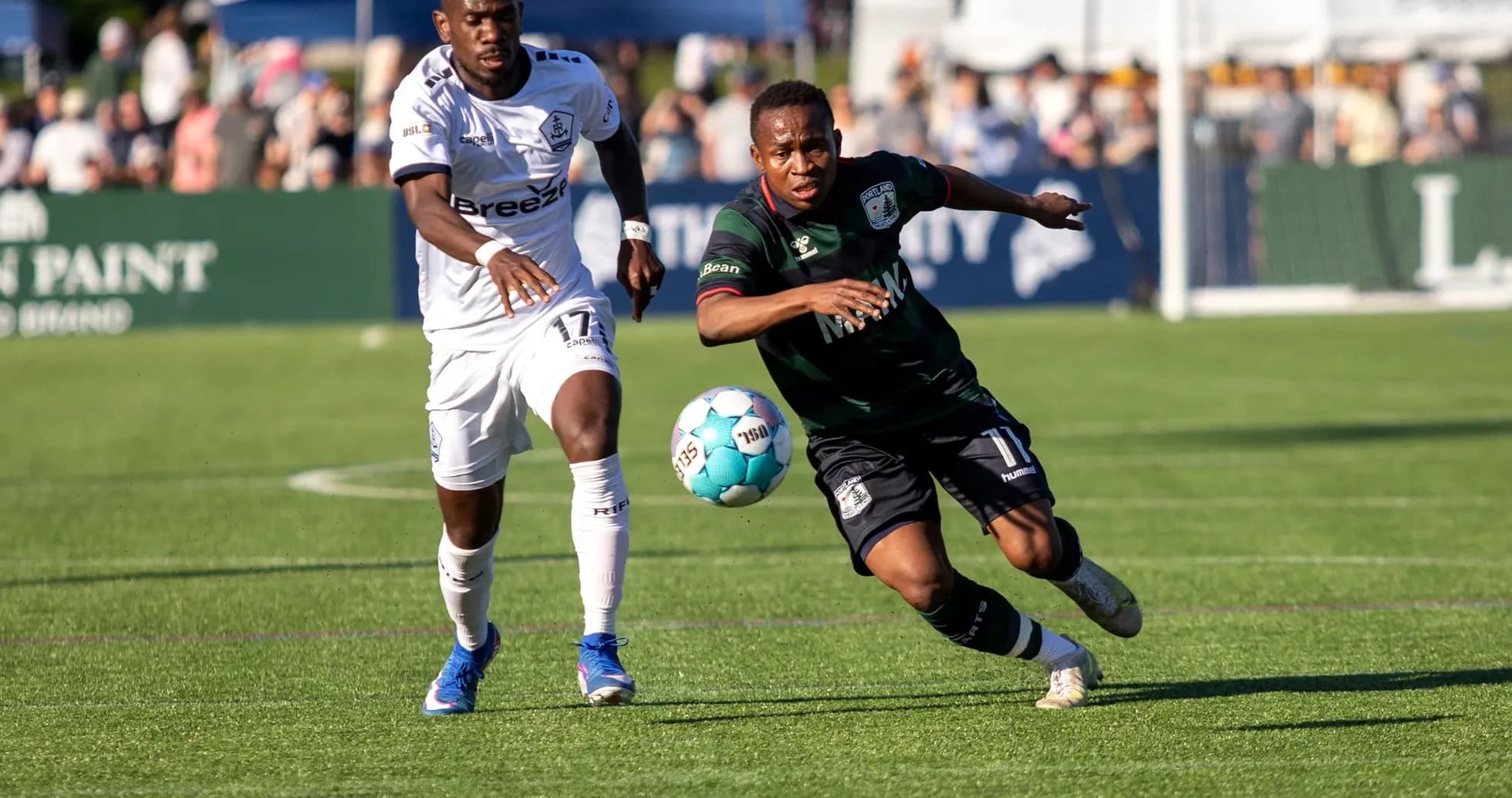
The flanks were another key battleground. L. Kunga and W. Varela offer directness for Portland, but against Brooklyn’s back line – anchored by L. Burns in goal and the defensive triangle of Latinovich, Gabriel Alves, and C. Frogson – they rarely found the kind of isolated 1v1s they thrive on. Instead, Portland’s attacking intent only opened more space for Brooklyn’s counters and third-man runs.
IV. Statistical Prognosis: A tale of two trajectories
Following this result, Brooklyn’s group position and statistical profile converge into a single, coherent picture: a side with a positive goal difference built on both attacking productivity and defensive control. Their overall goals-for average of 2.7 and goals-against average of 1.0 heading into the match were not inflated; the 5–1 only reinforces that this is a team capable of sustaining high output without sacrificing structure.
Portland, by contrast, remain defined by imbalance. Their total scoring average of 1.7 goals for per match is respectable, but the 3.0 conceded overall – and the even more alarming 4.0 away – place an unsustainable burden on their forwards. Even with a perfect penalty record (1 scored from 1 in total, 100.00%), the margins they need to overcome defensively are simply too wide.
From an xG-style tactical lens, Brooklyn’s compact shape, disciplined card profile (no reds, controlled yellows), and ability to generate high-quality chances from multiple zones point toward sustainable success as the group phase tightens. Portland’s late-game disciplinary spikes, away defensive frailty, and reliance on chaotic, open matches suggest a side that will always be dangerous but rarely in control.
At Maimonides Park, that contrast crystallized into a 5–1 reality: Brooklyn as the measured contender, Portland as the romantic, flawed outsider whose open heart leaves too many spaces for ruthless opponents to exploit.